April 30: Early Registration Deadline for Metallomics 2011

The early registration deadline for the Third International Symposium on Metallomics conference is April 30.

Metallomics 2011

Metallomics is to be held in Munster, Germany June 15-18, 2011 and sister journal Metallomics has announced a special issue themed around the conference.  The submission deadline for the special issue July 15, 2011.  More information can be accessed online at: http://www.metallomics2011.org.

Digg This
Reddit This
Stumble Now!
Share on Facebook
Bookmark this on Delicious
Share on LinkedIn
Bookmark this on Technorati
Post on Twitter
Google Buzz (aka. Google Reader)

April 20: Last Day for TraceSpec2011 Early Registration

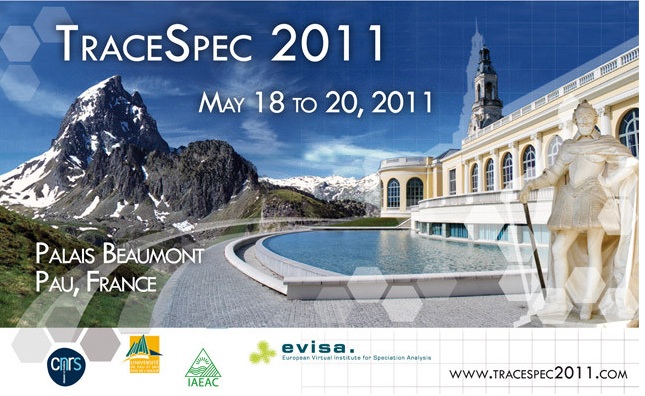
The 13th Workshop on Progress in Trace Metal Speciation for Environmental Analytical Chemistry has extended the early registration

TraceSpec 2011

deadline to April 20, and late-breaking poster presentations are still being accepted.  The preliminary program is now online and can be accessed at: http://www.tracespec2011.com.

Digg This
Reddit This
Stumble Now!
Share on Facebook
Bookmark this on Delicious
Share on LinkedIn
Bookmark this on Technorati
Post on Twitter
Google Buzz (aka. Google Reader)

Coastal Pollution Shown to Affect Harbor Seals

The work of a number of researchers affiliated with JAAS has been prominently featured in the popular press recently.  The paper:

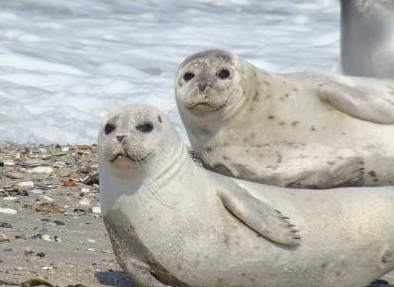
Harbor Seals

First health and pollution study on harbor seals (Phoca vitulina) living in the German Elbe estuary“, Antje Kakuschke, Elizabeth Valentine-Thon, Simone Griesel, Juergen Gandrass, Octavio Perez Luzardo, Luis Dominguez Boada, Manuel Zumbado Peña, Maira Almeida González, Mechthild Grebe, Daniel Pröfrock, Hans-Burkhard Erbsloeh, Katharina Kramer, Sonja Fonfara and Andreas Prange., Marine Pollution Bulletin,60(11), 2019-2086.

was cited on a number of popular news sites because of the concerns it raised about the pollution of coastal environments.  Specifically, the authors found elevated levels of many heavy metals and long-lived industrial pollutants in the blood of the seals, and hypothesized that similar pollution effects were responsible for the elevated immune response observed in these animals. They suggested that periodic monitoring of these subjects will provide new insights into the adverse effects of marine activity on their local ecosystem, making them- in effect- very cute biomarkers.  Kudos to the authors on this wonderful work…

Digg This
Reddit This
Stumble Now!
Share on Facebook
Bookmark this on Delicious
Share on LinkedIn
Bookmark this on Technorati
Post on Twitter
Google Buzz (aka. Google Reader)

Hot Article: Analysis of explosive residues in human fingerprints using OC-LIBS

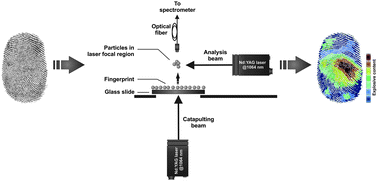
Chemical images generated by OC-LIBS provided visual information on the spatial distribution of the explosive residue in the fingerprints.

Optical catapulting in combination with laser induced breakdown spectroscopy (OC-LIBS) is a new and developing technique that has been effectively tested for the analysis of solid aerosols.

In this paper, Abdelhamid et al. use OC-LIBS to analyse explosive residues in human fingerprints left on glass surfaces in the form of solid aerosols.   Experimental conditions such as the temporal acquisition delay, the distance from the surface and the interpulse delay time between lasers are studied.  They show advantages of OC-LIBS over conventional LIBS including the absence of contamination of the specimen analyzed and the freedom from spectral contribution of the substrate where the sample was placed.

Analysis of explosive residues in human fingerprints using optical catapulting–laser-induced breakdown spectroscopy
M. Abdelhamid, F. J. Fortes, M. A. Harith and J. J. Laserna
J. Anal. At. Spectrom., 2011, Advance Article
DOI: 10.1039/C0JA00188K

Do take a look and let us know your thoughts on this emerging technique.

Digg This
Reddit This
Stumble Now!
Share on Facebook
Bookmark this on Delicious
Share on LinkedIn
Bookmark this on Technorati
Post on Twitter
Google Buzz (aka. Google Reader)

Daniel Pröfrock wins Bunsen-Kirchhoff Award

(Carsten Engelhard)  Dr. Daniel Pröfrock has been named the 2011 Bunsen-Kirchhoff Award winner.

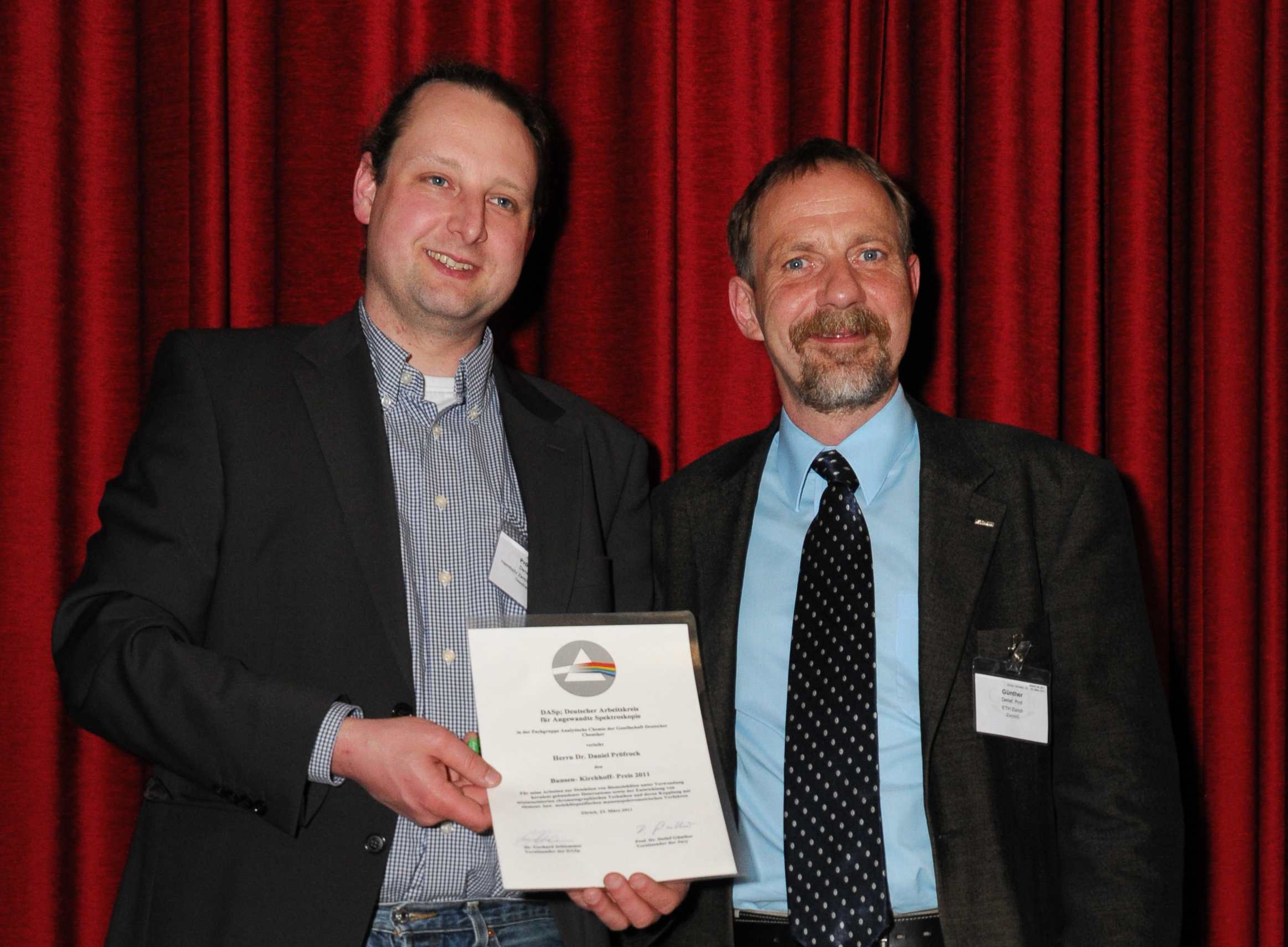
Bunsen-Kirchhoff Award winner Dr. Daniel Pröfrock with Prof. Dr. Detlef Günther (Picture: Johannes Stadler, CC-BY).

Prof. Detlef Günther, JAAS Editorial Board Chair and member of the award committee, presented the prize on behalf of the German Society for Applied Spectrocopy (DASp) during the ANAKON conference dinner. The ANAKON conference was held March 22 – 25, 2011 in Zurich, Switzerland. Every year the Bunsen-Kirchhoff Award is given to an outstanding young scientist in the field of spectroscopy. The prize includes a monetary reward of 2.500,00 €.

Daniel presented an award lecture entitled “Elemental speciation in environmental and life sciences utilizing heteroatoms, miniaturization, and mass spectrometry”.  He is a scientist in the Marine Bioanalytical Chemistry Department of the Helmholtz-Zentrum Geesthacht Centre for Materials and Coastal Research (HZG, http://www.hzg.de).  His research interests include trace element analysis and elemental speciation in the marine environment, as well as development and application of hyphenated techniques for marine bio analysis.

Congratulations Daniel!

Digg This
Reddit This
Stumble Now!
Share on Facebook
Bookmark this on Delicious
Share on LinkedIn
Bookmark this on Technorati
Post on Twitter
Google Buzz (aka. Google Reader)

Most-read JAAS articles in February

The most popular JAAS articles in February

Read five of the most-read papers in February 2011 here:

Beibei Chen, Shujing Heng, Hanyong Peng, Bin Hu, Xu Yu, Zhiling Zhang, Daiwen Pang, Xin Yue and Ying Zhu, J. Anal. At. Spectrom., 2010, 25, 1931-1938
DOI: 10.1039/C0JA00003E

Andrew Taylor, Simon Branch, Martin P. Day, Marina Patriarca and Mark White, J. Anal. At. Spectrom., 2011, 26, 653-692
DOI: 10.1039/C1JA90006D
 
Owen T. Butler, Warren Cairns, Jennifer M. Cook and Christine M. Davidson, J. Anal. At. Spectrom., 2011, 26, 250-286
DOI: 10.1039/C0JA90038A
 
Jing-Min Liu and Xiu-Ping Yan, J. Anal. At. Spectrom., 2011, Advance Article
DOI: 10.1039/C0JA00232A
 
Michael Krachler and Paul Carbol, J. Anal. At. Spectrom., 2011, 26, 293-299
DOI: 10.1039/C0JA00083C
Digg This
Reddit This
Stumble Now!
Share on Facebook
Bookmark this on Delicious
Share on LinkedIn
Bookmark this on Technorati
Post on Twitter
Google Buzz (aka. Google Reader)

Issue 4 now online

A themed issue on glow discharge spectroscopy

Bordel et al, 26(4): 758-765

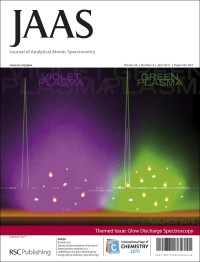
Our themed issue highlighting the latest work in Glow Discharge Spectroscopy is now online.

An Editorial by Philippe Guillot, Cornel Venzago and Gerardo Gamez provides an overview of the International Glow Discharge Spectroscopy Symposium 2010:

Editorial: International glow discharge spectroscopy symposium, Albi, France, August 22–25, 2010
Philippe Guillot, Cornel Venzago and Gerardo Gamez
J. Anal. At. Spectrom., 2011, 26, 647-648
DOI: 10.1039/C1JA90004H

A second Editorial, by Gerardo Gamez, considers the work of GLADNET:

Editorial: Weaving the glow discharge net
Gerardo Gamez
J. Anal. At. Spectrom., 2011, 26, 649-652
DOI: 10.1039/C1JA90005F

Our appropriately glowing front cover shows work by Nerea Bordel and colleagues, characterizing two plasma regimes:

Spatial characterization of pressure-based plasma regimes in a radiofrequency glow discharge by using optical emission spectroscopy
Rebeca Valledor, Jorge Pisonero, Thomas Nelis and Nerea Bordel
J. Anal. At. Spectrom., 2011, 26, 758-765
DOI: 10.1039/C0JA00177E
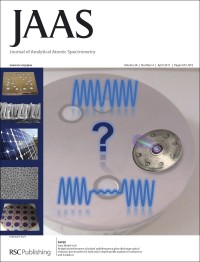
Sanz-Medel et al., 26(4): 776-783

The inside front cover highlights the work of Alredo Sanz-Medel and co-workers, which investigates conductor and insulator layers using pulsed-RF-GD-OES:

Analytical performance of pulsed radiofrequency glow discharge optical emission spectrometry for bulk and in-depth profile analysis of conductors and insulators
Deborah Alberts, Beatriz Fernández, Rosario Pereiro and Alfredo Sanz-Medel
J. Anal. At. Spectrom., 2011, 26, 776-783
DOI: 10.1039/C0JA00094A

We hope you enjoy this themed issue – do let us know your thoughts on the work presented and the field more generally by posting a comment below.

Digg This
Reddit This
Stumble Now!
Share on Facebook
Bookmark this on Delicious
Share on LinkedIn
Bookmark this on Technorati
Post on Twitter
Google Buzz (aka. Google Reader)

Digging deeper into bone fossils

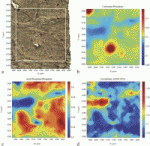
Optical view and corresponding FTIRM images of bone samples

The accuracy of studies on ancient bones of interest to archaeologists and paleontologists can be improved thanks to a new procedure designed by scientists in France.

Matthieu Lebon, from the National Museum of Natural History in Paris, and colleagues, have applied a method currently used in modern biomedical applications called synchrotron radiation Fourier transform infrared (SR-FTIR) microspectroscopy, to understand the fossilisation process of ancient bone.

Read Rebecca Brodie’s full news story in Chemistry World, and access the full paper for free below:

This article will be published later in the year as part of a themed issue highlighting the latest research in the area of synchrotron radiation in art and archaeometry.

Imaging fossil bone alterations at the microscale by SR-FTIR microspectroscopy

Matthieu Lebon, Katharina Müller, Jean-Jacques Bahain, François Fröhlich, Christophe Falguères, Loïc Bertrand, Christophe Sandt and Ina Reiche
J. Anal. At. Spectrom.
DOI: 10.1039/C0JA00250J

Digg This
Reddit This
Stumble Now!
Share on Facebook
Bookmark this on Delicious
Share on LinkedIn
Bookmark this on Technorati
Post on Twitter
Google Buzz (aka. Google Reader)

Most popular papers of 2010

Some JAAS highlights from our 25th anniversary year

Last year was as busy as ever for JAAS and we’d like to say thank you to all our authors and referees for helping us a achieve a successful 2010!  We’re delighted with all the articles we published, but we were curious to find out what people were reading.

So here are a handful of the most popular articles of 2010 – all of them are free to access until the end of April.  Why do you think these particular papers were so well-read? Let us know by posting your comments below.

Fundamental studies on the ablation behaviour of Pb/U in NIST 610 and zircon 91500 using laser ablation inductively coupled plasma mass spectrometry with respect to geochronology
Barbara K. Kuhn, Karin Birbaum, Yan Luo and Detlef Günther
J. Anal. At. Spectrom., 2010, 25, 21-27
DOI: 10.1039/B917261K

Technical Note: A fast sample preparation procedure for mercury speciation in hair samples by high-performance liquid chromatography coupled to ICP-MS
Samuel S. de Souza, Jairo L. Rodrigues, Vanessa C. de Oliveira Souza and Fernando Barbosa Jr.
J. Anal. At. Spectrom., 2010, 25, 79-83
DOI: 10.1039/B911696F

Communication: Development of direct atmospheric sampling for laser ablation-inductively coupled plasma-mass spectrometry
Robert Kovacs, Kohei Nishiguchi, Keisuke Utani and Detlef Günther
J. Anal. At. Spectrom., 2010, 25, 142-147
DOI: 10.1039/B924425E

Tutorial Review: Field-flow fractionation and inductively coupled plasma mass spectrometer coupling: History, development and applications
S. Dubascoux, I. Le Hécho, M. Hassellöv, F. Von Der Kammer, M. Potin Gautier and G. Lespes
J. Anal. At. Spectrom., 2010, 25, 613-623
DOI: 10.1039/B927500B

Technical Note: Quantification method for elemental bio-imaging by LA-ICP-MS using metal spiked PMMA films
Christine Austin, Dominic Hare, Tristan Rawling, Andrew M. McDonagh and Philip Doble
J. Anal. At. Spectrom., 2010, 25, 722-725
DOI: 10.1039/B911316A

Digg This
Reddit This
Stumble Now!
Share on Facebook
Bookmark this on Delicious
Share on LinkedIn
Bookmark this on Technorati
Post on Twitter
Google Buzz (aka. Google Reader)

High precision radium ratio and concentration measurement in seawater

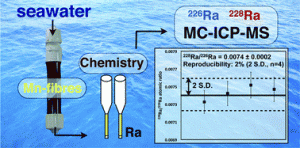
Precise measurement of 228Ra/226Ra ratios and Ra concentrations in seawater samples by multi-collector ICP mass spectrometry This paper presents a new analytical technique for the high-precision measurement of 228Ra/226Ra ratios and Ra concentrations in seawater by multi-collector ICP mass spectrometry (MC-ICP-MS). Yu-Te Hsieh and Gideon M. Henderson from the University of Oxford, UK, demonstrate that the technique, relative to commonly used decay-counting approaches, has a lower detection limit and higher precision.  This technique will allow study of 228Ra in the ocean interior where concentrations are low and will extend the powerful use of this isotope to understand mixing and trace element fluxes in the oceans.

Interested in knowing more?  Read the full article here; free until 8th April!

Precise measurement of 228Ra/226Ra ratios and Ra concentrations in seawater samples by multi-collector ICP mass spectrometry
Yu-Te Hsieh and Gideon M. Henderson
J. Anal. At. Spectrom., 2011, Advance Article
DOI: 10.1039/C1JA10013K

Digg This
Reddit This
Stumble Now!
Share on Facebook
Bookmark this on Delicious
Share on LinkedIn
Bookmark this on Technorati
Post on Twitter
Google Buzz (aka. Google Reader)