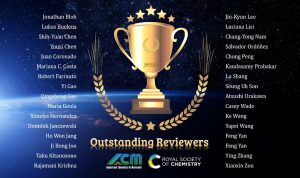
To celebrate the 2025 Outstanding Reviewers of Industrial Chemistry & Materials and gain deeper insights into the perspectives of our reviewers, we invited them to share their views on peer review, advice for authors, and their experiences with ICM.
This time, we are pleased to highlight Prof. Mariana Conceicao da Costa, Prof. Ying Zhang and Prof. Xiaoxin Zou. We sincerely thank them for their generous contributions and continued support of the journal. We hope their insights will provide valuable guidance and inspiration for both reviewers and authors.
![]() |
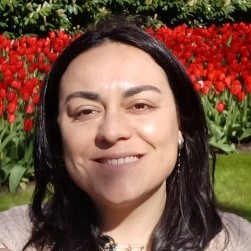
Mariana Conceicao da Costa is an assistant professor at Universidade Estadual de Campinas. She received her PhD from the School of Engineering of Lorena, University of São Paulo, in 2008. Her research is focused on thermodynamics, particularly on the study of phase equilibria, including solid–liquid equilibrium (SLE), liquid–liquid equilibrium (LLE), and vapor–liquid equilibrium (VLE). |
![]() |
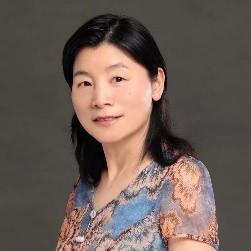
Ying Zhang is an Associate Professor at University of Science and Technology of China. She received her PhD from the University of Connecticut in 2006. Her research focuses on the green catalytic conversion of biomass-derived organic molecules and multisource waste gases. Her main research interests include: (1) the design and application of efficient multifunctional catalysts; (2) the catalytic conversion and high-value utilization of biomass and organic solid wastes; and (3) catalytic purification technologies for multisource waste gases. |
![]() |
Xiaoxin Zou is a Professor at Jilin University. He received his PhD from Jilin University and has long been engaged in research on energy conversion and catalytic materials, with a particular focus on the intersection of structural chemistry, synthetic chemistry, and catalytic chemistry of inorganic solid materials. |
What motivated you to review for ICM, and what keeps you engaged with the journal?
Mariana Conceicao da Costa: My motivation was based on the journal’s commitment, seriousness, and the excellence of the work it publishes. In addition, the topics covered are closely aligned with my research interests.
Ying Zhang: I was motivated to review for ICM because it occupies a very meaningful position in the field: it bridges the gap between fundamental research and industrial requirements. This focus is especially valuable in industrial chemistry and materials science, where the real impact of research depends not only on scientific novelty, but also on practicality, scalability, and relevance to application. I also appreciate that ICM is a high-ranking professional journal with a clear vision for publishing work that is both academically rigorous and industrially meaningful.
What keeps me engaged is the consistently professional editorial process. The editors demonstrate strong scientific judgment, efficient communication, and respect for reviewers’ time and expertise. I also find the manuscripts submitted to ICM to be highly relevant to current challenges in catalysis, materials design, process development, and sustainable chemistry. Reviewing for the journal gives me the opportunity to contribute to maintaining high standards in a field that is increasingly shaped by the integration of fundamental understanding with real-world industrial needs.
From a reviewer’s perspective, what makes a manuscript truly stand out during peer review?
Xiaoxin Zou: A manuscript stands out when it clearly articulates a novel and significant advance in the field, supported by robust and well-designed experiments or methodologies. Beyond the scientific content, clarity in presentation is key. A well-structured manuscript with logical flow, concise language, and compelling figures not only makes the reviewer’s task more efficient but also demonstrates the authors’ respect for the readers’ time and understanding. It reflects a thoughtful effort to communicate complex ideas effectively.
Ying Zhang: A manuscript truly stands out when it combines clear originality with solid scientific execution and practical significance. Novelty alone is not enough; the work should also be logically designed, supported by convincing evidence, and presented in a way that allows readers to understand why the findings matter.
For a journal like ICM, particularly strong manuscripts usually do three things well: first, they identify an important scientific or technological problem; second, they provide a rigorous and well-supported solution; and third, they explain the broader relevance of the work, especially in relation to industrial applicability, process feasibility, or materials performance. I am always impressed by papers in which the authors not only report strong results, but also demonstrate deep mechanistic understanding, careful control experiments, and honest discussion of limitations. Clarity of writing also makes a major difference, because it reflects the authors’ command of their own work.
What advice would you give to early-career researchers or first-time authors to improve their chances of a successful peer review?
Ying Zhang: My first advice is to focus on the scientific question before focusing on the manuscript itself. A well-written paper cannot compensate for an unclear research objective or insufficient evidence. Authors should ask themselves: What is the key advance? Why is it important? And have I provided enough data to support each major claim?
Second, authors should pay close attention to structure and logic. Reviewers respond positively to manuscripts that are easy to follow, where the motivation, experimental design, results, and conclusions are all well connected. It is also important to avoid overstating significance. A balanced and evidence-based presentation is always more persuasive than exaggerated claims.
I would also emphasize an important point: if authors already know at the time of submission that their work has fundamental weaknesses, it is almost impossible to rely on “luck” to pass peer review. Reviewers are invited precisely because they are experts in the field, and they are usually able to identify critical flaws in experimental design, interpretation, or evidence very quickly. Peer review is a process for evaluating and improving solid research, not for rescuing work with known major defects.
Finally, I would encourage first-time authors to think from the reviewer’s perspective. Anticipate likely questions, include appropriate controls, explain methodology clearly, and make sure figures are informative and consistent. A manuscript that is careful, transparent, and intellectually honest already has a much stronger foundation for successful peer review.
What is the most valuable insight or lesson you have gained through reviewing manuscripts?
Mariana Conceicao da Costa: The review process demands many hours of work, but it provides an opportunity to closely engage with the work of colleagues worldwide, as reviewing a manuscript requires carefully examining it to understand the methodology and the results presented, as I do with my own work.
Ying Zhang: One of the most valuable lessons I have gained is that strong science is not defined only by positive results or complex techniques, but by the quality of the reasoning behind the work. Reviewing has reinforced for me how important it is to build a coherent scientific story in which every major conclusion is supported by appropriate evidence.
It has also taught me the importance of fairness and balance in evaluation. Even manuscripts with weaknesses often contain useful ideas, and the role of peer review is not only to judge, but also to help improve the quality and clarity of the work. In that sense, reviewing is a process of scientific dialogue. It has made me more thoughtful both as a reviewer and as an author.
Has your experience reviewing for ICM influenced your interest in submitting your own work to the journal?
Ying Zhang: Yes, definitely. My experience reviewing for ICM has strengthened my interest in submitting my own work to the journal. Through the review process, I have seen that ICM is committed to publishing research that is scientifically rigorous, relevant to industrial chemistry and materials science, and meaningful beyond purely academic curiosity.
This impression is also supported by my own publishing experience with the journal. My main research area is biomass catalysis, and a review article I published in Industrial Chemistry & Materials in May 2023 has already been cited more than 140 times by peers. I have also seen our work and figures cited in publicly available conference presentations. More recently, I co-published a study with industrial collaborators in the area of low-temperature SCR, which has led to multiple invitations to academic conferences as well as invitations related to standards development. These experiences suggest to me that ICM reaches a broad readership across both academia and industry.
I also value the professionalism of the editorial team and the journal’s clear positioning in the community. For researchers working at the interface of fundamental understanding and practical application, ICM provides an attractive platform. Based on both my reviewing and publishing experience, I would strongly encourage researchers to consider submitting their high-quality work to ICM.

Contact us: icm@rsc.org
Visit our website: rsc.li/icm
Find all the latest developments, research and news from across our portfolio on X, LinkedIn, and sign-up to our e-alerts.