Archive for the ‘News’ Category

The Future of MOFs?

Neil Champness

We all know that MOFs are everywhere now but where are they going? Neil Champness provides us with his expert point of view on the future of metal-organic frameworks  in his recently published Dalton Transactions Frontier article. Find out where the challenges currently lie and the opportunities on the horizon for these hot hot compounds.

You can even download and read Neil’s exciting Frontier for free until the 4th October! Just click on the article title below:
The future of metal–organic frameworks
Neil R. Champness  
Dalton Trans., 2011, DOI: 10.1039/C1DT11184A

Digg This
Reddit This
Stumble Now!
Share on Facebook
Bookmark this on Delicious
Share on LinkedIn
Bookmark this on Technorati
Post on Twitter
Google Buzz (aka. Google Reader)

Call for papers: Themed issue – Coordination Chemistry in the Solid State

We are pleased to announce an upcoming themed issue on the topic of Coordination Chemistry in the Solid State, guest edited by Dalton Transactions Associate Editor Russell Morris. It is our pleasure to invite you to contribute to this themed issue.

Over the last decade or so there has a tremendous explosion of coordination chemistry in the solid state, with a particular focus on coordination polymers and metal-organic frameworks. Such materials offer great promise for many applications – from gas storage, separation and catalysis to biomedicine.  In this themed issue we aim to highlight the importance of coordination chemistry in the solid state to all aspects of this field, with contributions from experts in the field involved in either the fundamental synthesis of new solids or in the multidisciplinary application of these fascinating materials, and any coordination polymer chemistry anywhere in between.

How do I submit?

All types of manuscript, Communications, Full Papers and Perspectives, will be considered for publication. We aim to publish this themed issue in early 2012 and therefore would like to receive manuscripts by 20th October 2011. The manuscript should be prepared according to the format for regular articles and should be submitted via our online system. All invited manuscripts will be subjected to the normal refereeing procedure.

Deadline for Submission: 20th October 2011

Please indicate on submission that your manuscript is intended for this themed issue and direct any questions to the Dalton Transactions Editorial Office

We invite you to also check out previous themed issues featuring in Dalton Transactions. Read them here now.

Digg This
Reddit This
Stumble Now!
Share on Facebook
Bookmark this on Delicious
Share on LinkedIn
Bookmark this on Technorati
Post on Twitter
Google Buzz (aka. Google Reader)

Dalton Transactions in Chemistry World

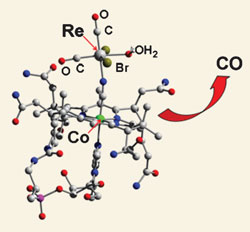
A Dalton Transactions article on carbon monoxide releasing molecules based on rhenium has been highlighted by Chemistry World:

Vitamin scaffold turns silent killer into a healing hero

A way to deliver carbon monoxide into the body safely for therapeutic use has been devised by scientists from Switzerland.

Fabio Zobi and colleagues from the University of Zurich attached a vitamin B12 scaffold to carbon monoxide-releasing rhenium complexes to increase their biocompatibility. Read the rest of the news story on the Chemistry World website…

Read the full Dalton Transactions article for free…

17 e− rhenium dicarbonyl CO-releasing molecules on a cobalamin scaffold for biological application
Fabio Zobi, Olivier Blacque, Robert A. Jacobs, Marcus C. Schaub and Anna Yu. Bogdanova
Dalton Trans., 2011, DOI: 10.1039/C1DT10649J

Digg This
Reddit This
Stumble Now!
Share on Facebook
Bookmark this on Delicious
Share on LinkedIn
Bookmark this on Technorati
Post on Twitter
Google Buzz (aka. Google Reader)

Jonathan Nitschke announced as the 2011 Dalton Transactions European/African Lecturer

We are very pleased to announce that the 2011 Dalton Transactions European/African Lectureship has been awarded to Professor Jonathan Nitschke, based in the Chemistry Department at the University of Cambridge, UK.

Dr Jonathan Nitschke

Jonathan’s research output in terms of quality and quantity is extraordinary. In his first four years as an independent researcher, he published 16 papers on Cu(I) mediated assembly processes in high impact journals, a significant achievement when starting up an independent lab.  During his time at Cambridge University, he has focussed his research on how to manipulate complex mixtures of interchanging compounds, and the useful functions exhibited by these new systems. Read more about Jonathan’s research here.

Jonathan will be giving his Dalton Transactions Lecture at a number of conferences during the next 12 months.

Congratulations Jonathan!


Digg This
Reddit This
Stumble Now!
Share on Facebook
Bookmark this on Delicious
Share on LinkedIn
Bookmark this on Technorati
Post on Twitter
Google Buzz (aka. Google Reader)

Highest ever Immediacy Index for Dalton Transactions

The 2010 Journal Citation Reports have recently been published by Thomson ISI, and the immediacy index for Dalton Transactions was announced to be a record high value for the journal, leading the field with a value of 0.81!  Published alongside the more well known impact factors, the immediacy index is considered to be a measure of how topical and urgent the work in a journal is.

Dalton Transactions’ latest impact factor was also published, as 3.65, representing a more than 20% growth in impact factor over the last 5 years!

The Impact Factor for 2010 is calculated from the total number of citations given in 2010 to articles published in 2008 and 2009, divided by the number of articles published in 2008 and 2009.

The Immediacy Index for 2010 is calculated from the total number of citations given in 2010 to articles published in 2010, divided by the number of articles published in 2010.

We thank all our authors and referees who continue to supported the journal. Please visit our website to learn more about Dalton Transactions, or submit an article today.

Information about the latest impact factors for other RSC journals is available here.

Digg This
Reddit This
Stumble Now!
Share on Facebook
Bookmark this on Delicious
Share on LinkedIn
Bookmark this on Technorati
Post on Twitter
Google Buzz (aka. Google Reader)

Dalton Division Awards – Winners announced

The winners of this year’s Dalton Division Awards have now been announced in this month’s RSC News (please see Page 10 in July 01, 2011 issue of RSCNews)

Congratulations to Professor James Cowan (Bioinorganic Chemistry Award), Dr Elizabeth New (Dalton Young Researchers Award), Professor David Parker (Ludwig Mond Award), Dr Stephen Liddle (Sir Edward Frankland Fellowship), Professor Jonathan Williams (Homogeneous Catalysis Award) and Dr Lawrence Que (Inorganic Mechanisms Award).

More about Dalton Division can be found at their website, or on their MyRSC group.

Digg This
Reddit This
Stumble Now!
Share on Facebook
Bookmark this on Delicious
Share on LinkedIn
Bookmark this on Technorati
Post on Twitter
Google Buzz (aka. Google Reader)

Dalton Transactions Younger Researchers Symposium: Abstract Deadline Approaching!


A chance to meet fellow postgraduates and postdocs from the wider UK inorganic community this year at the Dalton Transactions Younger Researchers Symposium. The meeting, organised in associated with Johnson Matthey, is taking place in University of Warwick on 20-21 September 2011. Register and submit your abstract now for a chance to

Remember registration for the symposium is free of charge!  More information available at the event webpage.
 
Register now! Abstract Deadline 22 July 2011

Digg This
Reddit This
Stumble Now!
Share on Facebook
Bookmark this on Delicious
Share on LinkedIn
Bookmark this on Technorati
Post on Twitter
Google Buzz (aka. Google Reader)

Daniel Mindiola organometallic research featured in Chemistry World

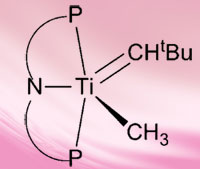
Dalton Transactions new Associate Editor Dan Mindiola, from Indiana University in the USA, has had his recent research highlighted in Chemistry World. His paper, published in Chemical Science, uses a metal-carbon multiple bond complex to activate methane.

Read the article in Chemistry World to find out more…

Read Jamie’s earlier blog post about Professor Mindiola’s recent appointment as an Associate Editor…

Digg This
Reddit This
Stumble Now!
Share on Facebook
Bookmark this on Delicious
Share on LinkedIn
Bookmark this on Technorati
Post on Twitter
Google Buzz (aka. Google Reader)

Radiopharmaceuticals Themed Issue Now Online!

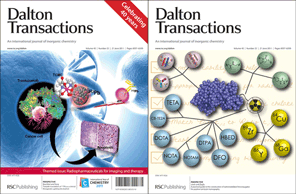
The Dalton Transactions theme issue on radiopharmaceuticals is now online. Read the editorial, by the guest editors Stephen Faulkner (University of Oxford) and Nicholas J. Long (Imperial College London), or check out the extensive collection of perspective review articles, or a variety of original research papers in the issue.

Articles in the issue include:

PERSPECTIVES:

Multimodal radio- (PET/SPECT) and fluorescence imaging agents based on metallo-radioisotopes: current applications and prospects for development of new agents
Flora L. Thorp-Greenwood and Michael P. Coogan

Radiometallated peptides for molecular imaging and targeted therapy
João D. G. Correia, António Paulo, Paula D. Raposinho and Isabel Santos

Towards translation of 212Pb as a clinical therapeutic; getting the lead in!
Kwon Yong and Martin W. Brechbiel

ARTICLES:

First dinuclear Re/Tc complex as a potential bimodal Optical/SPECT molecular imaging agent
Alexandre Boulay, Marine Artigau, Yvon Coulais, Claude Picard, Béatrice Mestre-Voegtlé and Eric Benoist

Synthesis, cytotoxicity and cellular uptake studies of N3 functionalized Re(CO)3 thymidine complexes
Mark D. Bartholomä, Anthony R. Vortherms, Shawn Hillier, John Joyal, John Babich, Robert P. Doyle and Jon Zubieta

Digg This
Reddit This
Stumble Now!
Share on Facebook
Bookmark this on Delicious
Share on LinkedIn
Bookmark this on Technorati
Post on Twitter
Google Buzz (aka. Google Reader)

Top 5 Highly Cited Bioinorganic Articles in Dalton Transactions

Bioinspired catalysis

Dalton Transactions is very proud of the bioinorganic chemistry we publish in our journal, and to celebrate this we are highlighting the top five highly cited bioinorganic papers we’ve ever published!

Congratulations to our authors, and here are the articles:

1.   Biological inorganic and bioinorganic chemistry of neurodegeneration based on prion and Alzheimer diseases
David R. Brown and Henryk Kozlowski
Dalton Trans., 2004, 1907-1917 DOI: 10.1039/B401985G

Metal anti-cancer compounds

2.     Bioinorganic chemistry of copper and zinc ions coordinated to amyloid-β peptide
Peter Faller and Christelle Hureau
Dalton Trans., 2009, 1080-1094, DOI: 10.1039/B813398K

3.    The bioinorganic and medicinal chemistry of carboranes: from new drug discovery to molecular imaging and therapy
Andrea F. Armstrong and John F. Valliant, Dalton Trans., 2007, 4240-4251, DOI: 10.1039/B709843J

Bioorganometallic chemistry

4.     Metal sensor proteins: nature’s metalloregulated allosteric switches
David P. Giedroc and Alphonse I. Arunkumar
Dalton Trans., 2007, 3107-3120, DOI: 10.1039/B706769K

5.     Molecular and supramolecular features of oxo-peroxovanadium complexes containing O3N, O2N2 and ON3 donor sets
Marian Časný and Dieter Rehder
Dalton Trans., 2004, 839-846, DOI: 10.1039/B315291J

Want to read more bioinorganic chemistry? Click on the covers of our bio-themed issues…

Digg This
Reddit This
Stumble Now!
Share on Facebook
Bookmark this on Delicious
Share on LinkedIn
Bookmark this on Technorati
Post on Twitter
Google Buzz (aka. Google Reader)