Author Archive

Read our new “Quantum computing” themed collection

We’re pleased to share a new themed collection from Digital Discovery on Quantum Computing for Chemistry, Material Science and Biotechnology

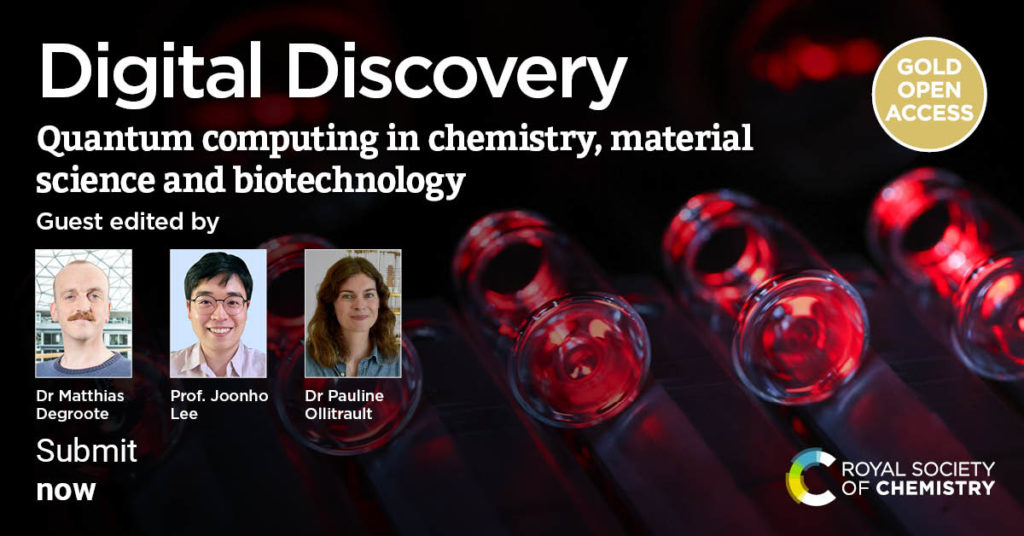
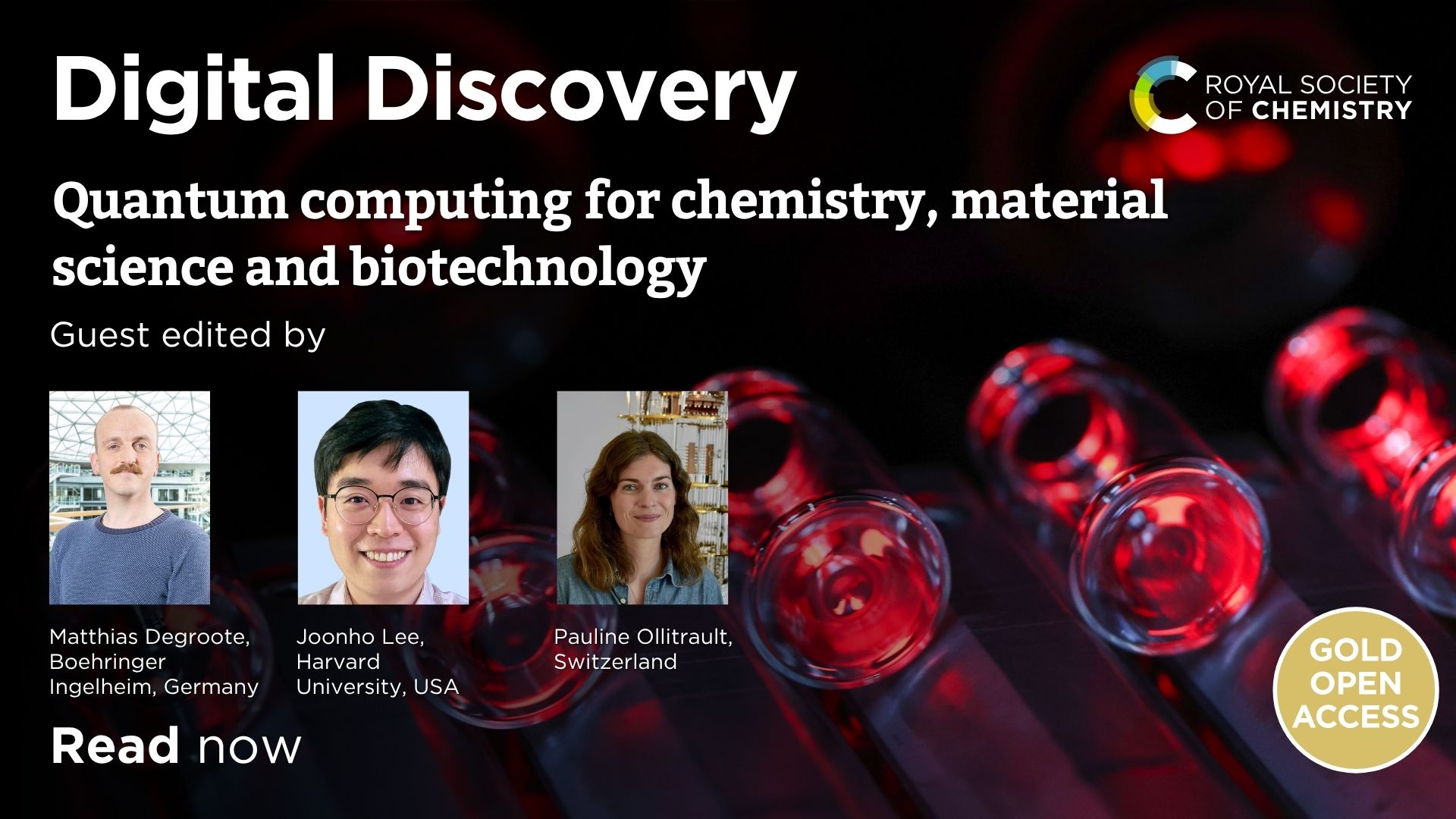
A banner with the collection details

Led by Associate Editor Dr Matthias Degroote (Boehringer Ingelheim Quantum Lab), and Guest Editors Prof. Joonho Lee (Harvard University) and Dr Pauline Ollitrault (QC Ware Corp.), the collection highlights work on both theory for and applications of quantum computers in chemistry, material science and biotechnology.

In particular, it aims to highlight work that expands the current area of applicability of quantum computers and introduces innovative ways to discover, characterize and produce new molecules. This includes near-term and fault-tolerant algorithms as well as improvements over current algorithms and entirely new workflows.

The full article line-up for this themed collection is available below. All articles in Digital Discovery are open access and free to read.

Editorial

Introduction to “Quantum Computing for Chemistry, Material Science and Biotechnology”
Matthias Degroote, Joonho Lee and Pauline Ollitrault
Digital Discovery, 2026, DOI: 10.1039/D6DD90023B

Perspectives

Extending quantum computing through subspace, embedding and classical molecular dynamics techniques
Thomas M. Bickley, Angus Mingare, Tim Weaving, Michael Williams de la Bastida, Shunzhou Wan, Martina Nibbi, Philipp Seitz, Alexis Ralli, Peter J. Love, Minh Chung, Mario Hernández Vera, Laura Schulz and Peter V. Coveney
Digital Discovery, 2025, 4, 3427–3444, DOI: 10.1039/D5DD00225G

The PPP model – a minimum viable parametrisation of conjugated chemistry for modern computing applications
Marcel D. Fabian, Nina Glaser and Gemma C. Solomon
Digital Discovery, 2026, 5, 482–496, DOI: 10.1039/D5DD00445D

Papers and Communications

Efficient strategies for reducing sampling error in quantum Krylov subspace diagonalization
Gwonhak Lee, Seonghoon Choi, Joonsuk Huh and Artur F. Izmaylov
Digital Discovery, 2025, 4, 954–969, DOI: 10.1039/D4DD00321G

Quantum machine learning of molecular energies with hybrid quantum-neural wavefunction
Weitang Li, Shi-Xin Zhang, Zirui Sheng, Cunxi Gong, Jianpeng Chen and Zhigang Shuai
Digital Discovery, 2025, 4, 2697–2710, DOI: 10.1039/D5DD00222B

Multireference error mitigation for quantum computation of chemistry
Hang Zou, Erika Magnusson, Hampus Brunander, Werner Dobrautz and Martin Rahm
Digital Discovery, 2025, 4, 2521–2533, DOI:10.1039/D5DD00202H

Estimating Trotter approximation errors to optimize Hamiltonian partitioning for lower eigenvalue errors
Shashank G. Mehendale, Luis A. Martínez-Martínez, Prathami Divakar Kamath and Artur F. Izmaylov
Digital Discovery, 2025, 4, 3540–3551, DOI:10.1039/D5DD00185D

Quantum state preparation of multiconfigurational states for quantum chemistry
Gabriel Greene-Diniz, Georgia Prokopiou, David Zsolt Manrique and David Muñoz Ramo
Digital Discovery, 2026, 5, 134–152, DOI: 10.1039/D5DD00350D

Chemically motivated simulation problems are efficiently solvable on a quantum computer
Philipp Schleich, Lasse Bjørn Kristensen, Jorge A. Campos-Gonzalez-Angulo, Abdulrahman Aldossary, Davide Avagliano, Mohsen Bagherimehrab, Christoph Gorgulla, Joe Fitzsimons and Alán Aspuru-Guzik
Digital Discovery, 2026, 5, 64–87, DOI: 10.1039/D5DD00377F

Efficient quantum simulation of non-adiabatic molecular dynamics with precise electronic structure
Tianyi Li, Yumeng Zeng, Qiming Ding, Zixuan Huo, Xiaosi Xu, Jiajun Ren, Diandong Tang, Xiaoxia Cai and Xiao Yuan
Digital Discovery, 2026, 5, 548–570, DOI: 10.1039/D5DD00433K

Towards utility-scale electronic structure with sample-based quantum bootstrap embedding
Joel Bierman and Yuan Liu
Digital Discovery, 2026, 5, 945–956, DOI: 10.1039/D5DD00416K

Mapping Bloch-Redfield dynamics into a unitary gate-based quantum algorithm
Koray Aydoğan, Maryam Abbasi, Whitney J. Short, Mikayla Z. Fahrenbruch, Timothy J. Krogmeier, Anthony W. Schlimgen and Kade Head-Marsden
Digital Discovery, 2026, 5, 1228–1236, DOI: 10.1039/D5DD00405E

A physics-informed measurement protocol for expectation values of fermionic observables
Davide Bincoletto and Jakob S. Kottmann
Digital Discovery, 2026, 5, 1257–1268, DOI: 10.1039/D5DD00251F

Quantum simulation of carbon capture in periodic metal–organic frameworks
Dario Rocca, Jérôme F. Gonthier, Joshua Levin, Tobias Schäfer, Andreas Grüneis, Hong Woo Lee and Byeol Kang
Digital Discovery, 2026, 5, 1388–1400, DOI: 10.1039/D6DD00023A

Hybrid quantum algorithm for simulating real-time thermal correlation functions
Elliot C. Eklund and Nandini Ananth
Digital Discovery, 2026, 5, 2759–2769, DOI: 10.1039/D6DD00381D

We hope you enjoy this new themed collection from Digital Discovery.

Digital Discovery July 2026 Newsletter

Welcome to the latest Digital Discovery newsletter! We’re pleased to share a round-up of the latest journal news, as well as information on our themed collections and upcoming events.

Get future updates directly to your inbox with our email alerts. Sign up here.

Latest News

We are delighted to announce the recipients of the Outstanding Early Career Research Award 2025: a team comprising Martin Fitzner, Adrian Šošić, Alexander V. Hopp, Marcel Müller, Rim Rihana, Karin Hrovatin, Fabian Liebig, Mathias Winkel, Wolfgang Halter and led by Jan Gerit Brandenburg.

Their award-winning paper, BayBE: a Bayesian Back End for experimental planning in the low-to-no-data regime, describes an open-source software framework that empowers researchers to use Bayesian optimisation techniques. These seek optima, such as the best set of reaction conditions, through a minimum number of experiments. Find out more about the winners and their work at our blog post.

Our Editor-in-Chief Prof. Alán Aspuru-Guzik is the winner of the 2026 Chemical Science Lectureship! He will give his award lecture at the Chemical Science symposium 2026, which takes place 29-30 October 2026, in London, UK.
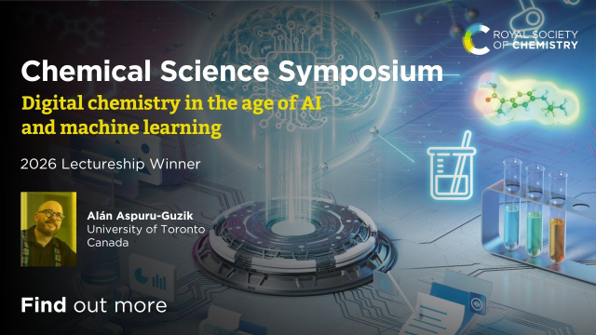
A banner with the chem sci symposium details

We’re pleased to announce that our 2025 Journal Impact Factor has increased to 7.1! Thank you to all of our authors for contributing their high-quality work, and to our editors and reviewers for their professional and prompt handling of these manuscripts. We’d particularly like to highlight our Outstanding Reviewers for 2025 who can be found in our recent Editorial.

Finally, we would like to welcome Prof. N. M. Anoop Krishnan to the Editorial Board of Digital Discovery as an Associate Editor. Prof. Krishnan is an Associate Professor in the Department of Civil and Environmental Engineering at IIT Delhi with a joint appointment in the Yardi School of Artificial Intelligence. He leads the Multiphysics & Multiscale Mechanics Research Group (M3RG), which focuses on AI-driven materials discovery, computational modeling of glasses, cementitious materials and disordered systems, and the development of foundation models for scientific applications.
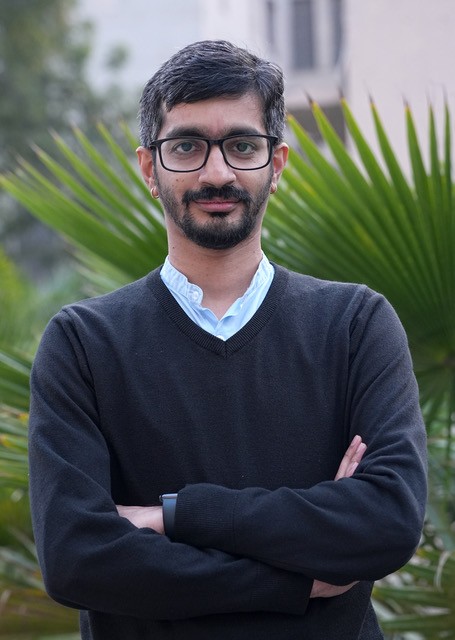
A portrait of Prof. N M Anoop Krishnan

Anoop received his B.Tech. in Civil Engineering from the National Institute of Technology Calicut in 2009, followed by a Ph.D. in Civil Engineering from the Indian Institute of Science Bangalore in 2015. He was a postdoctoral researcher at the University of California Los Angeles from 2015 to 2017 before joining IIT Delhi. He recently completed an Alexander von Humboldt Fellowship for Experienced Researchers at Friedrich Schiller University Jena (2023-2024), working on machine learning approaches for glass science.

Anoop conducts research at the intersection of materials science, computational mechanics, and artificial intelligence. His work has advanced the development of domain-specific language models for materials science, including MatSciBERT and LLaMat, and autonomous discovery frameworks such as the AILA. He is particularly passionate about developing rigorous benchmarking frameworks that enable researchers to understand the capabilities and limitations of AI models in scientific applications. His research spans atomistic and multiscale simulations, machine learning force fields, and AI-driven approaches to understanding structure-property relationships in complex materials, with applications ranging from construction materials to advanced ceramics and glasses.

Among his recognitions, he has received the W. H. Zachariasen Award from the Journal of Non-Crystalline Solids, Sir A. Pilkington Award from the Society of Glass Technology, UK (2024), the W. A. Weyl International Glass Science Award from International Commission on Glass (2022), the Google Research Scholar Award (2023), the Young Engineer Award by the Indian National Academy of Engineering (2020), and Young Scientist Award by the National Academy of Sciences India (2021).

Anoop adds: “Digital Discovery‘s focus on AI and automation to solve scientific problems with emphasis on reproducible, data-driven research resonates closely with my research vision and passion. I am excited to contribute to the journal’s mission of advancing the digital transformation of materials science and chemistry.”

Research Spotlight
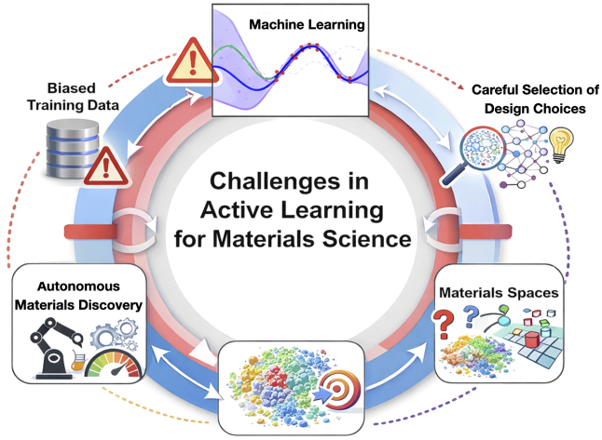
A graphical summary of the article

A critical examination of active learning workflows in materials science”, Nair and Foppa, Digital Discovery¸ 2026, 5, 2366–2382, DOI: 10.1039/d6dd00081a
A graphical summary of the article

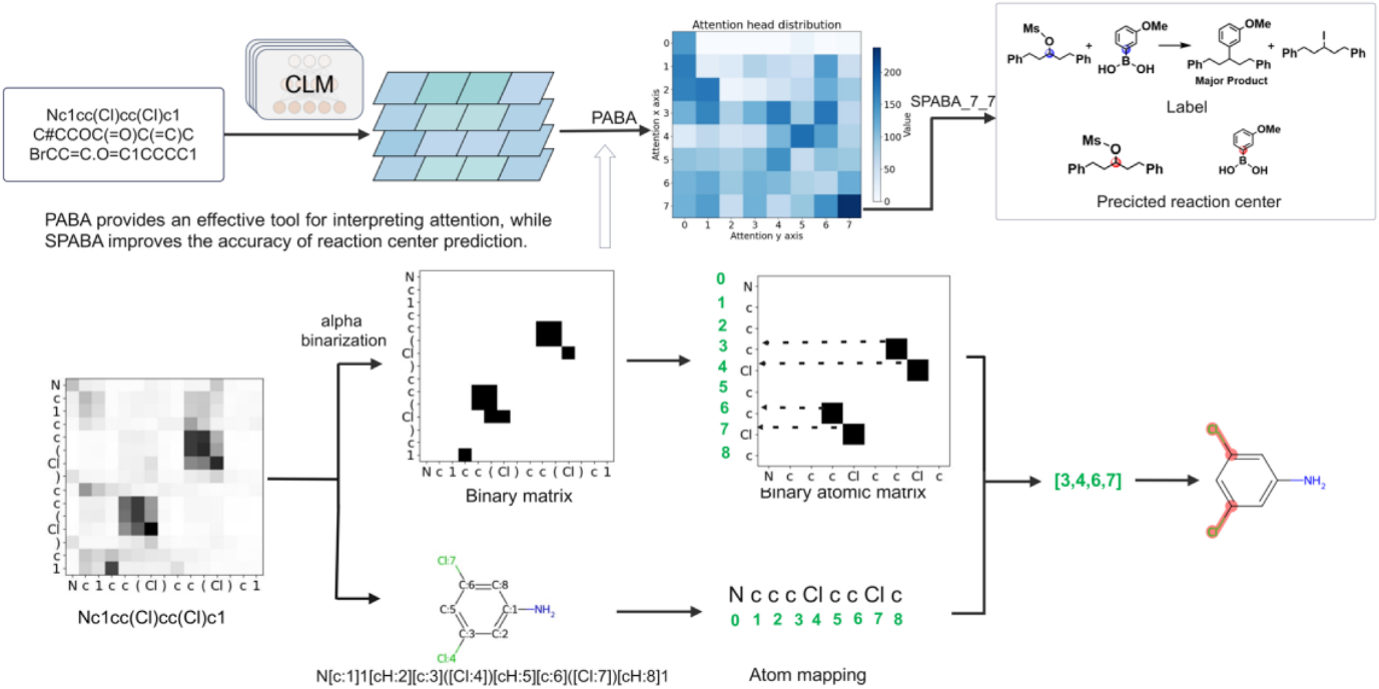
Reaction center prediction by analyzing attention of a chemical language model”, Tian et al., Digital Discovery, 2026, 5, 2458–2468, DOI: 10.1039/d6dd00055j
A graphical summary of the article

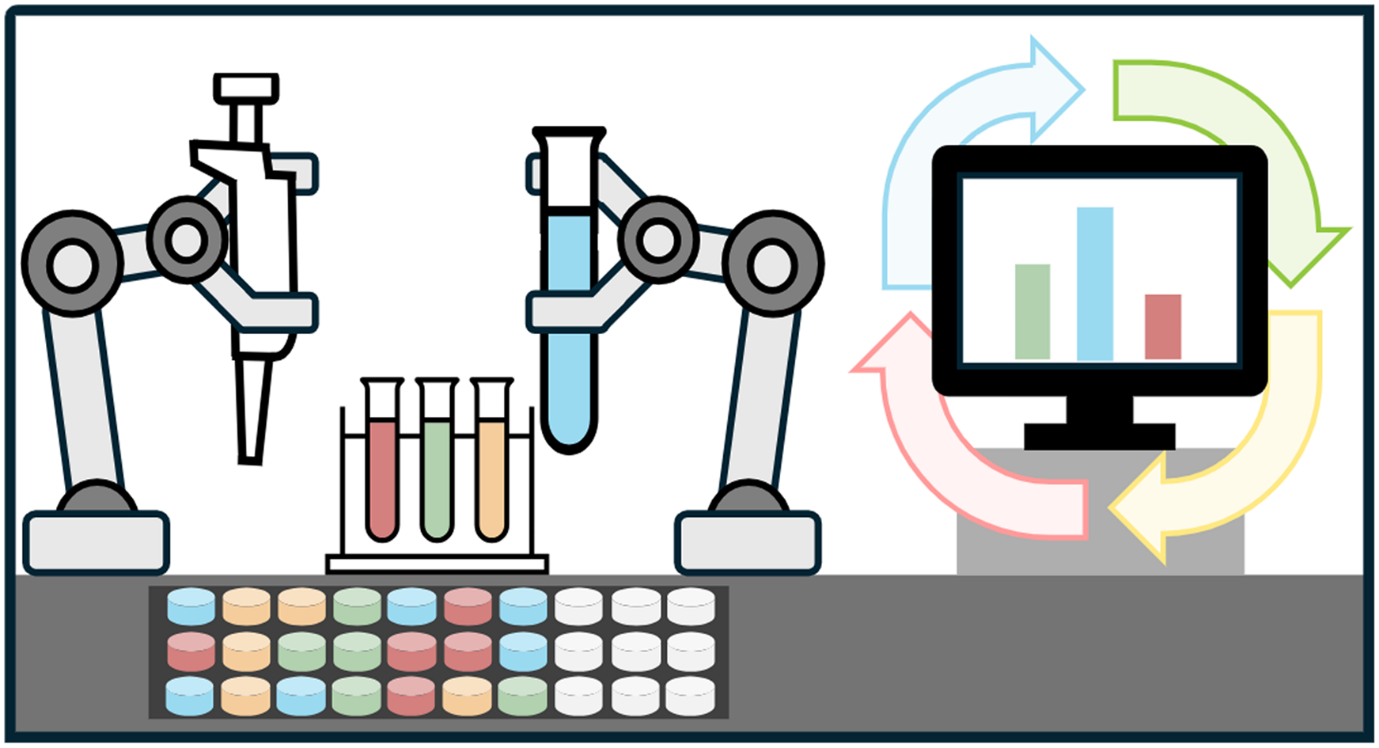
A user’s guide to your first self-driving liquid handling lab”, Webb, Gormley et al., Digital Discovery, 2026, 5, 2028–2041, DOI: 10.1039/d5dd00525f

Themed Collections

We are currently welcoming papers for our latest themed collection on General purpose models: Large language models and beyond, led by Dr N M Anoop Krishnan (IIT Delhi), Dr Francesca Grisoni (Eindhoven), and Dr Kevin Maik Jablonka (Friedrich Schiller Universität Jena and Helmholtz Center Berlin). The deadline for submissions is 31 August 2026; find out more and contribute your research here.
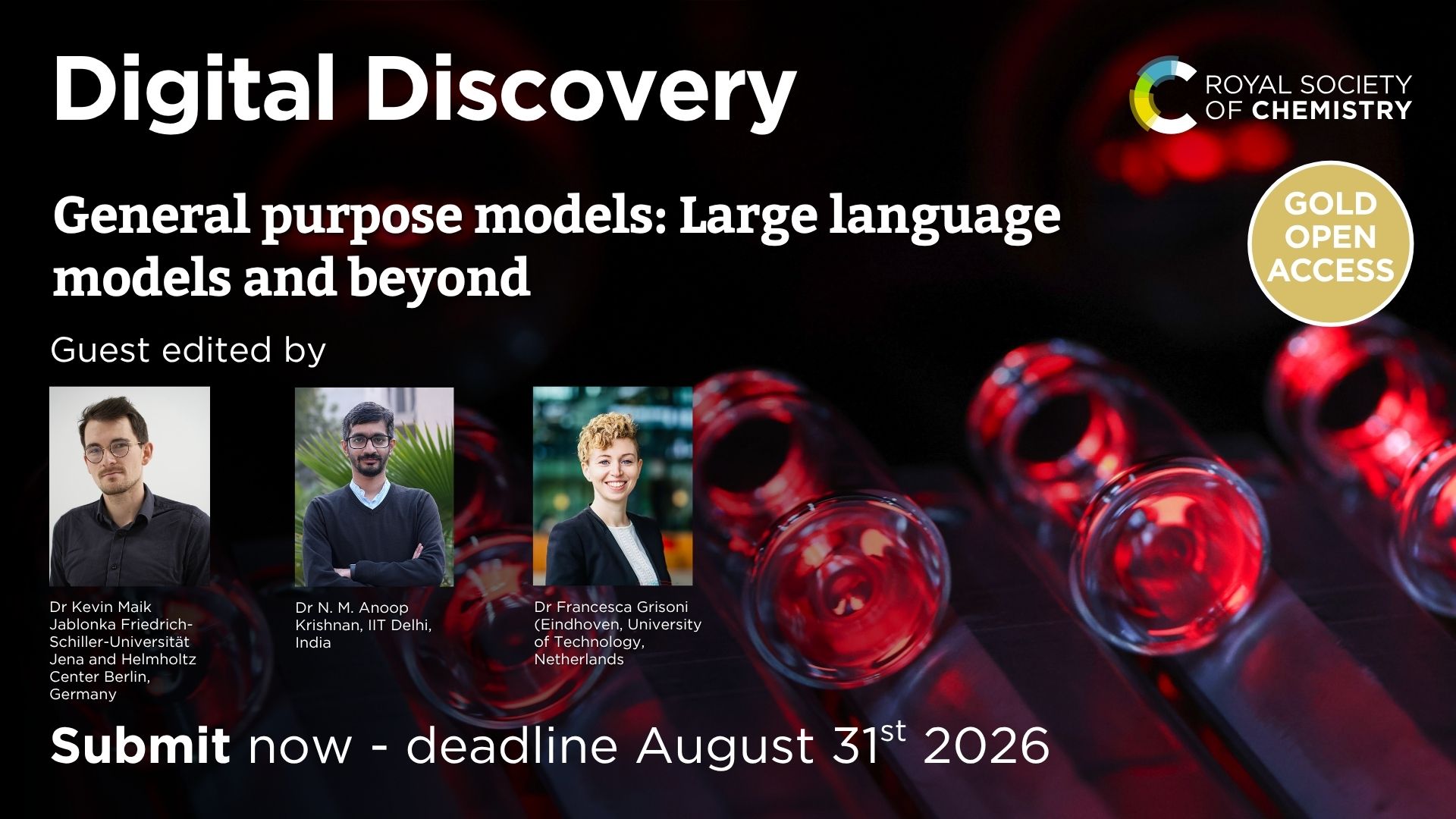
A banner with the collection's details.

Recent Events

Digital Discovery was pleased to sponsor a number of conferences and their awards this spring:

The ‘Breaking Silos — Open Community for AI x Science’ social event at the International Conference on Learning Representations (ICLR 2026) in Rio de Janero, Brazil was sponsored by Digital Discovery and organised by editorial board members Indra Priyadarshini S and N M Anoop Krishnan with Sayan Ranu from Indian Institute of Technology, Delhi. The session brought together researchers from across machine learning, physics, chemistry, biology, mathematics, and medicine to discuss how AI can accelerate scientific discovery when communities collaborate more openly. Thanks to the panellists Emilio Vital Brazil, Bianca Zadrozny, and Mehrad Ansari for their insights and engaging with the attendees.

We joined with Physical Chemistry Chemical Physics and Chemical Science to co-sponsor two awards at the 18th International Congress on Quantum Chemistry. Congratulations to the winners, Muhan Zhang of Emory University, for “Symmetry Dilemmas in Quantum Computing: A Comprehensive Analysis” and Tobias Kaczun of Heidelberg University for “Taking the Next Step with Machine Learning Orbital Free DFT”.

The 54th Annual Meeting of the Southeast Theoretical Chemistry Association (SETCA 2026) took place in Atlanta, USA at the end of May 2026. Digital Discovery and Physical Chemistry Chemical Physics sponsored awards for the best student poster presentations. Huge congratulations to Krishnendu Sinha of Georgia State University presenting “Opening Promoter DNA Without ATP: A Multistep Initiation Mechanism in RNA Polymerase I”.

Congratulations to Laura Marcon from the University of Oxford who won the Best Poster Award sponsored by Digital Discovery at CAMLC26, for her work “Assessing the transferability of Machine-Learned Interatomic Potentials in Diels-Alder reactions”. Look out for the next iteration of this annual workshop on Cheminformatics, Automation and Machine Learning in Chemistry held in Zaragoza, Spain!

We were pleased to join Physical Chemistry Chemical Physics in sponsoring best poster awards at this year’s ScotChem Computational Chemistry Symposium in Edinburgh, UK. The winner of the Digital Discovery award is Theo Hatcher of the University of St Andrews for “Modelling Small Molecules in SMOM Crystals”, and the PCCP award goes to Beth Raynor of the University of Edinburgh for “Switching off Electron Delocalisation in Chalcogen Bonding Balances”.

Our Assistant Editor, Elizabeth Bedwell, represented Digital Discovery at the AIchemy and Leverhulme Research Centre Conference 2026 in Liverpool, UK in June. Digital Discovery and Chemical Science sponsored the best poster awards: congratulations to Katie Zhou (University of Liverpool), Federico Ottomano (Imperial College London), and Louise Efford (University of Sheffield) for their excellent presentations.
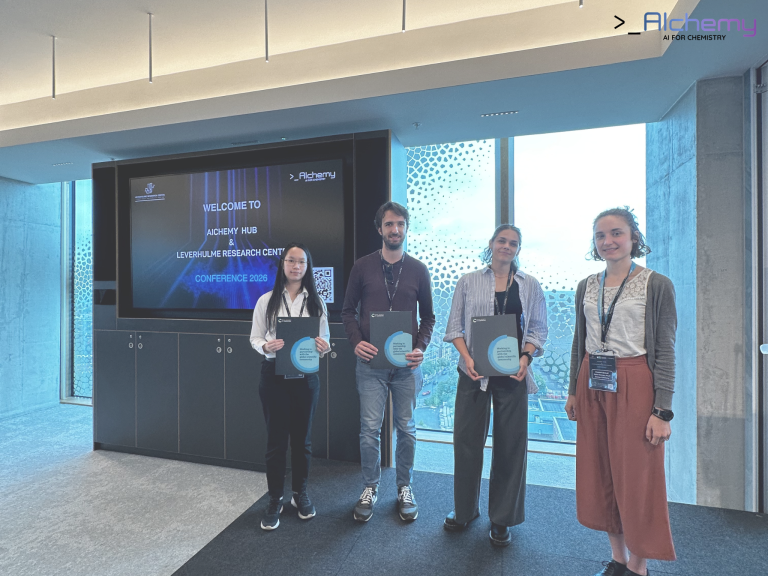
The prize winners and editor Dr Elizabeth Bedwell

Digital Discovery joined EES Catalysis and Catalysis Science & Technology in sponsoring prizes at the 20th International Conference on Theoretical Aspects of Catalysis in Delft, The Netherlands. Our congratulations to the winners! The Digital Discovery prize went to Alexandre Peuch of the University of Cambridge, UK for “Still Foundational or Already Universal? Assessing General-Purpose MLIPs for Heterogeneous Catalysis Using the HetCat26 Benchmark”. The award from Catal. Sci. Tech. went to Lisa Hetzel of the Technical University of Munich, Germany for “Grand-Canonical Embedding for Constant-Potential Electronic Structure Calculations”. Bibiana Türkcan, of Leiden University, The Netherlands, won the EES Catalysis award for “Modeling plasmonic nanoparticles with a jellium model: an overview”.
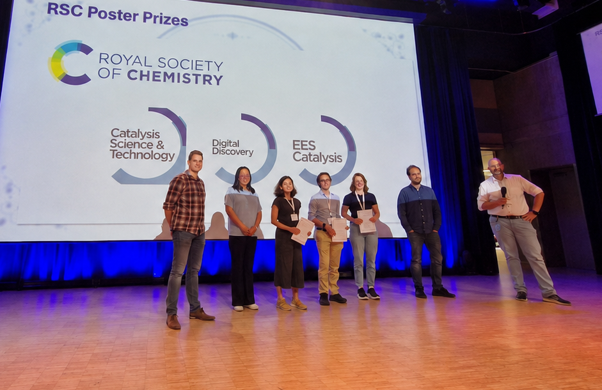
The ICTAC prize winners

Finally, we were pleased to sponsor poster prizes at the AI4X-Accelerate Conference 2026 in  Singapore, attended by our Executive Editor Dr Anna Rulka. Our congratulations to all of the winners, who you can find on the event web page, and in particular to the Best Poster Award winner Martin Hoffmann Petersen!
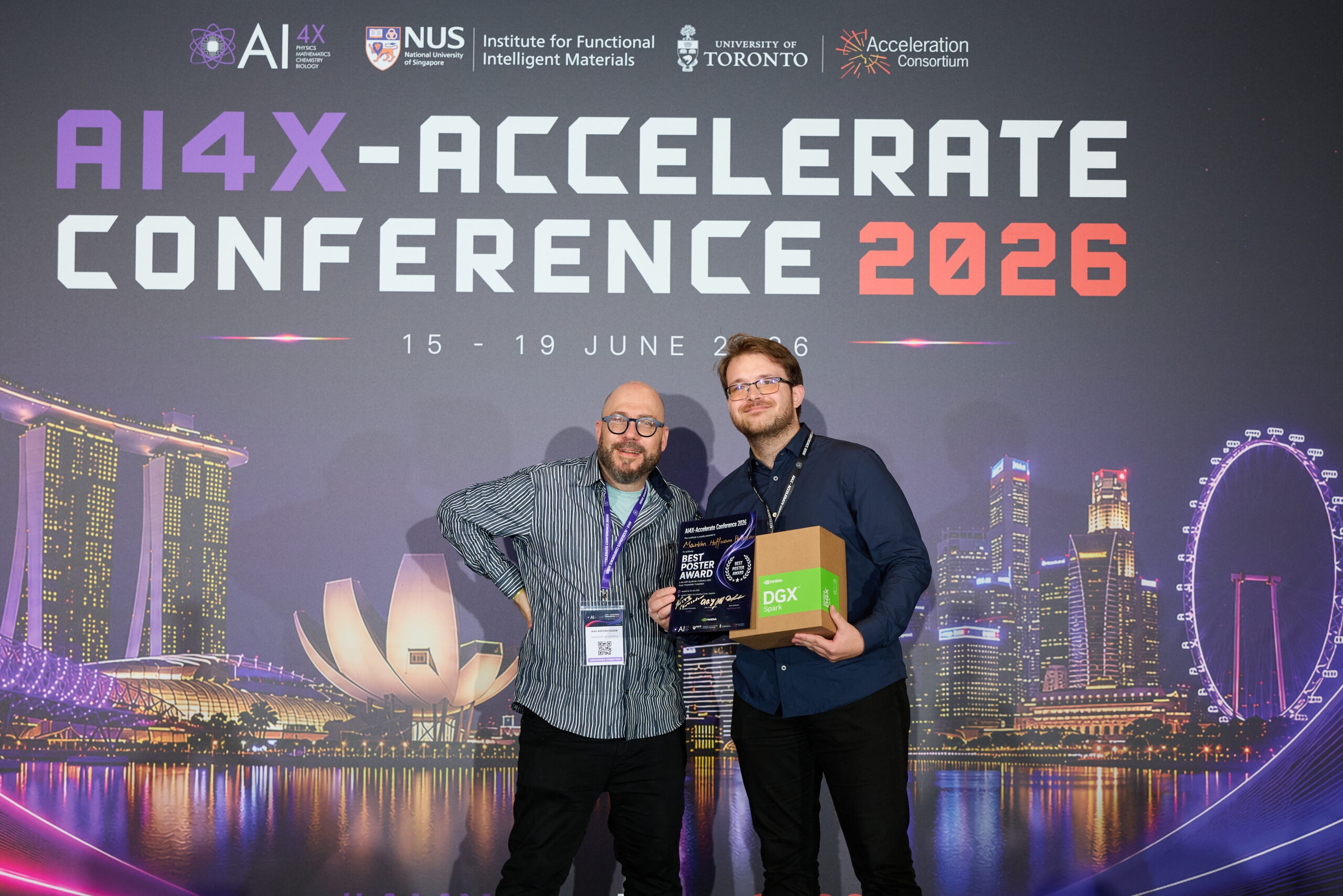
Martin Hoffman Petersen (right) and Editor-in-Chief Alan Aspuru-Guzik (left) at the awards ceremony.

Upcoming Meetings:

We’re pleased to support this year’s ACS Graduate Student Symposium at the ACS Fall meeting: ‘Advancing Chemistry with AI and Emerging Technologies’. Don’t miss this exciting and broad-scope track looking at innovation, entrepreneurship, and careers using these techniques. Advance registration for the ACS Fall meeting closes on July 23, ahead of the meeting from 23-27 August in Chicago, IL, USA.

Digital Discovery is also sponsoring a poster prize at the 9th Artificial Intelligence in Chemistry Symposium running 2-4 September 2026, in Cambridge, UK. Don’t miss this this exciting meeting organised by the RSC CICAG and RSC BMCS also incorporates an ‘Introduction to AI in Chemistry’ workshop on the first day.

Can’t make it to Cambridge? Register for the RSC BMCS Hot Topics meeting on AI in Drug Discovery, an online symposium running on 3 November.

RSC FIRST 2026: AI in Chemistry runs 19-21 November in Xiamen, China. This collaboration between the Royal Society of Chemistry and Xiamen University, will dive into Artificial Intelligence (AI) in Chemistry and convene global pioneers at the forefront of AI-driven research within the chemical sciences. Abstract submission for talks and posters closes 1 September 2026! Our Deputy Editor Alexander Whiteside looks forward to meeting the community in Xiamen this autumn.

Registration is now open for GLOW 2026, the Global Conference Empowering Women in Leadership & Materials Science which takes place at NTU Singapore from 29 September to 1 October 2026.

Follow our channels below to keep up to date on the events we’re supporting later in 2026.

Submit your work to Digital Discovery

Find out more about Digital Discovery on our webpage, where you can also find our author guidelines. Digital Discovery has received a 2025 Impact Factor of 7.1, and provides a first decision on articles sent to peer review in an average of 46 days.

Publishing open access with RSC journals unlocks the full potential of your research – bringing increased visibility, wider readership and higher citation potential to your work. As a not-for-profit organisation serving the chemical sciences community, we ensure that our article processing charge (APC) remains the most competitive of major publishers. More details can be found here and the APC for Digital Discovery is £2200. You can also use our journal finder tool to check if your institution currently has an agreement with the RSC that may entitle you to a discount of the APC.

Stay Connected:

Postdoc or early career researcher? Interested in building your peer review experience and helping improve open data at Digital Discovery? Consider becoming a data reviewer. Find out more on our blog post.

Follow us on LinkedIn and Bluesky for new articles and the latest news from Digital Discovery and related journals at the Royal Society of Chemistry.




Accelerating Discovery: Digital Discovery’s Outstanding Early Career Research Award 2025

We are delighted to announce the recipients of the Outstanding Early Career Research Award 2025 from Digital Discovery: a team comprising Martin Fitzner, Adrian Šošić, Alexander V. Hopp, Marcel Müller, Rim Rihana, Karin Hrovatin, Fabian Liebig, Mathias Winkel, Wolfgang Halter and Jan Gerit Brandenburg.

Their award-winning paper, “BayBE: a Bayesian Back End for experimental planning in the low-to-no-data regime, describes an open-source software framework that empowers researchers to use Bayesian optimisation techniques. These seek optima, such as the best set of reaction conditions, through a minimum number of experiments.

In their own words:

“The Bayesian Back End (BayBE) was born at Merck KGaA from the merger of two independent Bayesian optimization projects. Anticipating a rapid increase in use cases benefiting from this technology, we unified these efforts to build an easy-to-use toolkit and scalable foundation. In doing so, BayBE became a blueprint for professional code development, also proving the value of open-source software in a traditionally guarded industrial setting.

“Today, its footprint has expanded significantly, utilized by various companies across the chemical and pharmaceutical sectors, as well as by universities for research and teaching. Back at Merck KGaA, the internal BayBE ecosystem continues to rapidly evolve through comprehensive APIs, MCPs, and graphical user interfaces, alongside efforts to drive fully autonomous robotic lab equipment. To push these capabilities even further, our ongoing research focuses on enabling robust transfer learning, multi-fidelity optimization, hybrid search spaces, and adapting Bayesian optimization for sequence-based domains.”

Dr Fitzner shared these remarks on the award, on behalf of the team:

“As industrial scientists, open-sourcing code and publishing methods aren’t always the default, but with BayBE, we really wanted to prioritize open collaboration. We are so grateful to Digital Discovery for this award and for recognizing that effort. The research around Bayesian optimization and the BayBE ecosystem is ongoing, in particular around areas such as transfer learning, hybrid spaces and sequence-based domains. Whether you have feature requests or developed a new algorithm that you might want to bring to a wider audience by integrating it into our framework, we encourage BO enthusiasts around the globe to get in touch via GitHub issues / discussions / email.”

We are proud to celebrate this outstanding contribution to the field and look forward to what this team uncovers next!

Read the winners’ paper here.

About the team:

Martin Fitzner

Martin holds a PhD in Computational Physics from University College London (UCL). As Principal Data Scientist for Digital Chemistry he aims to unite the fields of cheminformatics, machine learning, computational chemistry, experimental planning and professional software development. Martin is one of the founders and main developers of BayBE and product owner for various related technologies at Merck KGaA.

Adrian Šošić

Adrian holds a PhD in Electrical Engineering from TU Darmstadt, with a research focus on probabilistic modeling, Bayesian methods, and machine learning. Driven by a deep passion for mathematics and software engineering, he channels these interests into his work as a creator and core developer of BayBE. As a Lead Data Scientist at Merck KGaA, his goal is to establish Bayesian optimization as an industry standard — bridging the gap between cutting-edge probabilistic methods and real-world experimental workflows.

Alexander Hopp

Alex joined Merck directly after earning a PhD in Mathematics in 2020. As a Senior AI Research Scientist, he works at the forefront of cutting-edge technologies and leverages them for Merck KGaA. He is one of the founders and members of the BayBE Core Team, and contributes as a leading developer, maintainer, and product owner of the full BayBE ecosystem. In addition to BayBE, he participates in other interdisciplinary projects and supports them with his programming expertise.

Marcel Müller

Marcel holds a PhD in Theoretical Chemistry from the University of Bonn, where he developed efficient quantum-mechanical methods for molecular screening. After working with Merck KGaA on digital chemistry and Bayesian optimization workflows based on BayBE, he joined Alán Aspuru-Guzik at the University of Toronto, where he develops agentic AI systems for chemistry, early-stage drug discovery, and autonomous optimization.

Rim Rihana

Rim holds a bachelor’s degree in Computer Science from Darmstadt University of Applied Sciences, earned through a dual-study program with Merck KGaA. She contributed to BayBE during a practical phase of her bachelor’s studies, where she helped develop an early-stopping criterion for BayBE based on model internal data and created a function to visualize PI iterations in a 3D plot. Rim is currently a Data Culture Manager responsible for community and enablement around myGPT Suite, Merck’s internal conversational AI, fostering user empowerment and responsible usage.

Karin Hrovatin

Karin is an applied machine learning researcher at Merck KGaA. She focuses on understanding how machine learning models interact with real-world data in order to advance commercially relevant use-cases. She worked in different biological domains, such as protein design and target identification with single-cell data, where she developed approaches for integration of different data sources and efficient protein candidate design with small training datasets. Besides, she is interested in entrepreneurial activities.

Fabian Liebig

Fabian holds a bachelor’s degree in computer science from Darmstadt University of Applied Sciences, earned through a dual-study program with Merck KGaA. He first became involved with BayBE during the practical phase of his bachelor’s studies, where he developed a benchmarking package for BayBE, integrated it into the cloud-based evaluation pipeline, and contributed to the underlying cloud infrastructure. Fabian is currently pursuing a dual master’s degree while continuing his work with Merck KGaA. His focus is on benchmarking, evaluation, and software implementation within the BayBE ecosystem.

Mathias Winkel

Being trained as a physicist, Mathias is inherently curious, which has driven him across numerous scientific fields—primarily in digital domains: large-scale numeric simulations of laser-plasma interactions, parallel-in-time methods, finite-element modeling of cardiac activity, commercial software development for particle simulations, brain-inspired AI research, modular automation for laboratories and production, and more. Today, Mathias leads the AI & Quantum Lab at Merck KGaA, Darmstadt, Germany. The team identifies and transfers disruptive technologies into the company to globally accelerate scientific discovery and production processes. One of these technologies is BayBE, in which Mathias serves as user voice and advisor.

Wolfgang Halter

Wolfgang earned his Dr.-Ing. in Control Theory and Synthetic Biology at the University of Stuttgart, studying how feedback loops govern biological systems. At Merck KGaA, he heads a global team of 40 in AI, Data Science & Bioinformatics, building AI solutions across the full Life Science business. He contributes to BayBE in an advisory and strategic capacity, helping steer the project where it matters most.

Jan Gerit Brandenburg

Gerit holds a PhD in Theoretical Chemistry from the University of Bonn and a master’s degree in Physics from Heidelberg University. He is Senior Director for AI & Automation in Drug Discovery at Merck KGaA, Darmstadt, Germany, where he builds AI-driven and automated discovery platforms connecting machine learning, computational chemistry, and lab automation. Previously, he led Digital Chemistry and helped scale computational and AI capabilities across the company. Gerit has authored more than 60 peer-reviewed publications and brings deep scientific expertise to the interface of computation, AI, and experimentation. He led the BayBE paper as a strong example of cutting-edge technology development with substantial relevance and traction in industry.

Follow us on LinkedIn and Bluesky for new articles and the latest news from Digital Discovery and related journals at the Royal Society of Chemistry.

Get future updates directly to your inbox with our newsletters and email alerts. Sign up here.

Digital Discovery April 2026 Newsletter

Welcome to the latest Digital Discovery newsletter! We’re pleased to share a round-up of the latest journal news, as well as information on our themed collections and upcoming events. Get future updates directly to your inbox with our email alerts. Sign up here.

Latest News

Our 2026 #RSCPoster conference took place on LinkedIn for 24 hours, from 3-4 March. We’re pleased to share the winner in the #RSCDigital category is Alister Goodfellow for the poster XYZ to Chemical Insight: TS analysis, Molecular Graphs and Visualisation!

This year’s runner-up is Stefania Monteleone, who presented MApyl: Evotec’s HPC workflow automation system.

Congratulations to the winners, and our thanks to all of the contributors for their excellent posters. Find out about the winners in other categories on our web page: 2026 #RSCPoster winners.

We were pleased to highlight the contributions of women in accelerated science, with a special article collection which you can read here: Celebrating International Women’s Day 2026: Women in Digital Discovery.

Themed Collections

Slide showing the profiles of new Digital Discovery themed collection and profiles of the guest editors

We’re pleased to announce that our themed collection of articles from the participants of the 2023 and 2024 Accelerate Conferences is now online! This collection is Guest Edited by Prof. Janine George (Federal Institute for Materials Research and Testing (BAM) and Friedrich Schiller University Jena, Germany), Prof. Claudiane Ouellet-Plamondon (École de Technologie Supérieure, Canada) and Prof. Kristofer Reyes (University at Buffalo, United States).

Produced in collaboration with the Acceleration Consortium, organisers of the Accelerate Conference, this collection features paper that span innovations in algorithms, decision-making, and integrated self-driving laboratories—from efficient experimental design and probabilistic programming to orchestration frameworks coordinating sensing, actuation, and learning. Collectively, they illustrate new principles for accelerating and scaling discovery. Read the collection for more. We look forward to featuring the contributors to the 2025 conference in a themed collection that is already under way, to be published in 2025-2026.

Events

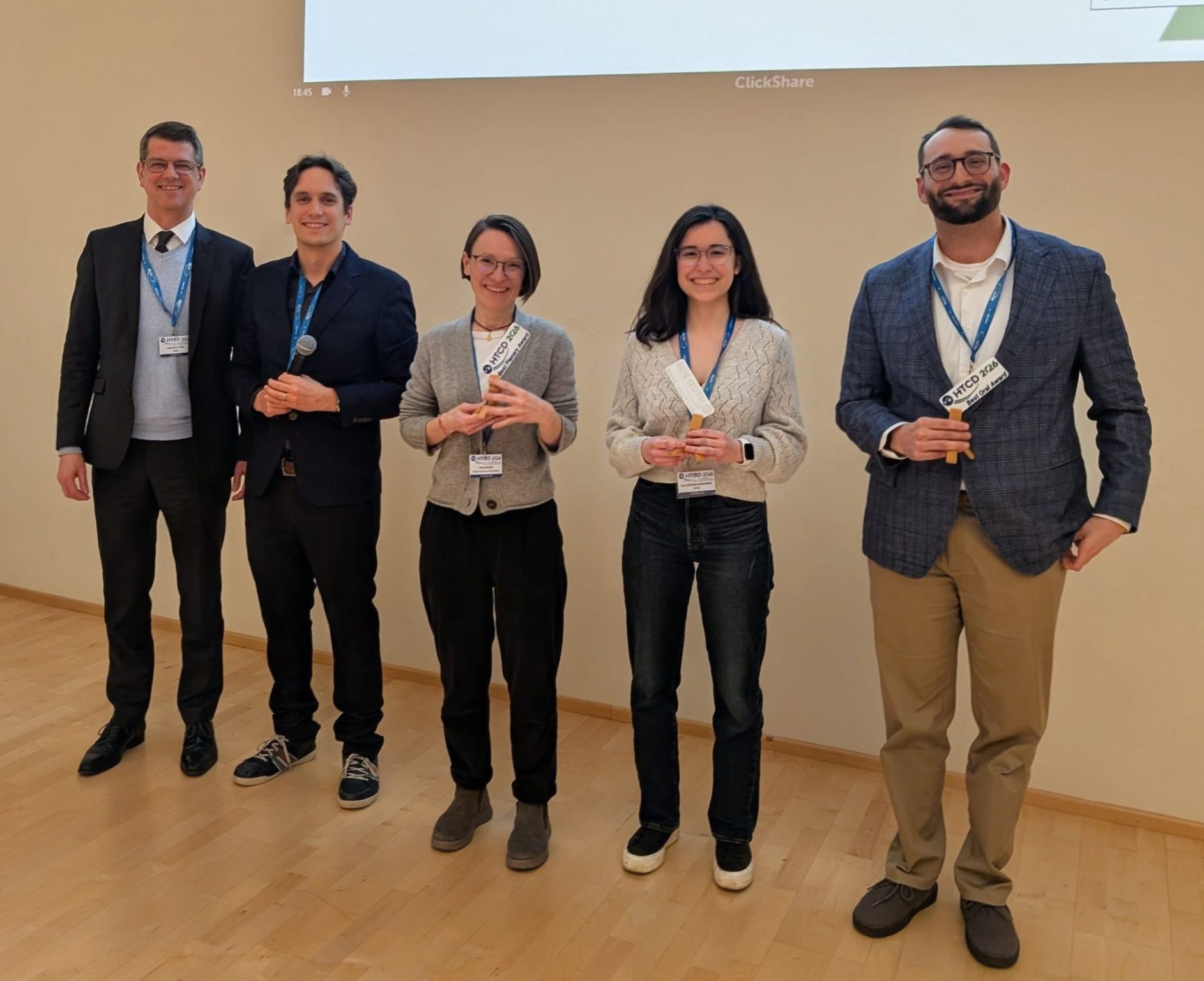
Our Executive Editor Anna Rulka (below, centre) Digital Discovery represented Digital Discovery at the Second international symposium on High-Throughput Catalysts Design (HTCD 2026) in Lille on 30-31 March. We joined Reaction Chemistry & Engineering and Catalysis Science & Technology in sponsoring awards at the meeting.

A photograph of 5 people

Our congratulations to Paco Laveille (ETH Zurich, not pictured) for the best plenary lecture award; Samuel Gleason (Entalpic, right) for the best oral presentation; and Sara Arteche Echeverría (Sanofi and UCCS, second from right) for the best poster!

The journals are also collaborating on a themed collection featuring work from the participants of the meeting. Find out more here, and look out for information on the collection when the articles are published this year.

We recently supported the RSC CICAG–RSC SERAC RSC Analyticode meeting at Burlington House, London, and are delighted to announce that Kefeng Huang from the University of York won the best poster prize for their work titled “TARMAC: A Taxonomy for Robot Manipulation in Chemistry”. Our congratulations to Kefeng!

Digital Discovery and Reaction Chemistry & Engineering are pleased to support prizes for best talk and best poster at this year’s 9th Machine Learning and AI in (Bio)Chemical Engineering Conference taking place in Cambridge, UK on 6-7 July. The MABC is a highlight of the UK conference calendar, targeting developers and advanced users of AI/ML within the context of chemistry and biochemical engineering. Visit the web page to find out more and register.

A group of RSC journals including Digital Discovery will be sponsoring prizes for the best posters at the 11th Conference on Quantum Information and Quantum Control (CQIQC-XI) taking place August 17-21 2026 in Toronto. We join Physical Chemistry Chemical Physics, Materials Horizons, Materials Advances, and Nanoscale Advances in wishing the best to all the participants in this cross-disciplinary meeting! Following the conference, we’ll also be inviting the participants to contribute to a themed collection across many of these journals – look out for more information soon.

Updated 17 April 2026 – We’re currently working with the CQIQC on a revised plan for support of the meeting. Watch this space and the event web site for updates!

Follow our channels below to keep up to date on the events we’re supporting in 2026.

Submit your work to Digital Discovery

Find out more about Digital Discovery on our webpage, where you can also find our author guidelines. Digital Discovery has received a 2024 Impact Factor of 5.6, has an article acceptance rate of 67%, and provides a first decision on articles sent to peer review in an average of 45 days.

Publishing open access with RSC journals unlocks the full potential of your research – bringing increased visibility, wider readership and higher citation potential to your work. As a not-for-profit organisation serving the chemical sciences community, we ensure that our article processing charge (APC) remains the most competitive of major publishers. More details can be found here and the APC for Digital Discovery is £2200. You can also use our journal finder tool to check if your institution currently has an agreement with the RSC that may entitle you to a discount of the APC.

Stay Connected:

Postdoc or early career researcher? Interested in building your peer review experience and helping improve open data at Digital Discovery? Consider becoming a data reviewer. Find out more on our blog post.

Follow us on LinkedIn and Bluesky for new articles and the latest news from Digital Discovery and related journals at the Royal Society of Chemistry.
Workshop on sustainable exploration of chemical spaces with machine learning

Digital Discovery is pleased to support the SusML Workshop 2025!

The rising demand for sustainable machine learning (ML)-assisted solutions to technological and societal challenges has driven significant research and development efforts in materials science and computational chemistry. Despite notable progress, challenges remain in developing Efficient, Accurate, Scalable, and Transferable (EAST) methodologies that minimize energy consumption and data storage while creating robust ML models. The SusML workshop (https://susml.net) aims to bring together renowned scientists and emerging junior researchers pioneering advancements at the intersection of materials science, chemistry, and ML. The workshop will focus on fostering dynamic discussions and generating innovative ideas for developing EAST methodologies—a critical element for sustainable exploration (both directly and inversely) of the chemical space encompassing molecules and materials.

Deadline: Applications and abstract submissions will be accepted until June 15, 2025. See details at https://susml.net/#Application

Venue: Max Planck Institute for the Physics of Complex Systems, Dresden, Germany.

Invited speakers

  • David Balcells (University of Oslo)
  • Ganna Gryn’ova (University of Birmingham)
  • Anatole von Lilienfeld (University of Toronto)
  • Hanna Türk (École Polytechnique Fédérale de Lausanne)
  • Anton Bochkarev (Ruhr-Universität Bochum)
  • Veronika Juraskova (University of Oxford)
  • Volker Deringer (University of Oxford)
  • Jacqueline Cole (University of Cambridge)
  • Johannes Margraf (Universität Bayreuth)
  • Luca Ghiringhelli (Friedrich-Alexander-Universität)
  • Rico Friedrich (Technische Universität Dresden)
  • Janine George (Bundesanstalt für Materialforschung und -prüfung)
  • Thorben Frank (Technische Universität Berlin)
  • Adrian Ehrenhofer (Technische Universität Dresden)

Organizers

  • Leonardo Medrano Sandonas (Technische Universität Dresden)
  • Mariana Rossi (MPI for the Structure and Dynamics of Matter)
  • Alexandre Tkatchenko (University of Luxembourg)
  • Milica Todorović (University of Turku)
  • Gianaurelio Cuniberti (Technische Universität Dresden)

Contact: susml@tu-dresden.de

Call for papers celebrating the International Year of Quantum Science and Technology 2025

This call for papers is now closed. However, we encourage you to contact us if you would like to discuss submitting your work on these topics to one of our journals.

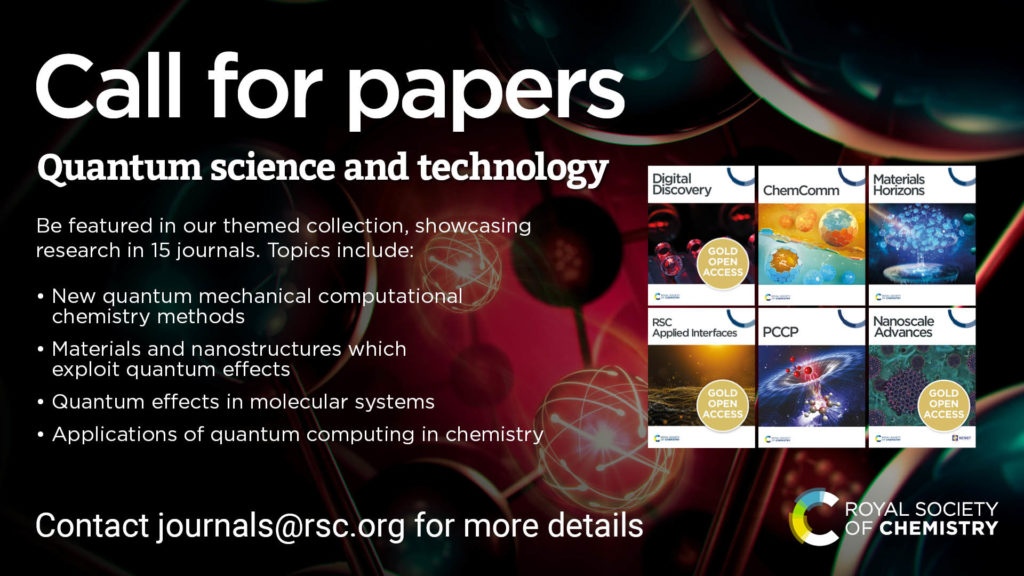
A banner summarising the information in this post.

We are delighted to announce a call for papers celebrating the UNESCO International Year of Quantum Science and Technology 2025. This collection across a selection of our materials, nanoscience, physical chemistry and interdisciplinary journals is now open for submissions.

The submission deadline is 1 October 2025.

For this broad collection of articles celebrating Quantum Science and Technology we encourage contributions on topics including, but not limited to:

  • New quantum mechanical computational chemistry methods
    • Focusing on new methods to provide expanded variability (customization) to programs and algorithms applied to molecular and materials discovery.
  • Studies on materials and nanostructures which exploit quantum effects
    • The engineering and investigation of materials and nanostructures that exploit QM effects. The collection seeks papers that offer insights into the understanding of Quantum effects or mechanistic insights rather than routine experimental studies that focus on material / device performance.
  • Cross-disciplinary studies looking at quantum effects in molecular systems
    • Studies that bridge chemistry with adjacent disciplines to understand electronic and fundamental effects such as quantum dot cellular automata.
  • Applications of quantum computing in chemistry
    • The design of new quantum algorithms, and application of existing algorithms, in the calculation, prediction and design of atomic, molecular, and materials properties.

This collection will be hosted across the following journals.

Chemical Science, Chemical Communications, RSC Applied Interfaces and RSC Advances

Digital Discovery and Physical Chemistry Chemical Physics

Materials Horizons, Journal Materials Chemistry A, Journal Materials Chemistry B, Journal Materials Chemistry C, and Materials Advances,

Nanoscale Horizons, Nanoscale and Nanoscale Advances

We hope you will accept our invitation to contribute to this collection. If you are interested, please contact us at journals@rsc.org and let us know which journal you would like to contribute to. If you have any questions, we would be delighted to send you more information. If you are unsure which journal would be the most suitable for your work or would like to check a topic’s suitability for a journal, we would be happy to help.

Publishing open access with RSC journals unlocks the full potential of your research – bringing increased visibility, wider readership and higher citation potential to your work. As a not-for-profit organisation serving the chemical sciences community we ensure that our article processing charge (APC) remains the most competitive of major publishers. More details can be found here. You can also use our journal finder tool to check if your institution currently has an agreement with the RSC that may entitle you to a discount or fully cover the APC.

Articles will be added to the collection as soon as they are accepted, and promotion of the collection is scheduled for the end of 2025. Please mention the collection name “Quantum Science and Technology” when you submit your manuscript. Please note that all submissions will undergo peer-review in the usual manner and must comply with each journal’s usual journal scope and standards.

Call for papers – Quantum Computing in Chemistry, Material Science and Biotechnology

A slide promoting this open call with photographs of the Guest Editors.

Digital Discovery is delighted to welcome papers for its latest themed collection on Quantum Computing in Chemistry, Material Science and Biotechnology themed collection of Digital Discovery, led by Dr Matthias Degroote (Boehringer Ingelheim Quantum Lab), Prof. Joonho Lee (Harvard University) and Dr Pauline Ollitrault (QC Ware Corp.). If you do not directly work in this field, please do feel free to forward this email to any of your colleagues that might be interested in contributing to this themed collection.

Contributions are welcome in both theory for and applications of quantum computers in chemistry, material science and biotechnology. We would especially like to encourage manuscripts that expand the current area of applicability of quantum computers and introduce innovative ways to discover, characterize and produce new molecules. We will consider near-term and fault-tolerant algorithms as well as improvements over current algorithms and entirely new workflows.

We encourage submissions on topics including, but by no means limited to:

  • Synergies between classical and quantum computers that leverage the strengths of both.
  • Use of machine learning and data to bring down the cost of quantum computation.
  • Tailored algorithms for specific subsets of chemical systems or types of interaction.
  • Prediction of chemical properties with data that can efficiently be extracted from a quantum computer.

The deadline for submissions 11 August 2025.

If you would like to contribute to this collection, please let us know by email at digitaldiscovery-rsc@rsc.org, and we will set up a submission link for you to contribute your article.

Promotion of the collection is scheduled for promotion in late 2025, with articles published online as soon as they’re accepted. Authors are welcome to submit original research in the form of a Communication or Full Paper. Authors who would like to contribute a Review article should contact the Editorial office with their proposal. The Editorial Office reserves the right to check suitability of submissions for both the journal and the scope of the collection, and inclusion of accepted articles in the final themed collection is not guaranteed.

You can find out more detailed information about our journal scope and our valued editorial board members on our website. If you have any questions about the journal or the collection, please contact us at the above address.

Introducing “Commit”, a mini article for dynamic reporting of incremental improvements to previous scholarly work

Digital Discovery is pleased to introduce a new article type, “Commit”, a mini article for dynamic reporting of incremental improvements to previous scholarly work. This new type of article allows the community to share changes to work published in Digital Discovery articles, whether this is one’s own work or another’s. We see Commits as citable articles describing the changes made to a project, which could be a full manuscript, or an open hardware or software project published in the journal.

Some examples of Commits could include:

  • Hardware articles: a device which has the same motivation and use but has an improvement in capabilities or construction.
  • Software articles: addition of features or improvement of capabilities.
  • Data: incorporating additional data while keeping the underlying schema the same (for example, new data which has been added since the last article).

Commits are expected to be shorter than a full article, although there is no rigid page limit. We expect that most of the improvements will be present in associated code/data repositories or supporting information associated with the work.

To find out more about preparing, submitting, and citing Commit articles, read our Editorial at DOI: 10.1039/D4DD90053G. We welcome queries or comments by email to the journal’s Editorial Office at digitaldiscovery-rsc@rsc.org.

Large language model expert? Review papers for Digital Discovery

A banner inviting readers to become reviewers for Digital Discovery

With the increasing application of large language models (LLMs) in automation and data analysis, Digital Discovery is looking for experts in LLMs to act as peer reviewers. If you would like to take part, please follow the instructions below. Reviewers who have registered their interest will be entered into a prize draw to win an exclusive Digital Discovery mug in March of 2025!

If you have authored or reviewed for us previously, you can log in to your account at https://mc.manuscriptcentral.com/dd and update the “Research Interests” section of your profile to mention “LLMs”, and/or “large language models”. If you don’t currently have an account you can sign up at https://rsc.li/become-a-reviewer, and then complete your Research Interests once the process is complete.

If LLMs are not one of your areas of expertise, but you would be interested in reviewing other papers for Digital Discovery, please let us know, and update your research interests and keywords as mentioned above. We are also interested in recruiting reviewers to assess authors’ datasets and codes – please see this link for more information.

If you have a colleague who is an expert in LLMs, or who would be interested in reviewing for Digital Discovery in general, please feel free to pass this information to them!

Digital Discovery Webinar: Artificial Intelligence and Data in Drug Discovery and Development

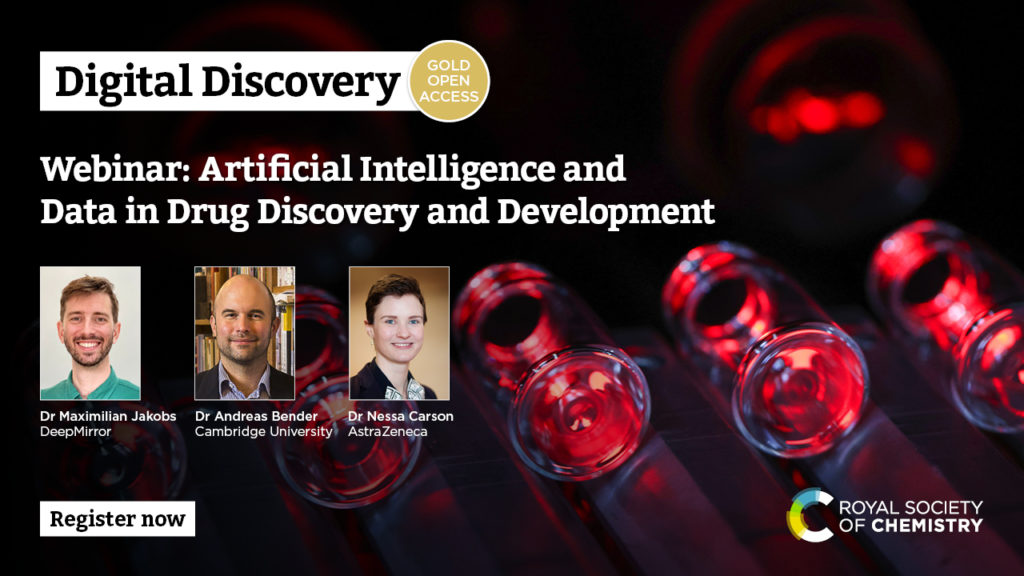
Digital Discovery invites you to this webinar on opportunities, challenges and techniques in the use of AI and data in drug discovery and development.

A banner with the webinar title and pictures of the speakers

Featuring Maximilian Jakobs (DeepMirror), Andreas Bender (University of Cambridge) and Nessa Carson (AstraZeneca), this 90-minute seminar will explore key ideas and case studies, challenges in achieving tangible process improvements, and approaches to interfacing AI, data and robotic systems with pharmaceutical R&D.

Register to join us live on Wednesday, 30 October 2024 at 1400 GMT, or receive the on-demand version.

Register now!

Program

1400 GMT – Welcome
1405 GMT – Introduction to Digital Discovery, Anna Rulka (Executive Editor, Digital Discovery)
1410 GMT – What is AI, and Why Does It Matter?, Maximilian Jakobs (DeepMirror)
1435 GMT – Aspects of Life Science Data and Translation, Andreas Bender (Cambridge University)
1500 GMT – AI and data in the process development space, Nessa Carson (AstraZeneca)
1525 GMT – Final questions and close

This webinar is free to attend wherever you are, and can be watched either live or on-demand at a time that’s convenient to you. We hope you can join us!