Archive for the ‘News’ Category

New PCCP Advisory Board member: Marco Garavelli

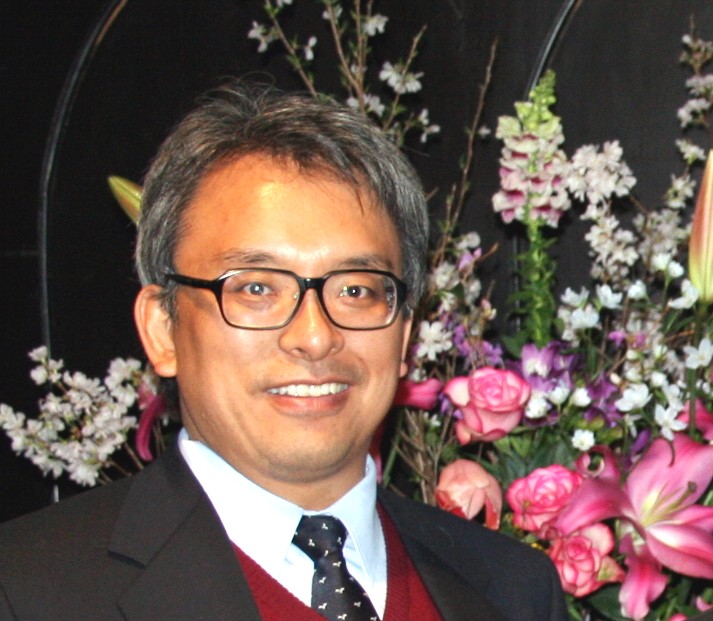
Marco Garavelli photoPhysical Chemistry Chemical Physics (PCCP) is delighted to welcome Professor Marco Garavelli to our Advisory Board.

Marco received his Laurea in Chemistry (Magna Cum Laude) in 1994 from the University of Bologna, where he subsequently also studied for his PhD. Between 1998-1999 he worked as a Research Associate at King’s College London and in 1999 he joined the University of Bologna as a lecturer.

His research interests are in theoretical and computational chemistry, with particular focus on the simulation of the (chemical and photochemical) reactivity of large molecules and the interactions between complex molecular systems and external stimuli (e.g. photons).

Read Marco’s recent PCCP articles by following the links below:

Product formation in rhodopsin by fast hydrogen motions
Oliver Weingart, Piero Altoè, Marco Stenta, Andrea Bottoni, Giorgio Orlandi and Marco Garavelli
DOI: 10.1039/C0CP02496A

Adenine deactivation in DNA resolved at the CASPT2//CASSCF/AMBER level
Irene Conti, Piero Altoè, Marco Stenta, Marco Garavelli and Giorgio Orlandi
DOI: 10.1039/B926608A

Digg This
Reddit This
Stumble Now!
Share on Facebook
Bookmark this on Delicious
Share on LinkedIn
Bookmark this on Technorati
Post on Twitter
Google Buzz (aka. Google Reader)

Mattanjah de Vries joins PCCP Advisory Board

Mattanjah de Vries photoPhysical Chemistry Chemical Physics (PCCP) is delighted to announce that Professor Mattanjah de Vries, of the University of California Santa Barbara, has joined the Advisory Board of the journal.

Professor de Vries received his BSc in Physics, Mathematics, and Astronomy from the University of Amsterdam in 1971 and his Masters in Nuclear Physics from the Hebrew University, Jerusalem in 1975. He returned to the University of Amsterdam to study for his PhD in Chemical Physics, graduating in 1980.

His current research covers the use of gas phase techniques to study isolated molecules and the study of fragile organic molecules using laser mass spectrometry.

Professor de Vries latest PCCP article appeared in the themed issue on the Molecular mechanisms of the photostability of life.

Read his exciting research article today:

The effect of C5 substitution on the photochemistry of uracil
Dana Nachtigallová, Hans Lischka, Jaroslaw J. Szymczak, Mario Barbatti, Pavel Hobza, Zsolt Gengeliczki, Gustavo Pino, Michael P. Callahan and Mattanjah S. de Vries
DOI: 10.1039/B925803P

Digg This
Reddit This
Stumble Now!
Share on Facebook
Bookmark this on Delicious
Share on LinkedIn
Bookmark this on Technorati
Post on Twitter
Google Buzz (aka. Google Reader)

Physical Chemistry Prizes and Awards

Nominations close on the 15 January 2012

Our Prizes and Awards recognise achievements by individuals in advancing the chemical sciences.

Do you know someone who has made an outstanding and innovative contribution to the fields of physical or theoretical chemistry?

Physical Chemistry Prizes and Awards being presented in 2012 are:

Harrison-Meldola Memorial Prizes
Corday-Morgan Prizes
Tilden Prizes
Centenary Prizes
Interdisciplinary Prizes
Faraday Lectureship Prize
Bourke Award
Marlow Award
Chemical Dynamics Award
Surfaces and Interfaces Award
Soft Matter and Biophysical Chemistry Award
Liversidge Award

Showcase inspiring science and gain the recognition deserved – Nominate now

Closing date for nominations is 15 January 2012

Digg This
Reddit This
Stumble Now!
Share on Facebook
Bookmark this on Delicious
Share on LinkedIn
Bookmark this on Technorati
Post on Twitter
Google Buzz (aka. Google Reader)

Emissive crystalline materials are worthy of note!

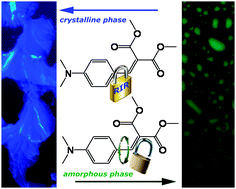
imageWork by Dario Pasini and co-workers on materials which are more emissive in the solid state than in solution, recently published in PCCP has been highlighted in ACS Noteworthy.

The authors believe the compound’s interesting properties can be exploited for sensing and optoelectronic applications.

Read the full exciting article today:

Efficient crystallization induced emissive materials based on a simple push–pull molecular structure
Elena Cariati, Valentina Lanzeni, Elisa Tordin, Renato Ugo, Chiara Botta, Alberto Giacometti Schieroni, Angelo Sironi and Dario Pasini
DOI: 10.1039/C1CP22267H

Digg This
Reddit This
Stumble Now!
Share on Facebook
Bookmark this on Delicious
Share on LinkedIn
Bookmark this on Technorati
Post on Twitter
Google Buzz (aka. Google Reader)

We don’t want you to miss out . . .

Tribology: Faraday Discussion 156
2 – 4 April 2012
University of Southampton, UK

We know a very busy festive season is coming up shortly so this is a gentle reminder that you haven’t taken any action yet about attending Tribology : FD156.

Poster abstract and bursary applications are now invited, and registration is open.

Chemists, physicists, theoreticians, engineers and biomedical researchers will all benefit from joining this forum for exploring advances in all the diverse aspects of experimental techniques which bear directly on the topic of tribology.

To keep up with the way tribology directly affects our lives you need to be part of our wide-ranging discussion. So please don’t miss out – act now before the end of year rush.

P.S. Don’t forget that registering early lets you make savings!

Tribology Faraday Discussion 156 2-4 April 2012 University of Southampton, UK

Digg This
Reddit This
Stumble Now!
Share on Facebook
Bookmark this on Delicious
Share on LinkedIn
Bookmark this on Technorati
Post on Twitter
Google Buzz (aka. Google Reader)

PCCP issue 48 out now!

The latest issue of PCCP has now been published online – take a look today!

Aromaticity, electron delocalisation, and related molecular propertiesIssue 48 features a broad range of papers and Communications and includes the following Perspective articles:

Take a look at the issue today!

Digg This
Reddit This
Stumble Now!
Share on Facebook
Bookmark this on Delicious
Share on LinkedIn
Bookmark this on Technorati
Post on Twitter
Google Buzz (aka. Google Reader)

Shedding light on ultracold reactions in space

A story today in Chemistry World discusses how counterintuitive results in ultracold chemistry are helping to build a picture of reactions taking place in deep space.

Two different groups led by Eric Hudson at the University of California and Stefan Willitsch of the University of Basel have both shown that light can play a bigger role than expected in the nascent field of ultracold atom-ion interactions. Read more of the Chemistry World story…

Stefan Willitsch has also just co-Guest Edited a themed issue of PCCP on the physics and chemistry of cold molecules.

You can read more about highlights from the themed issue or browse its contents:

Read the highlights from physics and chemistry of cold molecules

Browse the whole themed issue

Digg This
Reddit This
Stumble Now!
Share on Facebook
Bookmark this on Delicious
Share on LinkedIn
Bookmark this on Technorati
Post on Twitter
Google Buzz (aka. Google Reader)

PCCP: a focus on Asia

Physical Chemistry Chemical Physics (PCCP) is delighted to announce the appointment of Professor Katsuhiko Ariga and Professor Seong Keun Kim as Associate Editors of the journal. 
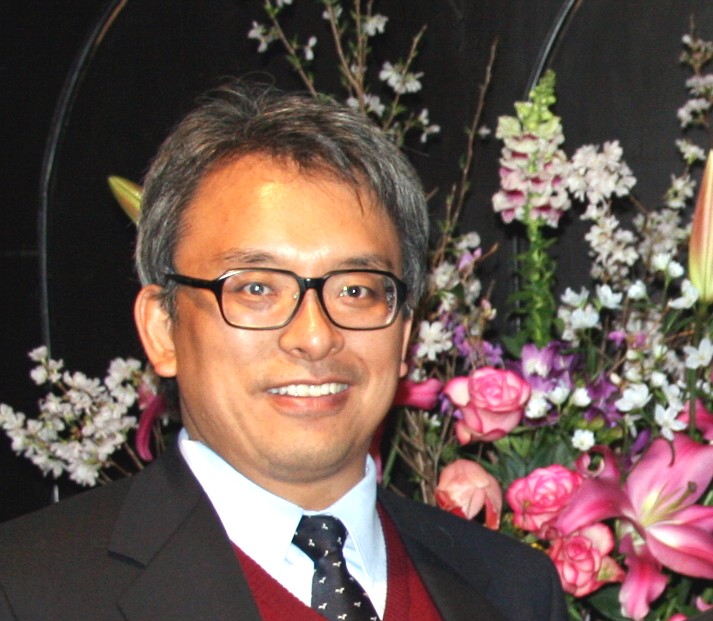
Professor Ariga is the Director of Supermolecules Group at the National Institute for Materials Science (NIMS) in Japan. His research covers supermolecular chemistry and surface science, including the boundaries between organic chemistry, physical chemistry, biochemistry, and materials chemistry. 

Professor Kim
is head of the Molecular Reaction Dynamics Laboratory at Seoul National University, Korea. He uses spectroscopic, microscopic, and computational methods to investigate a wide range of subjects from molecular physics and nanoscience to cell biology.

PCCP is committed to publishing the best research from Asia in the broad fields of physical chemistry, chemical physics and biophysical chemistry. We also have many leading Asian scientists on our international Editorial and Advisory Boards: Professors Asuka Fujii, Yasuhiro Iwasawa, Yoshiyasu Matsumoto, Zhong-Qun Tian, Li-jun Wan, Wenchuan Wang and Xueming Yang, as well as Yuan Tseh Lee on our Honorary Board.

On behalf of Professors Ariga and Kim and all our Editorial Board, we invite you to submit your best work to PCCP.

PCCP and the Royal Society of Chemistry have strong links with scientists in Asia and we now have RSC offices in Beijing, Shanghai and Toyko.

So you can see for yourself the quality of work appearing in PCCP, we have selected some recent Perspective review articles from authors all across Asia which are available to read for free for a limited period.

Operation of micro and molecular machines: a new concept with its origins in interface science
Katsuhiko Ariga, Shinsuke Ishihara, Hironori Izawa, Hong Xia and Jonathan P. Hill
DOI: 10.1039/C0CP02040K

From nanocrystal synthesis to functional nanostructure fabrication: laser ablation in liquid
P. Liu, H. Cui, C. X. Wang and G. W. Yang
DOI: 10.1039/B918759F

Understanding underlying processes in formic acid fuel cells
Sunghyun Uhm, Hye Jin Lee and Jaeyoung Lee
DOI: 10.1039/B909525J

Supramolecular nanoarchitectures for light energy conversion
Taku Hasobe
DOI: 10.1039/B910564F

Ionic liquids in surface electrochemistry
Hongtao Liu, Yang Liu and Jinghong Li
DOI: 10.1039/B921469K

Nonbonding interactions of organic halogens in biological systems: implications for drug discovery and biomolecular design
Yunxiang Lu, Yong Wang and Weiliang Zhu
DOI: 10.1039/B926326H

Static, rheological and mechanical properties of polymer nanocomposites studied by computer modeling and simulation
Jun Liu, Liqun Zhang, Dapeng Cao and Wenchuan Wang
DOI: 10.1039/B913511A

Ionicity in ionic liquids: correlation with ionic structure and physicochemical properties
Kazuhide Ueno, Hiroyuki Tokuda and Masayoshi Watanabe
DOI: 10.1039/B921462N

For more information and news visit our website, or follow us on Twitter:

We invite you to be a part of this success, submit your research today.

Digg This
Reddit This
Stumble Now!
Share on Facebook
Bookmark this on Delicious
Share on LinkedIn
Bookmark this on Technorati
Post on Twitter
Google Buzz (aka. Google Reader)

RSC Physical Chemistry Prizes and Awards

Nominations are now open

Our Prizes and Awards recognise achievements by individuals in advancing the chemical sciences.

Do you know someone who has made an outstanding and innovative contribution to the fields of physical or theoretical chemistry?

Physical Chemistry Prizes and Awards being presented in 2012 are:

Harrison-Meldola Memorial Prizes
Corday-Morgan Prizes
Tilden Prizes
Centenary Prizes
Interdisciplinary Prizes
Faraday Lectureship Prize
Bourke Award
Marlow Award
Chemical Dynamics Award
Surfaces and Interfaces Award
Soft Matter and Biophysical Chemistry Award
Liversidge Award

 Showcase inspiring science and gain the recognition deserved – Nominate now

Closing date for nominations is 15 January 2012

Digg This
Reddit This
Stumble Now!
Share on Facebook
Bookmark this on Delicious
Share on LinkedIn
Bookmark this on Technorati
Post on Twitter
Google Buzz (aka. Google Reader)

PCCP: a focus on Japan

ArigaPhysical Chemistry Chemical Physics (PCCP) is delighted to announce the appointment of Professor Katsuhiko Ariga as an Associate Editor of the journal.

Professor Ariga is the Director of Supermolecules Group at the National Institute for Materials Science (NIMS) in Japan. His research covers supermolecular chemistry and surface science, including the boundaries between organic chemistry, physical chemistry, biochemistry, and materials chemistry.
PCCP is committed to publishing the best Japanese research in the broad fields of physical chemistry, chemical physics and biophysical chemistry. We have several leading Japanese scientists on our international Advisory Board: Asuka Fujii, Yasuhiro Iwasawa and Yoshiyasu Matsumoto.

So you can see for yourself the quality of work appearing in PCCP, we have selected some recent articles from authors based in Japan which are available to read for free for a limited period.

On behalf of Professor Ariga and all our Editorial Board, we invite you to submit your best work to PCCP.

The Royal Society of Chemistry has also recently opened an office in Toyko in the same building as the Chemical Society of Japan. You can read RSC CEO Dr Robert Parker’s speech from the official opening here .

Operation of micro and molecular machines: a new concept with its origins in interface science
Katsuhiko Ariga, Shinsuke Ishihara, Hironori Izawa, Hong Xia and Jonathan P. Hill
DOI: 10.1039/C0CP02040K

Supramolecular nanoarchitectures for light energy conversion
Taku Hasobe
DOI: 10.1039/B910564F

Ionicity in ionic liquids: correlation with ionic structure and physicochemical properties
Kazuhide Ueno, Hiroyuki Tokuda and Masayoshi Watanabe
DOI: 10.1039/B921462N

Design of functional ionic liquids using magneto- and luminescent-active anions
Yukihiro Yoshida and Gunzi Saito
DOI: 10.1039/B920046K

The CH/π hydrogen bond in chemistry. Conformation, supramolecules, optical resolution and interactions involving carbohydrates
Motohiro Nishio
DOI: 10.1039/C1CP20404A

Colloidal Si nanocrystals: a controlled organic–inorganic interface and its implications of color-tuning and chemical design toward sophisticated architectures
Naoto Shirahata
DOI: 10.1039/C0CP02647F

Time-dependent intermolecular interaction during protein reactions
Masahide Terazima
DOI: 10.1039/C1CP21868A

Metal-intercalated aromatic hydrocarbons: a new class of carbon-based superconductors
Yoshihiro Kubozono, Hiroki Mitamura, Xuesong Lee, Xuexia He, Yusuke Yamanari, Yosuke Takahashi, Yuta Suzuki, Yumiko Kaji, Ritsuko Eguchi, Koki Akaike, Takashi Kambe, Hideki Okamoto, Akihiko Fujiwara, Takashi Kato, Taichi Kosugi and Hideo Aoki
DOI: 10.1039/C1CP20961B

For more information and news visit our website, or follow us on Twitter

We invite you to be a part of this success, submit your research today .

Digg This
Reddit This
Stumble Now!
Share on Facebook
Bookmark this on Delicious
Share on LinkedIn
Bookmark this on Technorati
Post on Twitter
Google Buzz (aka. Google Reader)