Archive for the ‘News’ Category

PCCP Asian Symposia

Physical Chemistry Chemical Physics (PCCP) is delighted to announce the upcoming series of Asian Symposia taking place in China, Japan and Korea.

PCCP-ICCAS Symposium: Frontiers of physical chemistry
Friday 28th September 2012
09:30 – 16:30
Lecture Theatre, Ground floor, Building One, Institute of Chemistry of Chinese Academy of Science (ICCAS), Beijing

PCCP-MANA symposium on Nanotechnology, Materials and Physical Chemistry
Monday 1st October 2012
09:40 – 16:10
WPI-MANA Auditorium, Namiki, NIMS, Tsukuba

PCCP-KCS Symposium on Interfaces in Physical Chemistry
Thursday 4th October 2012
09:40 – 17:50
Mogam Hall, Building 500, Seoul National University

The scientific programme at each event will features a series of world-class speakers both international and local:

  • Prof Katsuhiko Ariga, National Institute for Materials Science
  • Prof Kai Wu, Peking University
  • Prof Graham Hutchings, Cardiff University
  • Prof Can Li, Dalian Institute of Chemical Physics
  • Prof Buxing Han, ICCAS
  • Prof Eiichi Nakamura, University of Tokyo
  • Prof Hiroshi Nishihara, University of Tokyo
  • Prof David Nesbitt, University of Colorado at Boulder
  • Prof Minghua Liu, ICCAS
  • Prof Marie-Paule Pileni, University Pierre & Marie Curie
  • Prof Kazuhiko Maeda, Tokyo Institute of Technology
  • Prof Jinhua Ye, MANA
  • Prof Takayoshi Sasaki, MANA
  • Prof Mitsutoshi Masuda, AIST
  • Prof Yukio Nagasaki, MANA and University of Tsukuba
  • Prof Dongho Kim, Yonsei University
  • Prof Sang Bok Lee, University of Maryland
  • Prof Byung Hee Hong, Seoul National University
  • Prof Zee Hwan Kim, Korea University

All three events are free to attend and we look forward to welcoming you to these exciting meetings.

Digg This
Reddit This
Stumble Now!
Share on Facebook
Bookmark this on Delicious
Share on LinkedIn
Bookmark this on Technorati
Post on Twitter
Google Buzz (aka. Google Reader)

Graphene printer helps fight Parkinson’s disease

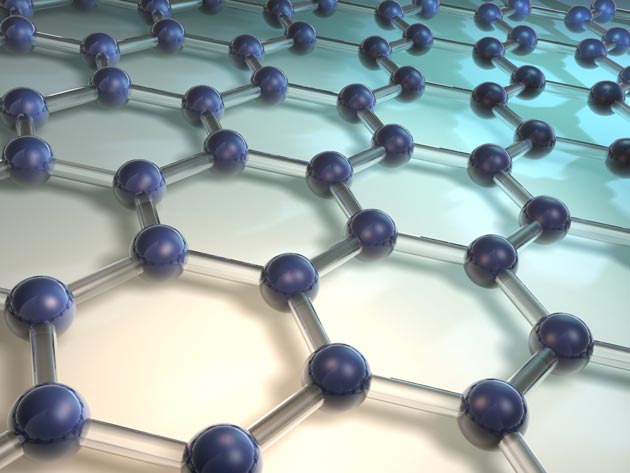
The simple, cheap and large-scale production of graphene is a hurdle in its commercial realisation

The simple, cheap and large-scale production of graphene is a hurdle in its commercial realisation

Scientists in China have developed a method to produce large-scale, high quality, graphene composite films easily and cheaply. The process could be invaluable in commercialising the material for electrochemical biosensor applications.

Graphene has become something of a wonder material since the Nobel prize for physics was awarded to Andre Geim and Konstantin Novoselov in 2010 for their groundbreaking investigations into the material. Its remarkable chemical and electronic applications have led to many researchers finding new applications for it. However, its simple, cheap and large-scale production has remained a major hurdle in its commercial realisation.

Read the full article in Chemistry World

Link to journal article
Layer-by-layer inkjet printing of fabricating reduced graphene-polyoxometalate composite film for chemical sensors
H Zhang et al
Phys. Chem. Chem. Phys., 2012, DOI: 10.1039/c2cp41561e

Digg This
Reddit This
Stumble Now!
Share on Facebook
Bookmark this on Delicious
Share on LinkedIn
Bookmark this on Technorati
Post on Twitter
Google Buzz (aka. Google Reader)

Themed Issue on Biophysical Studies on Protein Misfolding and Amyloid Diseases: Call for papers

PCCP themed issue: Biophysical Studies on Protein Misfolding and Amyloid Diseases

Guest Editor: Ayyalusamy Ramamoorthy (University of Michigan, USA)

PCCP is delighted to announce the high-profile themed issue ‘Biophysical Studies on Protein Misfolding and Amyloid Diseases’. It is our pleasure to invite you to submit an original research article for this themed issue.

The themed issue will be published in PCCP in 2013. It will receive great exposure, and get significant promotion.

PCCP is a high-impact, community spanning, international journal publishing work of the highest quality in the broad fields of physical chemistry, chemical physics and biophysical chemistry.

Deadline for Submissions: 15th December 2012

Amyloid diseases include a number of untreatable and devastating diseases such as Alzheimer’s, type II diabetes, Huntington’s and Parkinson’s diseases. The underlying mechanisms of pathology in these diverse diseases are all linked by the accumulation of misfolded proteins. Therefore, a detailed understanding of the molecular and cellular mechanisms of protein misfolding might facilitate new therapeutic discoveries across a broad family of disorders. Towards this goal, the challenge is to bring together an interdisciplinary collection of biophysical investigations required to link molecular mechanisms with cellular pathways and potential drug development.

This PCCP themed issue will cover a variety of topics including:
• The latest structural and kinetic studies on amyloid proteins
• Biophysical techniques to characterize the structure and oligomerization of amyloid proteins
• Novel approaches to inhibit and characterize the amyloid aggregation
• Theoretical and molecular dynamic simulation studies providing insights into the misfolding pathways and structure of amyloid proteins.

Manuscripts can be submitted in any reasonable format using our online submissions service. Submissions should be high quality manuscripts and will be subject to rigorous peer review. Please indicate upon submission that your manuscript is intended for this themed issue.

The deadline for submissions to the themed issue is 15th December 2012, though submissions before this date are of course welcomed.

If you haven’t already, check out our web collection of articles on biophysics and biophysical chemistry in PCCP.

Digg This
Reddit This
Stumble Now!
Share on Facebook
Bookmark this on Delicious
Share on LinkedIn
Bookmark this on Technorati
Post on Twitter
Google Buzz (aka. Google Reader)

Layer-by-layer inkjet printing to make a graphene-based film for a chemical sensor

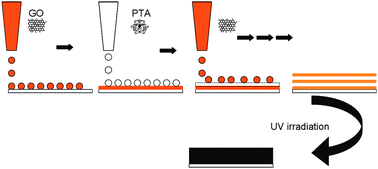
Scientists in China have used graphene oxide and polyoxometalate solution as ink to fabricate a composite film with a photo printer.

The film shows a linear relationship between the coverage and number of printing cycles, which indicates a steady-state film growth. The team performed a proof-of-principle experiment on the application of the composite for electrochemical sensing and successfully detected dopamine, with increasing current response to increasing concentration. Dopamine is a neurotransmitter, levels of which are monitored to diagnose Parkinson’s disease.

Graphene films are used for transistors and sensors, and there is a need for efficient and facile strategies for large-scale fabrication; this method has potential in terms of reducing material waste, lower costs and scalability.

Read more about this exciting work in the full PCCP article:

Layer-by-layer inkjet printing of fabricating reduced graphene-polyoxometalate composite film for chemical sensors
Hui Zhang, Anjian Xie, Yuhua Shen, Lingguang Qiu and Xingyou Tian
DOI: 10.1039/C2CP41561E

Table of contents image

Digg This
Reddit This
Stumble Now!
Share on Facebook
Bookmark this on Delicious
Share on LinkedIn
Bookmark this on Technorati
Post on Twitter
Google Buzz (aka. Google Reader)

Top 10 most-read PCCP articles in June

This month sees the following articles in PCCP that are in the top ten most accessed in June:

Low-temperature ZnO atomic layer deposition on biotemplates: flexible photocatalytic ZnO structures from eggshell membranes  
Seung-Mo Lee, Gregor Grass, Gyeong-Man Kim, Christian Dresbach, Lianbing Zhang, Ulrich Gösele and Mato Knez  
Phys. Chem. Chem. Phys., 2009, 11, 3608-3614 
DOI: 10.1039/B820436E 

The electrochemistry of CVD graphene: progress and prospects  
Dale A. C. Brownson and Craig E. Banks  
Phys. Chem. Chem. Phys., 2012, 14, 8264-8281 
DOI: 10.1039/C2CP40225D 

Gas phase metal cluster model systems for heterogeneous catalysis  
Sandra M. Lang and Thorsten M. Bernhardt  
Phys. Chem. Chem. Phys., 2012, 14, 9255-9269 
DOI: 10.1039/C2CP40660H 

Excited state intramolecular proton transfer (ESIPT): from principal photophysics to the development of new chromophores and applications in fluorescent molecular probes and luminescent materials  
Jianzhang Zhao, Shaomin Ji, Yinghui Chen, Huimin Guo and Pei Yang  
Phys. Chem. Chem. Phys., 2012, 14, 8803-8817 
DOI: 10.1039/C2CP23144A 

From VO2 (B) to VO2 (A) nanobelts: first hydrothermal transformation, spectroscopic study and first principles calculation  
Shudong Zhang, Bo Shang, Jinlong Yang, Wensheng Yan, Shiqiang Wei and Yi Xie 
Phys. Chem. Chem. Phys., 2011, 13, 15873-15881 
DOI: 10.1039/C1CP20838A 

Quantum chemistry simulation on quantum computers: theories and experiments  
Dawei Lu, Boruo Xu, Nanyang Xu, Zhaokai Li, Hongwei Chen, Xinhua Peng, Ruixue Xu and Jiangfeng Du 
Phys. Chem. Chem. Phys., 2012, 14, 9411-9420 
DOI: 10.1039/C2CP23700H 

Cu2ZnSnS4 (CZTS) nanoparticle based nontoxic and earth-abundant hybrid pn-junction solar cells  
Sudip K. Saha, Asim Guchhait and Amlan J. Pal  
Phys. Chem. Chem. Phys., 2012, 14, 8090-8096 
DOI: 10.1039/C2CP41062A 

The role of hydrogen bonding in excited state intramolecular charge transfer  
Francis A. S. Chipem, Anasuya Mishra and G. Krishnamoorthy  
Phys. Chem. Chem. Phys., 2012, 14, 8775-8790 
DOI: 10.1039/C2CP23879A 

A microporous–mesoporous carbon with graphitic structure for a high-rate stable sulfur cathode in carbonate solvent-based Li–S batteries  
Da-Wei Wang, Guangmin Zhou, Feng Li, Kuang-Hsu Wu, Gao Qing (Max) Lu, Hui-Ming Cheng and Ian R. Gentle 
Phys. Chem. Chem. Phys., 2012, 14, 8703-8710 
DOI: 10.1039/C2CP40808B 

Structure and dynamics of water at a clay surface from molecular dynamics simulation 
Virginie Marry, Benjamin Rotenberg and Pierre Turq  
Phys. Chem. Chem. Phys., 2008, 10, 4802-4813 
DOI: 10.1039/B807288D 

Why not take a look at the articles today and blog your thoughts and comments below.

Fancy submitting an article to PCCP? Then why not submit to us today!

Digg This
Reddit This
Stumble Now!
Share on Facebook
Bookmark this on Delicious
Share on LinkedIn
Bookmark this on Technorati
Post on Twitter
Google Buzz (aka. Google Reader)

New drug delivery method for ibuprofen examined

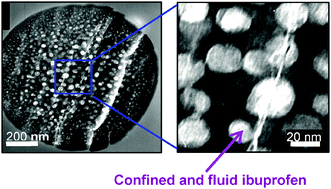
French scientists have prepared silica microspheres containing the commonly used drug ibuprofen using a spray drying and sol-gel process. The team found that the ibuprofen forms separate nano-domains within the silica microspheres.

For the full details about the properties of these fascinating materials read the PCCP article today:

Drug nano-domains in spray-dried ibuprofen–silica microspheres
Mohamed Fatnassi, Corine Tourné-Péteilh, Tzonka Mineva, Jean-Marie Devoisselle, Philippe Gaveau, Franck Fayon and Bruno Alonso
DOI: 10.1039/C2CP42092A

Table of contents image. Caption: Confined and fluid imbuprofen

Digg This
Reddit This
Stumble Now!
Share on Facebook
Bookmark this on Delicious
Share on LinkedIn
Bookmark this on Technorati
Post on Twitter
Google Buzz (aka. Google Reader)

Olympics fever hits PCCP and Nanoscale

Medals imageAs the excitement builds at London 2012 we bring you some “Olympics themed” articles from Physical Chemistry Chemical Physics (PCCP) and Nanoscale.  OK, so some of the links are a bit tenuous but it’s the taking part that counts… We hope you enjoy them!

Quantum sized, thiolate-protected gold nanoclusters
Rongchao Jin
Nanoscale, 2010, 2, 343-362
DOI: 10.1039/B9NR00160C

Density functional triple jumping
Jia Deng, Andrew T. B. Gilbert and Peter M. W. Gill
Phys. Chem. Chem. Phys., 2010, 12, 10759-10765
DOI: 10.1039/C0CP00242A

Silver nanowires – unique templates for functional nanostructures
Yugang Sun
Nanoscale, 2010, 2, 1626-1642
DOI: 10.1039/C0NR00258E

In situ STM observation of morphological changes of the Pt(111) electrode surface during potential cycling in 10 mM HF solution
Mitsuru Wakisaka , Shuichi Asizawa , Hiroyuki Uchida and Masahiro Watanabe
Phys. Chem. Chem. Phys., 2010, 12, 4184-4190
DOI: 10.1039/B923956A

Surface modification of anatase nanoparticles with fused ring catecholate type ligands: a combined DFT and experimental study of optical properties
Tatjana D. Savić, Ivana A. Janković, Zoran V. Šaponjić, Mirjana I. Čomor, Dušan Ž. Veljković, Snežana D. Zarić and Jovan M. Nedeljković
Nanoscale, 2012, 4, 1612-1619
DOI: 10.1039/C2NR11501H

A method to tune the ionic current rectification of track-etched nanopores by using surfactant
Lin Wang, Yu Yan, Yanbo Xie, Long Chen, Jianming Xue, Sha Yan and Yugang Wang
Phys. Chem. Chem. Phys., 2011, 13, 576-581
DOI: 10.1039/C0CP00587H

Visible-light-induced photocatalysis through surface plasmon excitation of gold on titania surfaces
Ewa Kowalska, Orlando Omar Prieto Mahaney, Ryu Abe and Bunsho Ohtani
Phys. Chem. Chem. Phys., 2010, 12, 2344-2355
DOI: 10.1039/B917399D

In situ TEM observation of lithium nanoparticle growth and morphological cycling
Jay Ghatak, Wei Guan and Günter Möbus
Nanoscale, 2012, 4, 1754-1759, DOI: 10.1039/C2NR11546H

The electron density vs. NICS scan: a new approach to assess aromaticity in molecules with different ring sizes
Cina Foroutan-Nejad, Shant Shahbazian and Parviz Rashidi-Ranjbar
Phys. Chem. Chem. Phys., 2010, 12, 12630-12637
DOI: 10.1039/C004254D

Power-law statistics in blinking SERS of thiacyanine adsorbed on a single silver nanoaggregate
Yasutaka Kitahama, Yuhei Tanaka, Tamitake Itoh and Yukihiro Ozaki
Phys. Chem. Chem. Phys., 2010, 12, 7457-7460
DOI: 10.1039/C000824A

Also check out the the exciting images of the olympicene molecule made by Anish Mistry and David Fox from the University of Warwick to celebrate the Olympics.

olympicene

Digg This
Reddit This
Stumble Now!
Share on Facebook
Bookmark this on Delicious
Share on LinkedIn
Bookmark this on Technorati
Post on Twitter
Google Buzz (aka. Google Reader)

Recently Appointed Academics in Physical Chemistry meeting – free registration

Have you recently been appointed as a lecturer in Physical Chemistry? Do you aspire to get a position soon?

If so you are welcome to join us at the Recently Appointed Academics in Physical Chemistry meeting held in Trevelyan College at Durham University from 5 – 7 September 2012.

Registration Deadline: 6 August 2012

The  is a biennial meeting sponsored by the RSC Faraday Division and is free to participants. It provides a forum for new appointees to engage with and learn about their role as an academic. Covering areas from research and teaching to getting funding and starting your own spin-out company this is a great opportunity to get to learn from academics who have been there before. Participants will have the opportunity and are strongly encouraged to present their research, which will aid in the networking and potential future collaborations.

More details are available on the meeting webpage.

Digg This
Reddit This
Stumble Now!
Share on Facebook
Bookmark this on Delicious
Share on LinkedIn
Bookmark this on Technorati
Post on Twitter
Google Buzz (aka. Google Reader)

Highlights from themed issues on ionic liquids

Crystal engineering with ionic liquids CrystEngComm CollectionIonic liquids ChemComm web themed issueInterfaces of ionic liquids PCCP Themed issue

The field of ionic liquids has seen phenomenal growth in recent years, with the topic spanning a variety of disciplines across the chemical sciences. The recent themed issues from ChemComm, PCCP and CrystEngComm showcase some of the latest developments from a range of scientific subjects utilising the unique properties of ionic liquids.

Highlights from these themed issues include the articles below, which are free to download until the 24th August. You can also access the full themed issues by clicking on the buttons above.

Click here to access the full list of articles

Digg This
Reddit This
Stumble Now!
Share on Facebook
Bookmark this on Delicious
Share on LinkedIn
Bookmark this on Technorati
Post on Twitter
Google Buzz (aka. Google Reader)

Call for papers: Theory meets Spectroscopy- Bunsentagung 2013

Physical Chemistry Chemical Physics (PCCP) is delighted to announce a forthcoming high-profile themed issue on “Theory meets Spectroscopy”, with Guest Editors Manfred M. Kappes and Willem M. Klopper, Karlsruhe Institute of Technology (KIT).

This will be the official themed issue of the international Bunsentagung 2013 meeting on the same theme organised by the Deutsche Bunsen-Gesellschaft (DBG) which takes place in May 2013, Karlsruhe, Germany. Free copies of the themed issue will be available at the meeting, maximising the visibility and profile of all published papers.

We invite you to submit a high quality manuscript of original, unpublished research with a focus on quantum chemical methodology for spectroscopy or on the interplay between theory and experiment in spectroscopic studies in the gas or condensed phase.

Deadline for submissions: 30 November 2012

All submissions will be subject to rigorous peer review to meet the high standards of PCCP. When you submit your article, please indicate that it is for the themed issue.

The invited speakers at the meeting include Mike Ashfold (Bristol), Tobias Brixner (Würzburg), Dominik Marx (Bochum), Frank Neese (Mülheim) and Martin Wolf (Berlin). For further speakers and details about the meeting visit the website.

PCCP has very strong links with the Bunsentagung and the DBG is a co-owner of PCCP. PCCP has published a themed issue on the Bunsentagung hauptthema for the past several years:

We hope you will be able to contribute to this exciting issue.

With our best wishes

Manfred Kappes and Wim Klopper
Guest Editors

Jane Hordern
Deputy Editor, PCCP

Digg This
Reddit This
Stumble Now!
Share on Facebook
Bookmark this on Delicious
Share on LinkedIn
Bookmark this on Technorati
Post on Twitter
Google Buzz (aka. Google Reader)