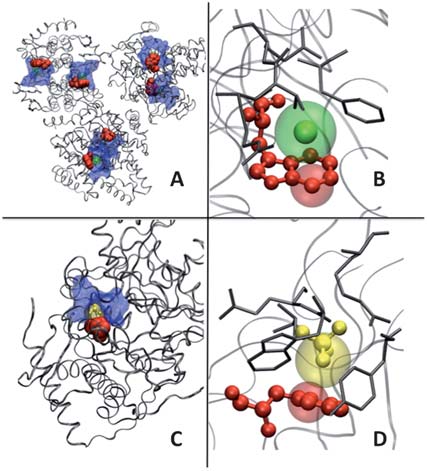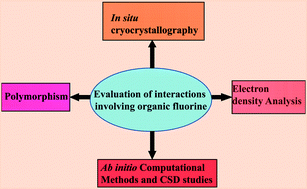

Following on from the previous blog last year ‘IUPAC Survey: Coordination polymer/MOF nomenclature’, we can now report the IUPAC division of Inorganic Chemistry has published a Highlight article ‘Coordination polymers, metal–organic frameworks and the need for terminology guidelines’. The paper is a summary of the work of the task group so far and the interactions they have had with scientists in the area.
The most common terms are coordination polymer and metal-organic framework and it can be difficult to know which structures are covered by which names and what these names mean to different people. This paper introduces the different ideas between various groups and provides an agenda for further work in the area.
Given the significance and interest of this article it has been made free to access until the end of March and can be downloaded below.
Coordination polymers, metal–organic frameworks and the need for terminology guidelines
Stuart R. Batten, Neil R. Champness, Xiao-Ming Chen, Javier Garcia-Martinez, Susumu Kitagawa, Lars Öhrström, Michael O’Keeffe, Myunghyun Paik Suh and Jan Reedijk
CrystEngComm, 2012, Advance Article
DOI: 10.1039/C2CE06488J


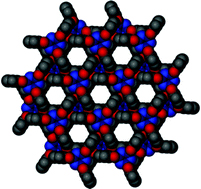
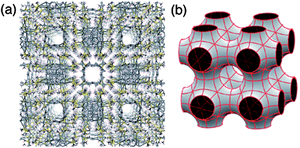

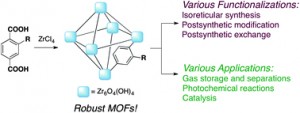 This comprehensive Highlight by Min Kim and Seth Cohen outlines the discovery, development and functionalization of Zr(IV)-based metal–organic frameworks. MOFs in general have been widely studied and the potential in biotechnological applications, catalysis, chemical sensing, gas separation and gas storage is of great interest.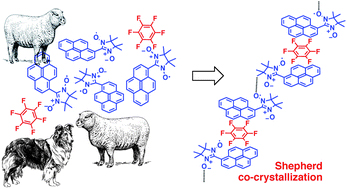



 In this CrystEngComm Highlight article Colin Seaton from the University of Manchester looks at the crystal engineering of co-crystals between carboxylic acids. Seaton looks at how Hammett substitution constants can help in the design and creation of multi-component crystalline materials.
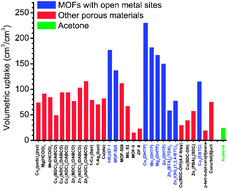 Acetylene is an important starting material in the petrochemical and electronic industry for various industrial and consumer products, and a promising alternative energy source for future acetylene fuel cell vehicles. With the importance of acetylene, as a green fuel, this CrystEngComm Highlight, focuses on the storage of acetylene and its separation from the CO2, CH4, or C2H4 mixtures on micro-porous metal–organic frameworks (MOFs).