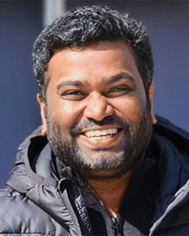
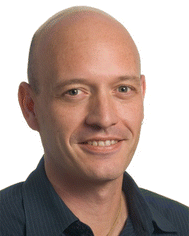
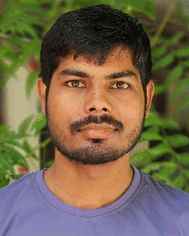
Happy New Year from the CrystEngComm Editorial Team!
CrystEngComm published its 27th volume in 2025 with over 700 articles in 48 issues including 80 Highlight review articles, 3 Tutorial reviews and 50 Communications. Research from authors in 53 countries was published with more than 2.3 million downloads, ensuring excellent visibility for the articles.
We are delighted to share some further highlights of CrystEngComm in 2025, including our Outstanding Paper Award winners, the introduction of Tutorial reviews, new Editorial Board members and our most popular articles from the year.
2024 CrystEngComm Outstanding Paper Award
The Outstanding Paper Award is an award aimed at recognising the high-quality work published in CrystEngComm from the previous year. The winners this year were Thomas Pickles, Vaclav Svoboda, Ivan Marziano, Cameron J. Brown and Alastair J. Florence for their work on Integration of a model-driven workflow into an industrial pharmaceutical facility: supporting process development of API crystallisation.
The authors presented a resource-efficient yet scalable pharmaceutical crystallisation process development using a model-driven workflow. CrystEngComm hosted a desktop seminar featuring a presentation on the research behind the winning paper by all the authors of the paper which was well received within the community.
New Editorial Board Members
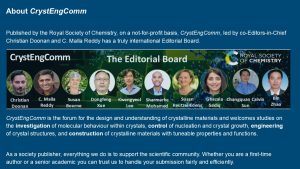
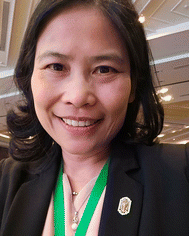
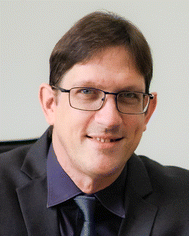
Earlier this year we were delighted to welcome both Ghazala Sadiq and Sharmarke Mohamed to join our international Editorial Board.
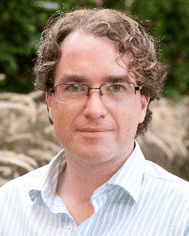
Ghazala is part of the Scientific Leadership Team at the CCDC, managing the Pfizer Solid Form Design Centre Team, where part of her role includes applying the latest knowledge-based informatics techniques to drug development compounds. She has a keen interest in Crystal Engineering, covering a range of topics including polymorphism, co-crystal design, fundamentals of intermolecular interactions, crystallisation, and the importance of molecular self-assembly in the nucleation of crystalline phases.
Sharmarke is an Associate Professor of Chemistry at Khalifa University (KU), Abu Dhabi, UAE, acting as Principal Investigator in the Green Chemistry & Materials Modelling Laboratory. Sharmarke’s research spans chemical crystallography, computational chemistry, and green chemistry.

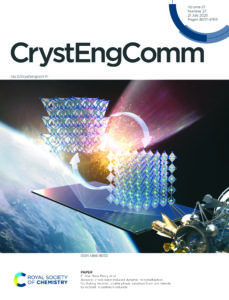
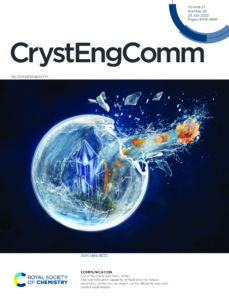
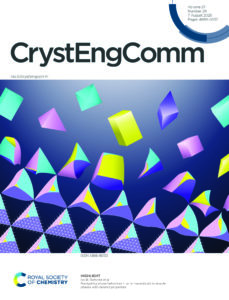
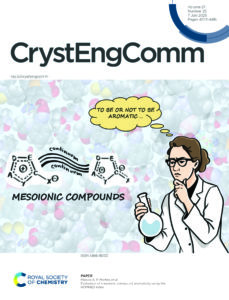
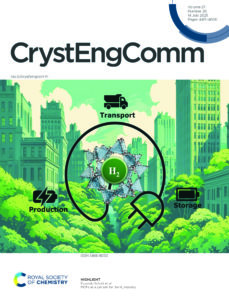
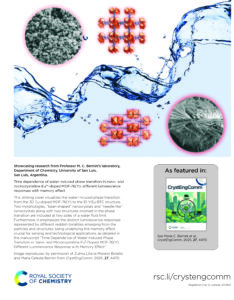
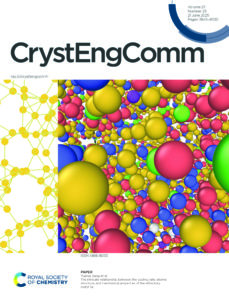
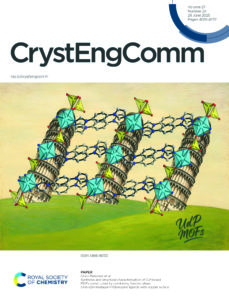
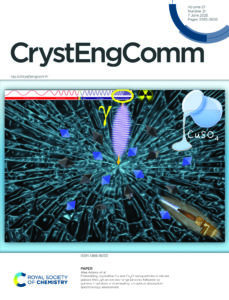
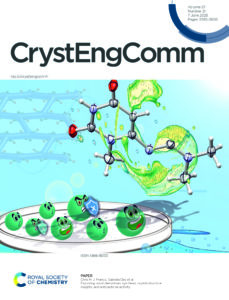
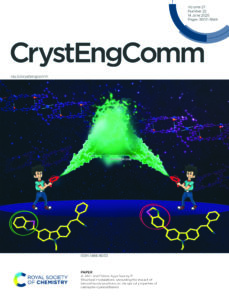
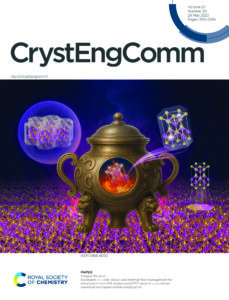
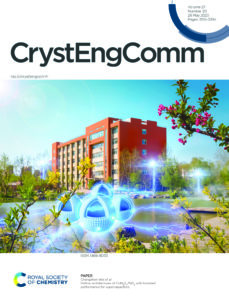
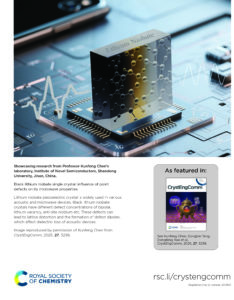
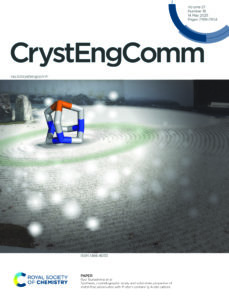
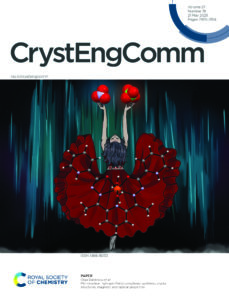
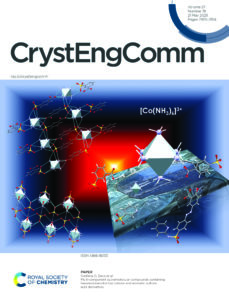
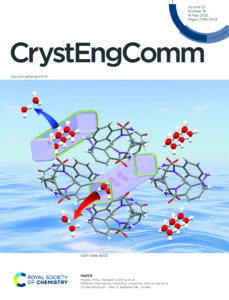
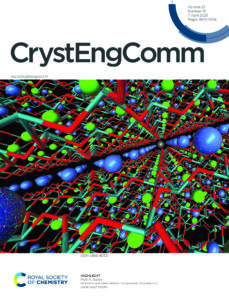
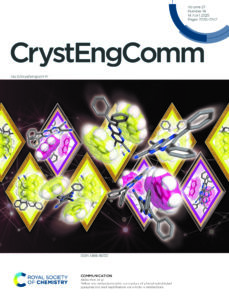
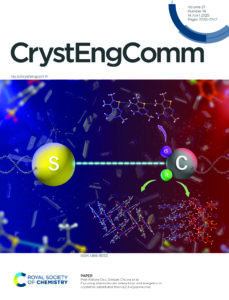
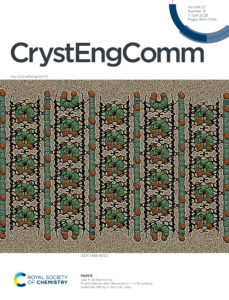
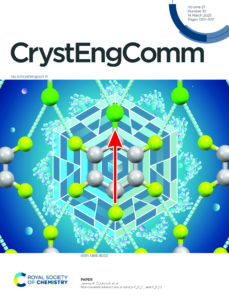
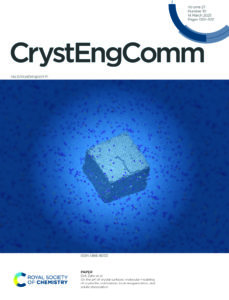
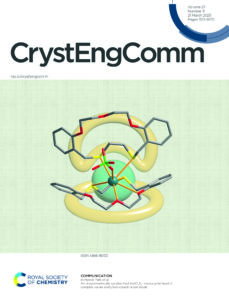
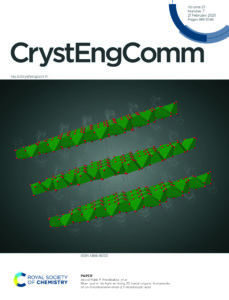
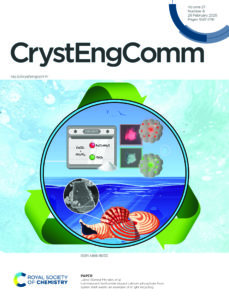
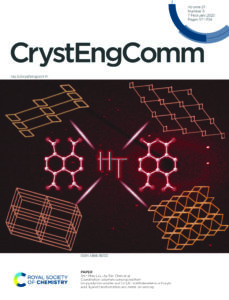
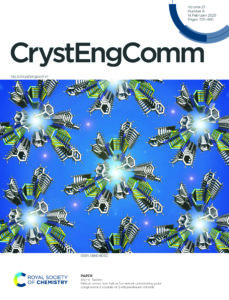
2025 CrystEngComm journal covers
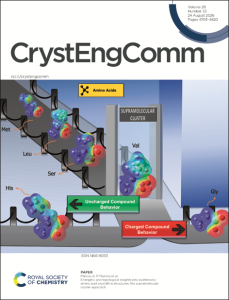
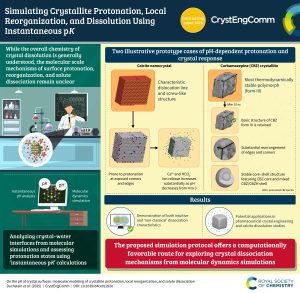
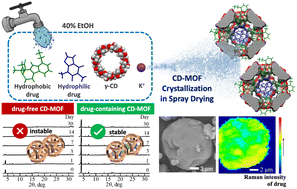
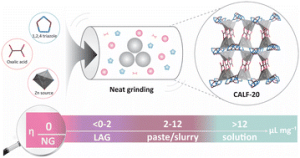
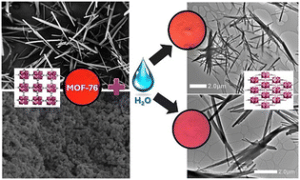
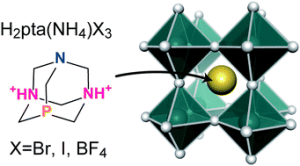
| We have published 60 covers supplied by authors in 2025. All the covers are available to view in the cover gallery and the articles have all been collected together in our Articles behind the 2025 journal covers collection ensuring great visibility of both the covers and associated articles. |

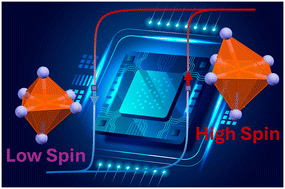
Issue 46 cover image |

Issue 45 cover image |
Introducing Tutorial reviews to CrystEngComm
We launched our new series of Tutorial reviews in 2025. This new article type is aimed at researchers who are new to the field or are embarking on a new direction of research, giving insight into how crystal engineering techniques underpin certain research areas.
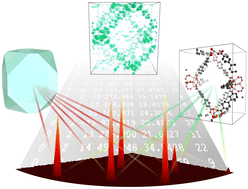
| Useful practices in single crystal diffraction analysis of reticular structures
Stefano Canossa
CrystEngComm, 2025, 27, 6556-6571 |
 |
 |
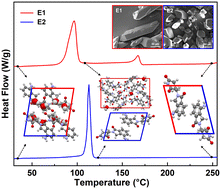
The impact of crystal habit on the pharmaceutical properties of active pharmaceutical ingredients
Niranj H. Ram, Madhukiran R. Dhondale, Maan Singh, Brahmeshwar Mishra, Ashish Kumar Agrawal, Anne Marie Healy and Dinesh Kumar
CrystEngComm, 2025, 27, 4614-4633 |
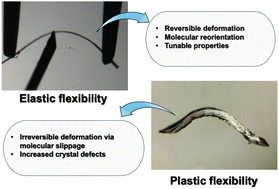
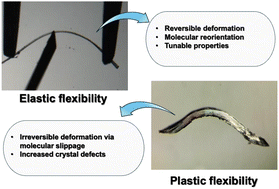
| Identifying and characterising flexible crystals
Atiqur Rahman, John C. McMurtrie, Sajesh P. Thomas and Jack K. Clegg
CrystEngComm, 2025, 27, 7110-7120 |
 |
| These articles all free to access until 30th April 2026. |
Themed collections in 2025
In 2025 we published two themed collections:
MOFs in Asia guest edited by Hoi Ri Moon, Sarah S. Park and Jihye Park, showcasing the recent advances and innovative research in the field of Metal-Organic Frameworks across Asia.
MOFs: three decades of pioneering research a post-publication collection of papers celebrating the research of the winners of the 2025 Nobel Prize in Chemistry, Susumu Kitagawa, Richard Robson and Omar M. Yaghi, and their co-workers.
A selection of the most popular articles in 2025
| The overestimated capability of fluid shear to induce secondary nucleation: an urgent call for diligently executed control experiments
Lorijn De Vrieze and Simon Kuhn
CrystEngComm, 2025, 27, 4810-4815 |
 |
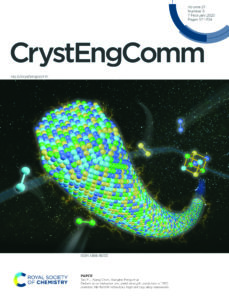
| A lot to unpack: a decade in high Z′ crystal structures
Paul G. Waddell
CrystEngComm, 2025, 27, 578-589 |
 |
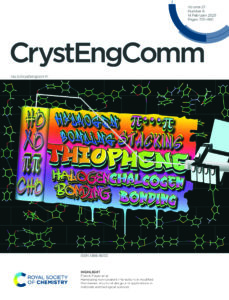
| Exploring intermolecular interactions and energetics in crystalline substituted thieno[2,3-d]pyrimidines
Pran Kishore Deb, Anila M. Menon, Fathima Nida PSR, Ipsha Shruti, Sara Nidal, Katharigatta N. Venugopala and Deepak Chopra
CrystEngComm, 2025, 27, 2070-2085
|
 |
We would love you to be part of the future of CrystEngComm so on behalf of the Co-Editors-in-Chief Professors Christian Doonan and C. Malla Reddy, we invite you to submit your research to CrystEngComm. See our author guidelines for information on our article types or find out more about the advantages of publishing in a Royal Society of Chemistry journal.
From all the CrystEngComm team, we thank you for your continued interest in and support of the journal and wish you well for 2026!