Archive for December, 2025

Biocatalysis themed collection: Celebrating the careers of Nicholas Turner and Sabine Flitsch

We are delighted to announce an upcoming Royal Society of Chemistry themed collection on Biocatalysis, to celebrate the careers of Prof. Nicholas Turner and Prof. Sabine Flitsch of the University of Manchester.

Over their remarkable careers, Professors Turner and Flitsch have made sustained and substantial contributions across the fields of chemical biology, biocatalysis, and carbohydrate chemistry. Over this time, they have also supported the development of countless early career researchers, who have gone on to forge successful independent careers in academia and industry.

This upcoming themed collection is aligned with a special celebration being held at the University of Manchester in April 2026 (detailed here) to mark the occasion of their retirement. Contributions will be invited from all of those in attendance, though we also welcome submissions from former alumni and collaborators who would like to participate, but cannot attend the meeting. The organisers of the meeting, Dr Rebecca Ruscoe (Keele University), Dr Christian Schnepel (Durham University), Dr Sebastian Cosgrove (Keele University) and Dr Jack Rowbotham (University of Manchester), will act as Guest Editors for the collection.

The following Royal Society of Chemistry journals are participating in this collection: RSC Chemical Biology, Catalysis Science & Technology, Reaction Chemistry & Engineering, and RSC Advances. Contributions must meet the scope and requirements of the journal to which the article is submitted, and will be subject to the journal’s normal peer review processes, including an initial assessment for suitability. Articles must be submitted by 31 July 2026. We will publish accepted articles online in a citeable form as soon as they are ready, with compilation and promotion of the complete collection in late 2026.

Potential contributors will receive a formal invitation in early 2026. For any queries, please contact the editorial office of RSC Chemical Biology at chembio-rsc@rsc.org.

2025 RSC Chemical Biology Emerging Investigators

We’re pleased to announce that the latest RSC Chemical Biology Emerging Investigators collection has now been published online!

Read the collection here.

RSC Chemical Biology is proud to present this collection of invited contributions from early career researchers who are making significant contributions to the field of chemical biology. Congratulations to all of the featured researchers!

A selection of the articles has been provided below. Read the full collection at https://rsc.li/cbemi25
All articles in RSC Chemical Biology are open access and free to read.

Profile
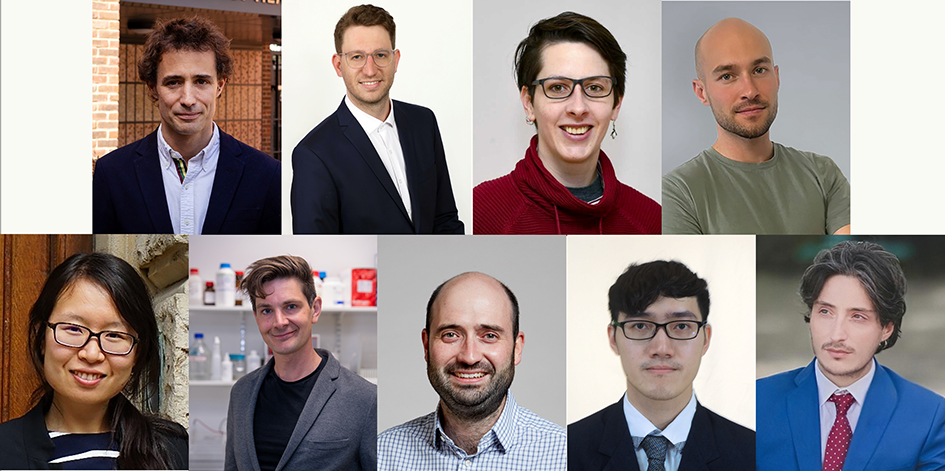
Contributors to the 2025 RSC Chemical Biology Emerging Investigators Collection
RSC. Chem. Biol., 2025, DOI: 10.1039/D5CB90052B
 
Communications
Efficient synthesis of O-glycosylated amino acids
Felicity J. Frank, Rebecca A. Lawson and Tom E. McAllister
RSC Chem. Biol., 2025, 6, 851-856, DOI: 10.1039/D5CB00076A
 
P450 cyptide synthase MpoB catalyzes the cross-linking of the YPW motif on the precursor peptide
Abujunaid Habib Khan, Jabal Rahmat Haedar, Vic Kiselov, Viktors Romanuks, Gints Smits, Stefano Donadio and Chin-Soon Phan
RSC Chem. Biol., 2025, 6, 1386-1390, DOI: 10.1039/D5CB00153F
 
Papers
The SpyBLI cell-free pipeline for the rapid quantification of binding kinetics from crude samples
Olga Predeina, Misha Atkinson, Oliver Wissett, Montader Ali, Cristina Visentin, Stefano Ricagno, Anthony H. Keeble, Mark R. Howarth and Pietro Sormanni
RSC Chem. Biol., 2025, 6, 1313-1327, DOI: 10.1039/D5CB00079C
 
Structure-guided engineering of a polyphosphate kinase 2 class III from an Erysipelotrichaceae bacterium to produce base-modified purine nucleotides
Rachel M. Mitton-Fry, René Rasche, Ann-Marie Lawrence-Dörner, Jannik Eschenbach, Aileen Tekath, Andrea Rentmeister, Daniel Kümmel and Nicolas V. Cornelissen
RSC Chem. Biol., 2025, 6, 1328-1335, DOI: 10.1039/D5CB00108K
 
We hope you enjoy this new themed collection from RSC Chemical Biology.

Late 2025 Newsletter

As we enter the last quarter of 2025, we are excited to share our latest updates with the RSC Chemical Biology community.

Get future updates directly to your inbox with our email alerts. Sign up here.

Latest News

OECRA 2024 winners

Our 2024 Outstanding Early Career Researcher Award goes to a team comprising Kilian Roßmann, Ramona Birke, Joshua Levitz, Ben Jones and Johannes Broichhagen, for their paper Red and far-red cleavable fluorescent dyes for self-labelling enzyme protein tagging and interrogation of GPCR co-internalization. Our congratulations to the winners! Find out more about the team and their paper at our blog post.


Research Spotlight

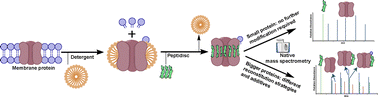
Peptidiscs offer a way to stabilise membrane proteins for mass photometry and cryo-EM in their native structure. In a recent article, Robinson, Bolla et al. have extended this to mass spectrometry, and share their insights on appropriate technique and the wide applicability of these stabilisers. Read “Native Mass spectrometry of membrane proteins reconstituted in peptidiscs” to find out more.

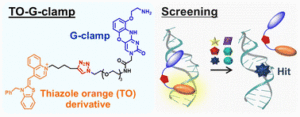
Onizuka, Nagatsugi et al. have devised new RNA-binding fluorogenic molecular probes for FID assays by combining thiazole orange derivatives with G-clamp, which were sensitive to hit compounds not found by the well-known indicator TO-PRO-1. Read their paper, “RNA-binding fluorogenic probes: G-clamp conjugated with a thiazole orange derivative for screening RNA-binding small molecules”, for more.

A new Review from Galenkap, van den Noort, and Maglia investigates the “Dynamics of single enzymes confined inside a nanopore”. Read the article to discover the promise of nanopore technology in studying single-molecule enzymology, the underlying principles, and the insights these techniques offer.


RSC Chemical Biology in the Community

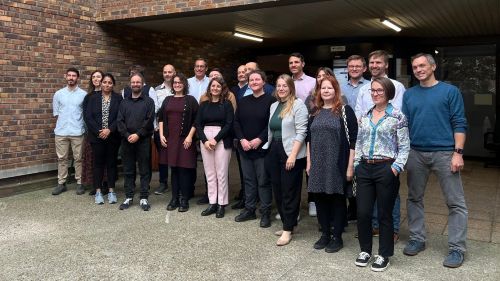
We were proud to sponsor the second RSC CBIC (Chemistry Biology Interface Community) Early Career Researcher Leadership Retreat at Imperial College London, continuing our partnership with this new event. Anna Rulka, the journal’s Executive Editor, took part and presented an overview of publishing with the Royal Society of Chemistry and the support available to early career authors. Find out more about the meeting on our blog post, and in Imperial College London’s news article.


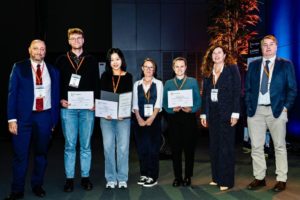
In October, Dr Rulka (centre) attended the joint ICBS & ECBS meeting ChemBioParis2025 to award poster and talk prizes sponsored by RSC Chemical Biology, meet our community, and learn from the state of the art scientific program. Our Associate Editor Zaneta Nikolovska-Coleska (second from right) also participated. Our congratulations to Hayoung Son (Seoul National University, Korea, third from left) on their Best Trainee Communications Prize, and Sebastian Hecko (TU Wien, Austria) and Yuko Hirata (University of Tokyo, Japan) on their best poster awards!


Dr Rulka was also pleased to attend the satellite 5th Young Investigator Workshop of the EuChemS Division of Chemical Biology and Chemistry in Life Sciences, at Institut Pasteur. RSC Chemical Biology proudly sponsor this event, which brings together early career researchers nominated by the EuChemS’ member National Chemical Societies.


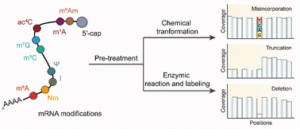
The journal’s new Deputy Editor Alexander Whiteside (left) joined the EMBO “The epitranscriptome” workshop this October to build connections with this rapidly developing field and present prizes from RSC Chemical Biology and Molecular Omics to the authors of the best posters, Lea Pradel (EPFL, Switzerland) and Aniek Martens (Radboud University, Netherlands). Congratulations to the winners!


Collections

Our new themed collection on “Biomolecular Technologies”, Guest Edited by Prof. Sheel Dodani (The University of Texas at Dallas) and Prof. Ariel Furst (Massachusetts Institute of Technology), brings together engineered biomolecule-based technologies spanning small molecules, nucleic acids, and proteins, with applications in biocatalysis, biosensing, and synthetic biology. Read the completed collection here.

Do you have some exciting new research in nucleic acids or peptides? Consider our upcoming themed collections, currently open for submissions:


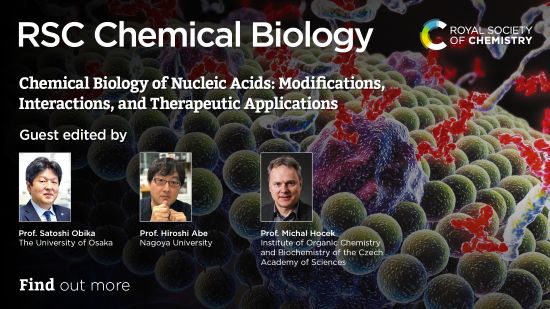
Our collection Chemical biology of nucleic acids: modifications, interactions, and therapeutic applications is open for submissions until 29 January 2026. Guest-Edited by Satoshi Obika (Osaka University), Hiroshi Abe (Nagoya University), and Michal Hocek (Czech Academy of Sciences), this collection invites research on the design and synthesis of nucleosides, nucleotides, and oligonucleotides, as well as evaluations of their biological activities both in vitro and in vivo. In addition, submissions focused on chemical biology research and drug discovery related to long DNA and RNA, and the development of new chemical biology techniques and analytical methods for nucleic acids, are also encouraged. Read the call for papers for information on how to contribute your work.


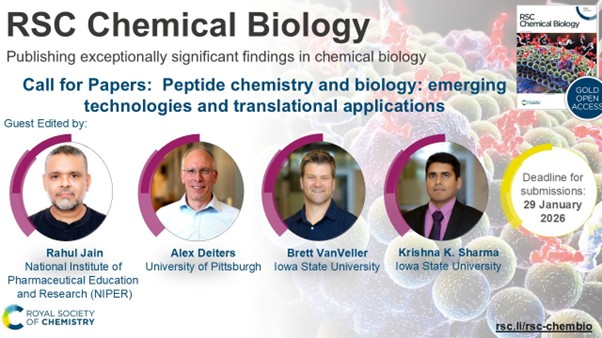
Rahul Jain (NIPER), Alex Deiters (University of Pittsburgh) Brett VanVeller (Iowa State University), and Krishna K. Sharma (Iowa State University) lead our collection on Peptide chemistry and biology: emerging technologies and translational applications. Developments in peptide modifications and new applications in PROTACs or as protein inhibitors underscore a bright future for peptide chemistry and biology. This themed collection showcases that progress, highlighting cutting-edge research from clinical and translational advances to innovative molecular designs, biological insights, and computational design approaches. Read the call for papers for information on the collection, and how to contribute your work by 29 January 2026.


Upcoming Events

Executive Editor Anna Rulka, and Associate Editor Zaneta Nikolovska-Coleska will be at this year’s Pacifichem symposium in Honolulu, Hawaii, on 15-20 December 2025. This year’s meeting includes sessions organised by our Editor-in-Chief Hiroaki Suga. We look forward to meeting you there!

We’re proud to sponsor a best poster award at the 29th Enzyme Mechanisms Conference in Carlsbad, CA, United States, January 4-8 2026.

RSC Chemical Biology is also pleased to support the 7th DNA Repair/Replication Structures & Cancer Conference in Playa Mujeres, Mexico, 1-6 February 2026.


Stay Connected

Follow us on LinkedIn and Bluesky for new articles and the latest news from RSC Chemical Biology and related journals at the Royal Society of Chemistry.


Building connections and confidence: the 2nd CBIC Early Career Researcher Leadership Retreat

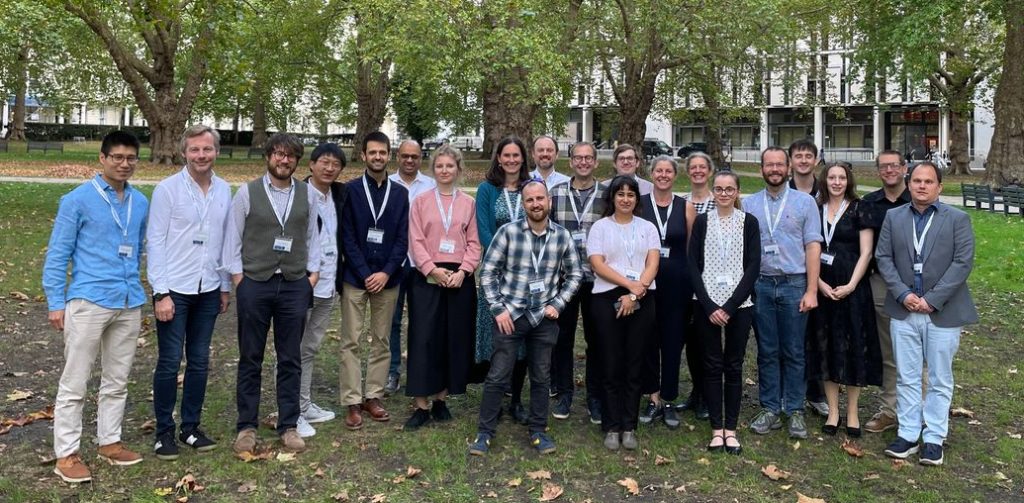
Early career researchers in chemical biology are not only shaping the future of their field, they are also redefining what scientific leadership looks like. This September, early career researchers (ECRs) gathered at Imperial College London for the second Chemistry Biology Interface Community (CBIC) Early Career Researcher Leadership Retreat, a three-day residential event designed to strengthen leadership skills, encourage collaboration, and build a supportive professional network.

Organised by CBIC Council members Anna Barnard, Gavin Miller and Andrew Truman, with local coordination support from Imperial’s Institute of Chemical Biology, the retreat brought together a diverse group of participants from across the UK and beyond. The event was sponsored by RSC Chemical Biology, and supported with a grant from the RSC’s Chemistry Biology Interface Community, with RSC staff joining throughout the programme to share resources and highlight opportunities available for ECRs across publishing, funding, and professional development.
Day 1: Research, publishing, and RSC support for early career researchers

The retreat opened with a warm welcome from the organisers and an introduction to the programme’s aims: to provide a dedicated space where early career researchers could reflect on their professional journeys and exchange ideas on leading research teams effectively.

The first morning included an invited talk from Professor Ed Tate (Imperial College London), who shared insights into advances in chemical biology and the importance of interdisciplinary collaboration. His talk set a motivating tone for the retreat.

A highlight of the opening day was a session of flash presentations, where each participant delivered a short overview of their research area. These rapid-fire talks helped participants learn about one another’s scientific interests, sparking discussions that continued throughout the event.

Later, the session focused on research and publishing, with the RSC Chemical Biology Executive Editor, Anna Rulka, presenting an overview of publishing with the Royal Society of Chemistry and the support available to early career authors. Delegates heard about opportunities to contribute to themed issues, editorials, and community-led features, as well as guidance on navigating the publication process.

These discussions sparked valuable conversations around scientific communication, authorship, and how ECRs can raise the visibility of their work.

Throughout the day, participants exchanged insights on research leadership, group management, and the evolving landscape of chemical biology research, setting the tone for an open, collaborative retreat.
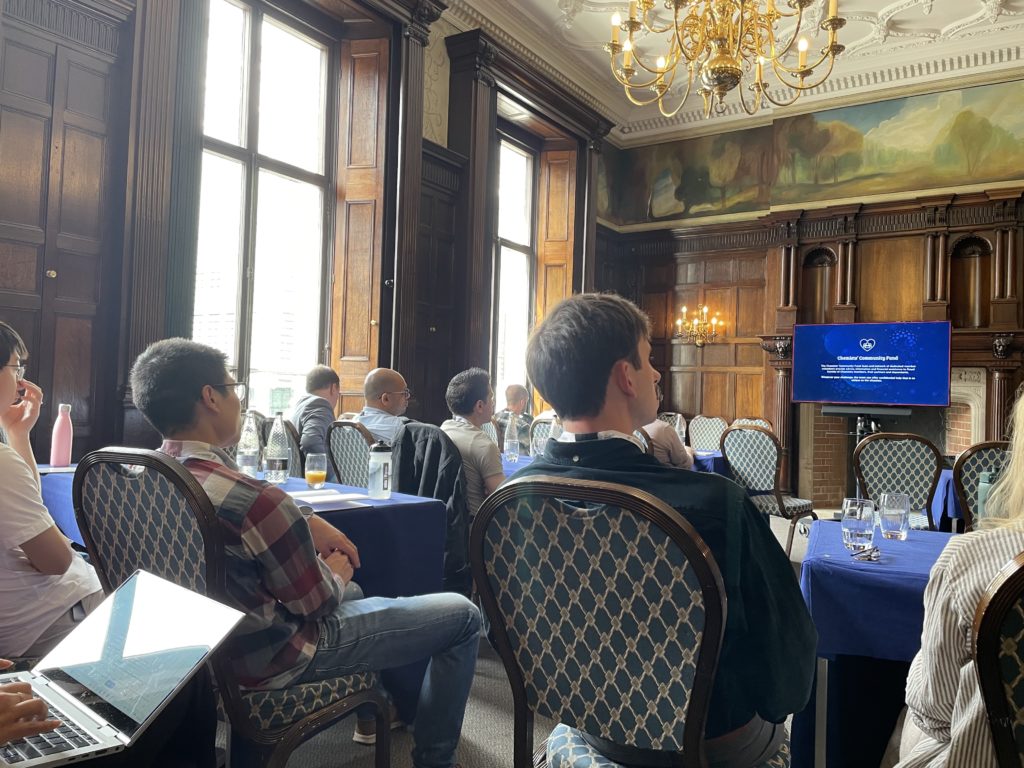
Dr Anna Rulka’s presentation

Day 2: Leadership skills and industry insights

The second day centred on leadership and industry engagement, with sessions designed to help participants reflect on how they lead, communicate, and collaborate.

Elizabeth Adams from Scafell Coaching facilitated an interactive morning workshop exploring what effective leadership looks like in research environments. Drawing on her experience, she encouraged participants to consider the importance of positive team culture, clear communication, and wellbeing in academic settings.

Through group exercises, attendees developed team charters, discussed approaches to conflict management, and shared practical strategies for workload balance and mentoring students. The conversations highlighted that leadership in science goes beyond technical expertise, it’s also about fostering inclusion, trust, and collaboration.

Collaboration was a recurring theme throughout the day. Delegates explored how to find suitable research partners, set clear expectations, and ensure fair recognition using different frameworks. Reviewing each other’s online profiles also helped participants reflect on how to represent their work effectively to potential collaborators and employers.

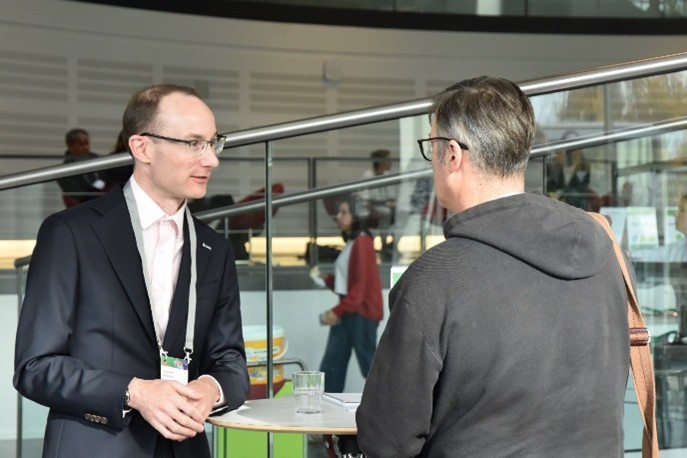
In the afternoon, participants heard from Dr Nadia Luheshi of AstraZeneca, whose talk offered an inspiring view of career pathways in industry. With experience spanning immunology, mRNA research, and oncology, she spoke about her transition from academia to industry and shared insights into open innovation, target validation, and the future of cancer research.

Nadia’s talk also highlighted how AI, data science, and digital health are transforming research and diagnostics, reinforcing how chemical biologists can contribute to advancing sustainable, patient-centred innovation.


Dr Nadia Luheshi

Day 3: Research sharing and reflection

The final day of the retreat returned to a focus on research, with each participant delivering a “chalk talk”: a concise five-minute presentation showcasing new data, challenges, or ideas from their lab, followed by a short discussion.

These sessions were energetic and collaborative, reflecting the diversity of expertise represented in the room. Participants provided constructive feedback, discovered shared interests, and even identified potential collaborations to pursue after the retreat.

The CBIC Programme Manager joined the final session to share upcoming opportunities for ECRs, including an RSC Funding Workshop on establishing independent research careers. As the retreat drew to a close, many participants reflected on how the experience had strengthened their confidence, expanded their professional networks, and provided new tools for leadership.

Prof. Ed Tate at his plenary

Strengthening the early career chemical biology community

The CBIC Early Career Researcher Leadership Retreat aims to become a cornerstone event for the chemical biology community. Building on the success of the inaugural 2023 meeting in Newcastle, this second edition continued to provide a supportive and intellectually stimulating environment for emerging leaders in the field. The quality of the ECRs at the event indicates that the future is bright for chemical biology research in the UK.

By combining scientific discussion with leadership training and peer-to-peer learning, the retreat underscored the importance of nurturing the people who will shape the next generation of chemical biology research. Feedback from delegates highlighted the value of the programme’s mix of sessions, which balanced professional development with time for reflection and collaboration.

For the RSC, events like this are an important way to connect with early career researchers, listen to their experiences, and ensure that Royal Society of Chemistry continues to meet their evolving needs—from publishing support and career development resources to funding opportunities and community networks.

The RSC extends sincere thanks to the organisers, speakers, and participants for delivering another inspiring retreat. Their enthusiasm, openness, and collaborative spirit reflect the best of the chemical biology community.

Read more: RSC CBIC Leadership Retreat Empowers Next-Gen Chemical Biologists | Imperial News | Imperial College London