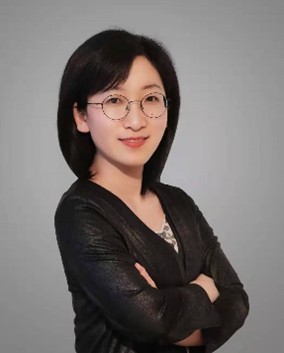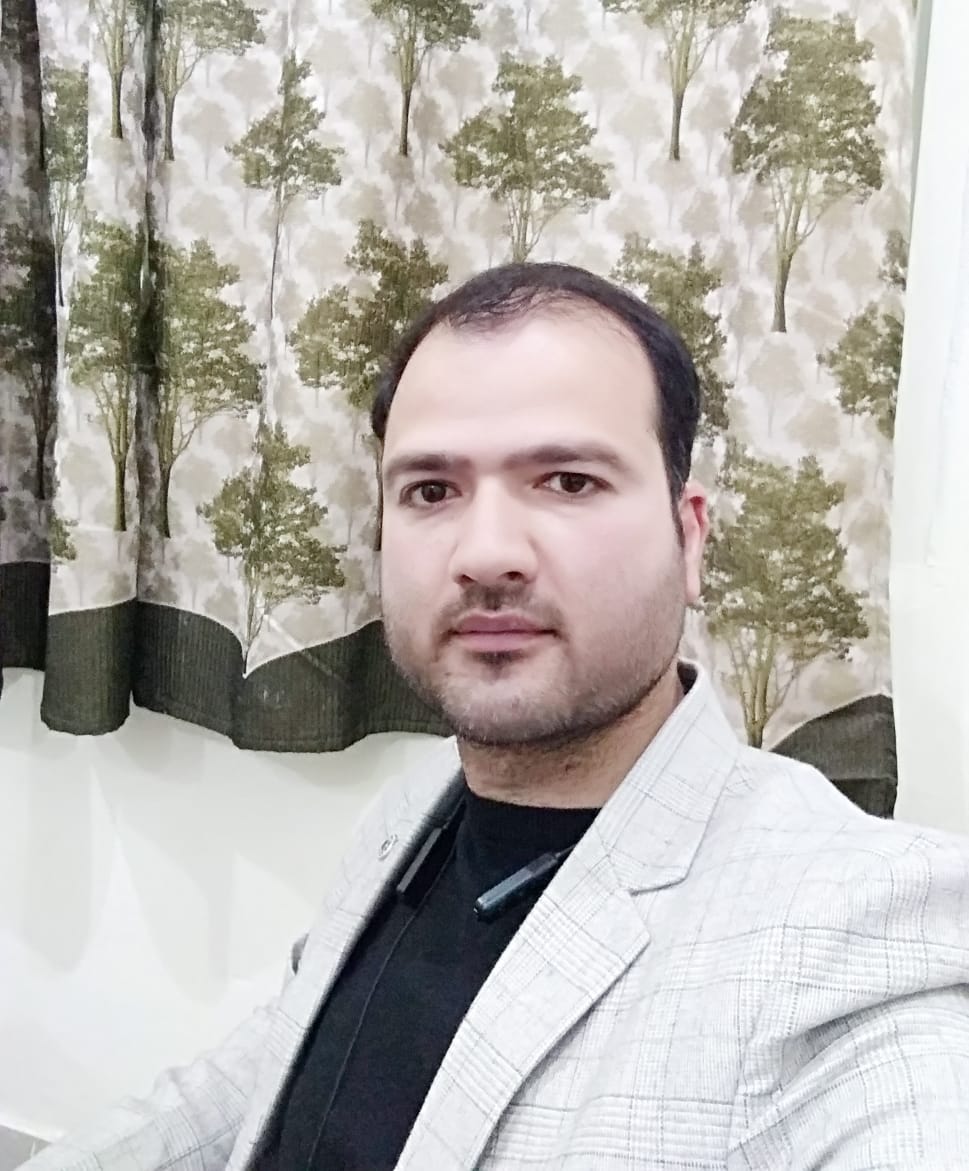

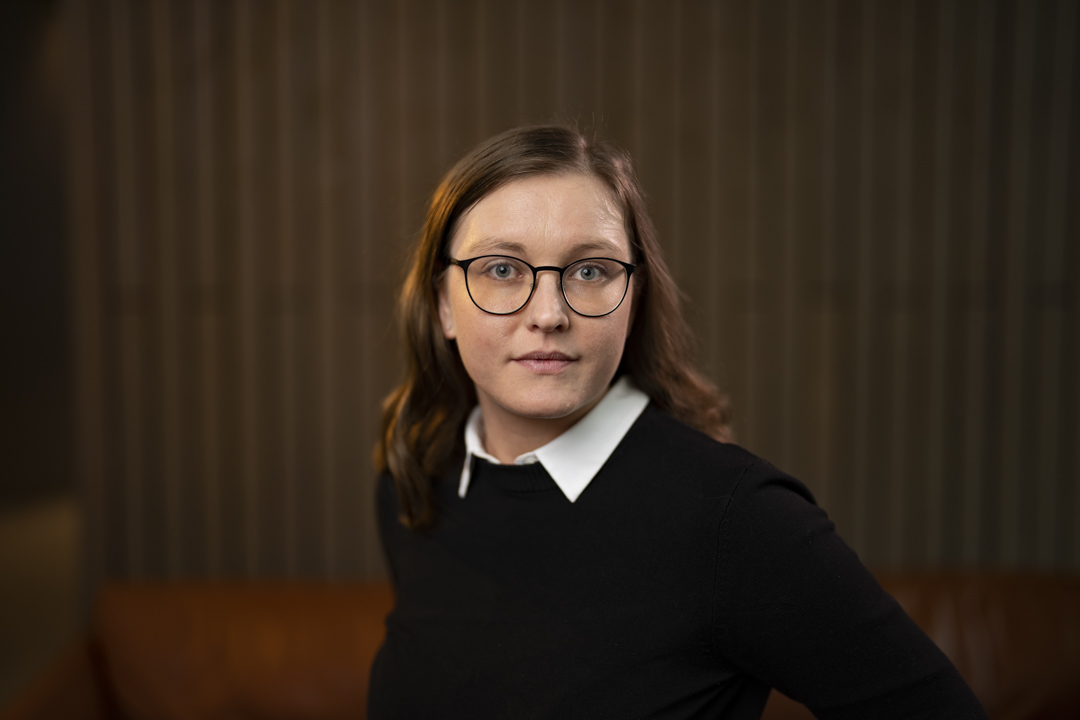
 Emilia Olsson received her PhD in 2017 under the supervision of Prof. Nora H de Leeuw at University College London (United Kingdom), where she developed a materials design framework to discover novel complex oxide materials for solid oxide fuel cells. After her PhD, she moved to the University of Surrey where she joined the group of Prof. Qiong Cai as a Research Fellow in Battery Materials Modelling. During this time, she also joined the groups of Prof. Maria-Magdalena Titirici at Imperial College London and Prof. Alan Drew at Queen Mary University of London as a visiting researcher. In September 2021, Emilia joined the Advanced Research Center for Nanolithography (ARCNL) as group leader of the Materials Theory and Modelling group and the Institute for Theoretical Physics (ITFA) at the Institute of Physics (IoP), University of Amsterdam (the Netherlands) as an assistant professor in Condensed Matter Theory. Her primary research interest lies in atomic scale materials design. Using complementary computational modelling techniques in close collaboration with experiment, Emilia aims to elucidate the atomic scale processes for complex materials, with a special focus on understanding how disorder, defects, and non-epitaxial interfaces affect materials properties.
Read Emilia’s Emerging Investigators article “Vacancy enhanced Li, Na, and K clustering on graphene” and find out more about her in the interview below:
Your recent Emerging Investigators Series articles focuses on Vacancy enhanced Li, Na, and K clustering on graphene. How has your research evolved from your first article?
In our earliest work on alkali metals in carbon materials, we focused on the role of individual carbon motifs found in realistic disordered anodes, and how they interact with single alkali-metal ions. Those studies were aimed at understanding how specific structural features enable ion storage and diffusion, and how that links to material performance.
Over time, our perspective has broadened from single ion insertion to the full interfacial picture, including the conditions under which metal deposition can begin. This paper captures that shift: rather than treating metal atoms as isolated adsorbates, we investigate how clusters form and grow on a representative carbon basal plane, and how a single, common defect—a carbon monovacancy—can fundamentally reshape the nucleation landscape. More broadly, my group is now extending this direction to connect local chemistry and defects to device-level failure modes such as dendrite formation, with the goal of informing more robust, designable carbon architectures.
What aspect of your work excites you most right now?
What excites me most right now is connecting atomic-scale structure and chemistry to device breakdown mechanisms—turning qualitative ideas into mechanistic understanding that can actually guide design.
For years, the community has recognised that “defects matter,” but often without a clear picture of how they influence nucleation and failure. In this study, we map distinct, metal-specific behaviour: on pristine graphene, Na shows a spontaneous tendency to cluster, while Li clustering is hindered at small cluster sizes, and K clustering is suppressed by weak binding and size effects. Introducing a single monovacancy stabilises small clusters for all three metals by strengthening binding and changing charge localisation—effectively lowering the barrier to early-stage nucleation.
The most exciting part is the implication: if we can identify which local motifs promote (or resist) nucleation, we can move toward rational defect and interface engineering, rather than relying on trial-and-error optimisation.
Which profession would you choose if you weren’t a scientist?
Something connected to the arts. I seriously considered museum conservation at one point—work that combines creativity with careful analysis and a deep respect for materials. In many ways, it has the same appeal as research: understanding how things are put together, why they degrade, and how to preserve or improve them.
What one piece of career advice would you share with other early career scientists?
Don’t lose sight of the fact that applications need fundamental science. My main advice is to build your career around a clear scientific question rather than a narrow technique—methods evolve quickly, but a strong question will keep generating new projects, collaborations, and impact. Seek strategic collaborators who genuinely complement your expertise, and cultivate persistence: most worthwhile ideas take longer than expected, and steady, focused progress (especially protecting time for thinking and writing) often matters as much as any single breakthrough.
How do you feel about Sustainable Energy & Fuels as a place to publish research on this topic?
Sustainable Energy & Fuels is an excellent fit for this work because it sits at exactly the intersection we aim for: fundamental chemical physics and materials insight, with a clear focus on problems that matter for sustainable energy technologies.
Although our paper is computational and fundamental in approach, the motivation is strongly applied: our goal is to understand early-stage metal clustering that can seed dendrite formation, compromising safety and lifetime in alkali-metal-based batteries. The journal’s interdisciplinary readership across energy storage, materials chemistry, and electrochemistry makes it a natural home for studies that connect atomistic mechanisms to device-relevant failure modes and, importantly, to practical design principles.