


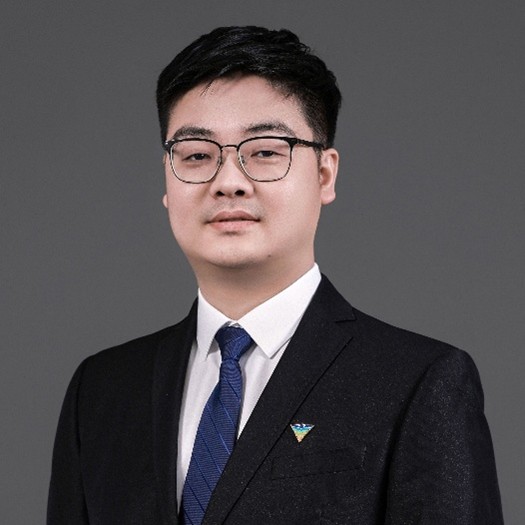
 Hao-Cheng Yang received his BSc and PhD degrees in Polymer Science from Zhejiang University. He then conducted postdoctoral research at Argonne National Laboratory (USA). In 2018, he joined Sun Yat-sen University as an Associate Professor, and in 2021 he joined Zhejiang University as a ZJU-100 Young Professor. His research focuses on surface & interface engineering of polymer membranes and membrane processes for environmental and energy applications.
Read Hao-Cheng’s Emerging Investigators Series article “Solar Energy Technologies for Desalination and Utilization of Hypersaline Brines” and read more about him in the interview below:
Your recent Emerging Investigators Series paper focuses on Solar Energy Technologies for Desalination and Utilization of Hypersaline Brines. How has your research evolved from your first article?
My first article focused on the phase separation processes of polymer membranes. During my PhD, my research shifted toward surface engineering of membrane materials. I later expanded my interests to membrane processes for environmental and energy-related applications. Currently, my research focuses on membrane material and device design for advanced separation and solar-powered processes.
What aspect of your work excites you most right now?
I am particularly excited by the concept of Janus configurations in my current research. Starting from Janus membranes, we found that constructing opposing properties on each side of a membrane can outperform uniform materials and, in some cases, reconcile conflicting material requirements for specific applications. This concept is not limited to membranes and shows promise for a wide range of energy-related applications.
Which profession would you choose if you weren’t a scientist?
If possible, I would choose to be an artist, a dream I have had since childhood. I spent many years practicing sketching when I was young. In a way, scientific research allows me to fulfil part of that dream, especially when preparing visual schemes for research papers.
What one piece of career advice would you share with other early career scientists?
I would advise early career scientists not to give up easily, even when their ideas are not widely supported. Although the line between persistence and stubbornness can be thin, solitary persistence can sometimes be more valuable than pursuing research topics that are immediately popular.
How do you feel about Sustainable Energy & Fuels as a place to publish research on this topic?
It has been a pleasure to publish our work in Sustainable Energy & Fuels. This journal is a highly suitable and impactful venue for research in this field. The journal’s emphasis on sustainable energy and fuels aligns well with our research interests, and its interdisciplinary readership helps bridge fundamental science with practical energy applications.


