
RSC Applied Polymers has published its first articles. To celebrate this we wish to introduce some of our #RSCAppliedfirst50 authors and their recently published articles.
In this post we feature an introduction to ‘A bioinspired approach to reversibly metal binding interfaces’ written by Agnes Morrisey, Laura Delafresnaye and Christopher Barner-Kowollik et al.
An Introduction to A bioinspired approach to reversibly metal binding interfaces by Agnes Morrisey, Laura Delafresnaye and Christopher Barner-Kowollik et al.
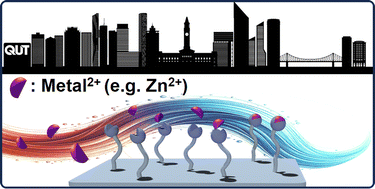
Flooding events are becoming more extreme and frequent due to climate change, including in this team’s home city of Brisbane, Australia, where devastating 2011 and 2022 floods of the Brisbane river brought the city to a standstill and adversely affected the livelihoods of many of its residents. These events cause substantial problems with regard to water contamination, especially with heavy metals, making recovery efforts challenging. However, regular rainfall events also cause continued issues for water contamination. Thus, creative solutions to treat and purify storm water are urgently required. The Queensland University of Technology (QUT) has partnered with ROCKWOOL-Lapinus to pioneer new strategies for urban storm water treatment, exploiting similar chemistry that marine animals like mussels use to attach themselves to surfaces such as rocks under often extreme conditions. Polymers play a critical role in the current research project, as the way in which mussels adhere to surfaces is by forming a cross-linked, sticky polymer network based on dopamine derivatives. Many studies in the past have been inspired by this natural adhesive mechanism, as it allows adhesion to a very wide range of substrates. Thus, for the current study, the team opted for a dopamine-based adhesion strategy, too.
Previously, the removal of heavy metals from wastewater has been based on conventional methods, which often exhibited a series of shortcomings such as the production of toxic byproducts, high energy consumption, biofouling and high cost. The university/company partnership introduces a materials system that is capable of effectively coating surfaces, while concomitantly allowing metal ions to be removed from aqueous solutions. Specifically, the consortium prepared a bioinspired polymeric system, which can readily crosslink in aqueous solution with effective adhesion onto 2D and 3D surfaces. The perhaps most challenging part of the project was to synthesize the molecule that contained both the adhesive units that are able to crosslink upon increasing the pH of the aqueous environment, while at the same time carrying a ligand molecule that is capable of capturing a wide range of metals, ideally reversibly. At the same time, the team required a simplified system that allowed them to rapidly confirm if the adhesion was successful both on the planar silicon surfaces and – more importantly – on the actual stone wool slabs that are used in the real-world storm water management application. For this purpose, the team also designed an adhesive system that carries a chemically clearly visible marker during surface analysis, i.e. bromine.
The binding surfaces were carefully assessed towards their long-term stability, metal ion binding efficiency and recoverability via surface sensitive analytical methods including Time of Flight Secondary Ion Mass Spectrometry and X-ray Photoelectron Spectroscopy, which are powerful surface analytical tools that allow the spatially resolved mapping of functionalities on surfaces. The versatility and effectiveness of the approach make these bioinspired materials highly attractive candidates for applications for the use in robust urban storm water treatment systems. The system is currently undergoing engineering assessment to explore real-world implementation, where the team conducts long term water flow testing over larger modified stone wool units, including their regeneration by removing the captured metal ions. Given the universal nature of the adhesion system, the team is actively exploring how to capture other pollutants from urban storm water.
The researchers in the project love working together, as it combines expertise from organic chemistry, industrial chemistry and chemical engineering, to tackle a problem that effects millions of people worldwide.
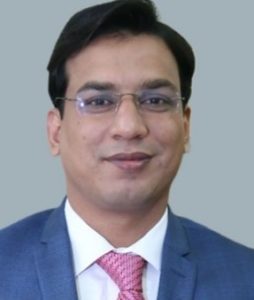
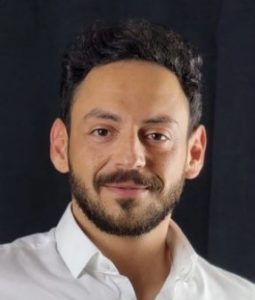
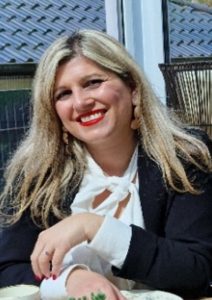
Agnes Morrissey
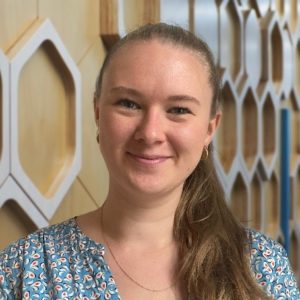
Agnes Morrisey
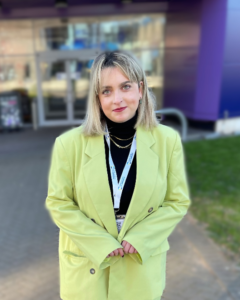
Agnes Morrissey obtained a bachelor’s degree in 2019 and master’s degree in 2021 in chemistry from the Friedrich Schiller University Jena, Germany, working with Prof Ulrich Schubert on self-healing and dynamic materials. In 2020, during her master’s studies she undertook a research project under supervision of Filip Du Prez as part of her Erasmus semester at Ghent University working on vitrimers. In 2022, she joined QUT’s Soft Matter Materials Laboratory for her doctoral studies under supervision of Distinguished Prof Christopher Barner-Kowollik. Her research focusses on exploring new interfaces for wastewater treatment as part of an industrial collaborative project with ROCKWOOL. In 2023, as part of this collaborative project Agnes conducted an internship stay at ROCKWOOL, the Netherlands, to gain experience in industry applied research.
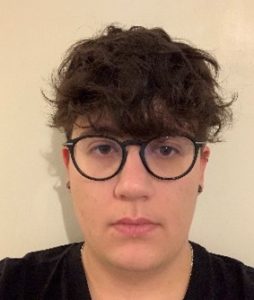
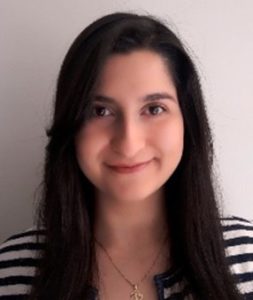
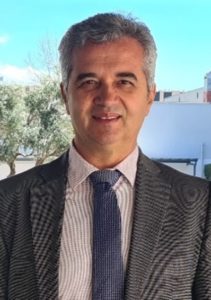
Vishakya Jayalatharachchi
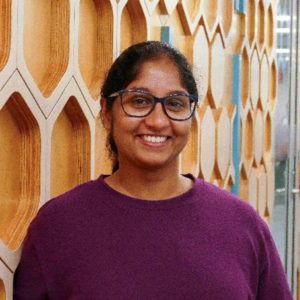
Vishakya Jayalatharachchi
Vishakya Jayalatharachchi graduated with a degree in Chemistry from the College of Chemical Sciences, Sri Lanka in 2014. Following this, she pursued her Master’s degree in Applied Sciences at Queensland University of Technology (QUT) and graduated in 2016, subsequently commencing her doctoral studies. Under the supervision of Profs. Josh Lipton-Duffin and Jennifer MacLeod, Vishakya completed her PhD in 2021 in the Surface Science group at QUT. Her doctoral research focused on the assembly and reactions of carboxylic acids on metal-passivated silicon, studied under ultra-high vacuum system. Following the completion of her PhD, Vishakya joined the Soft Matter Materials group at QUT as a postdoctoral research fellow in 2022, under the supervision of Distinguished Professor Christopher Barner-Kowollik. During this time, she contributed to a collaborative project aimed at understanding the materials and rockwool fiber interfaces. Currently, she works as a postdoctoral researcher at Friedrich-Alexander University of Erlangen-Nuremberg, Germany. She works with Professor Dr. Sabine Maier in Experimental Physics group studying the molecular self-assembly and on- surface reactions with atomic precision.
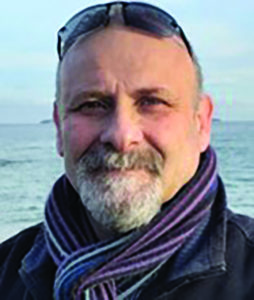
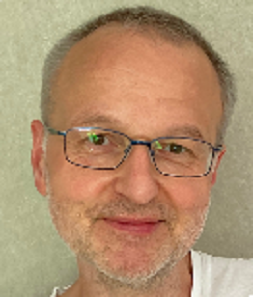
Lukas Michalek
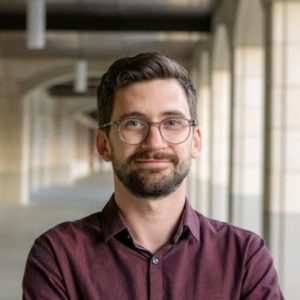
Lukas Michalek
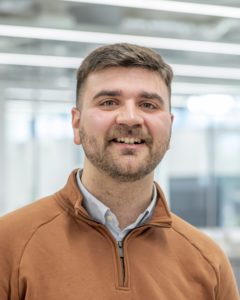
Lukas Michalek is a Walter Benjamin Postdoctoral Fellow with an interdisciplinary background that bridges chemistry, materials science, and engineering. His research interests center on leveraging advanced characterization techniques, molecular design, and theory to gain fundamental insights into soft matter. Lukas specializes in probing soft matter materials and polymer structures at surfaces and interfaces. During his PhD at the Queensland University of Technology, he developed novel methodologies for precisely characterizing material properties on surfaces under the supervision of Prof Christopher Barner-Kowollik (graduated 2020). As a postdoc at Stanford University, he applies his expertise to understand polymeric materials for emerging flexible electronics applications and is developing advanced characterization methodologies under the guidance of Prof Zhenan Bao. Lukas is combing polymer chemistry with advanced analytical instrumentation like atomic force microscopy to elucidate structure-property relationships. His interdisciplinary skills allow him to connect molecular-level understanding to real-world applications.
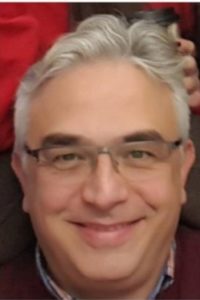
Prasanna Egodawatta
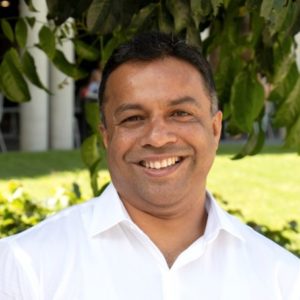
Prasanna Egodawatta
Associate Professor Prasanna Egodawatta is a water and environmental engineer at the School of Civil and Environmental Engineering. He has over 20 years of experience in both industry and academia. Prasanna’s recent research is focused on stormwater engineering, particularly in the environmental monitoring of toxic pollutants. Notably, his investigations into the fate and distribution of PFAS in urban environments and transformation and degradation processes of PAHs and heavy metals have emphasized the concealed risks associated with Australian waterways. Prasanna has empowered the scientific community to better manage toxic pollutant levels in urban water systems by developing predictive equations, innovative modelling techniques, and comprehensive risk assessment tools. So far, Prasanna has co-supervised 21 PhD projects to completion and produced over 150 research outputs, including seven authored books and 101 journal articles. Prasanna has also been involved in research projects with authorities such as the City of Logan and the City of Gold Coast and major corporations such as Urban Utilities, Port of Brisbane Corporation and Brisbane Airport Corporation.
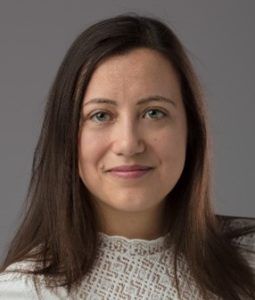
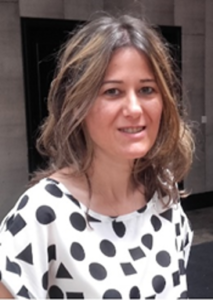
Neomy Zaquen
Neomy Zaquen
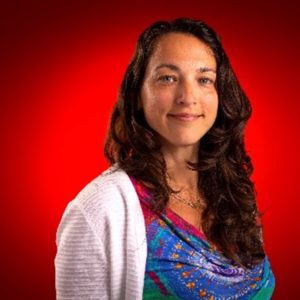
Neomy Zaquen is a Chemical Engineer, who graduated from the University of Technology, Eindhoven the Netherlands in 2012. She started her career by pursuing a PhD in chemistry at Hasselt University, Belgium, in the lab of Prof. Tanja Junkers. She joined the groups of Prof. Cyrille Boyer and Prof. Per Zetterlund at the University of New South Wales in 2017 on a Marie Curie fellowship, where she worked on the implementation of polymerization-induced self-assembly (PISA) reactions in batch and flow. At the end of 2018, she moved back to the Netherlands, where she started working in product development, at ROCKWOOL. Once acquainted with the stone wool products, the market and its customers, she became Product Manager, where she combines her technical knowledge with current market trends. At the same time, she graduated an executive master of Marketing and Management, at TIAS School for Business and Society, the Netherlands, in 2022. Currently, she is working as Strategy and Business Development Manager, thereby mapping strategic possibilities and looking into future markets for ROCKWOOL.
Laura Delafresnaye
Laura Delafresnaye
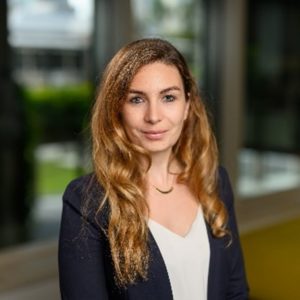
Laura Delafresnaye completed a dual engineering degree in chemistry and an MSc in polymer chemistry in 2012 at ESCPE/University Claude Bernard Lyon 1, France. During her academic journey, Laura gained practical experience as a junior engineer for a year at Bluestar Silicones (now Elkem) in Barcelona, Spain. Following this, she pursued her master’s thesis in 2012, which focused on controlled radical polymerization, at the laboratory of Catalysis, Polymerization, Process, and Materials (CP2M, Lyon, France). In 2013, she continued her academic pursuits with a PhD, collaborating with Solvay, focusing on the synthesis of polymer/clay nanocomposites film-forming latexes, also conducted in the same laboratory. In 2017, Dr. Delafresnaye joined the Soft Matter Materials Laboratory at the Queensland University of Technology (Brisbane, Australia) under the guidance of Professor Christopher Barner-Kowollik. Since then, she has developed her expertise in photochemistry, particle synthesis, and chemiluminescence. She assumed the role of Head of Laboratory Operations, and was promoted to the role of Research Coordinator for Professor Christopher Barner-Kowollik in 2019. Notably, she secured an Australian Research Council Linkage grant in 2020, collaborating with the industrial partner Rockwool-Lapinus, and a Discovery grant in 2022.
Christopher Barner-Kowollik
Christopher Barner-Kowollik
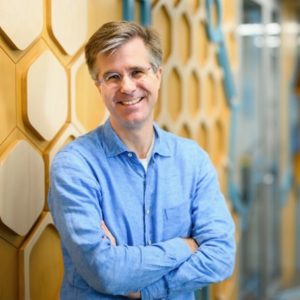
A graduate in chemistry from Göttingen University, Germany, Christopher joined the University of New South Wales in early 2000 rising to lead the Centre for Advanced Macromolecular Design in 2006 as one of its directors. He returned to Germany to the Karlsruhe Institute of Technology (KIT) in 2008, where he established and led a German Research Council-funded Centre of Excellence in soft matter synthesis. Following a period as an adjunct professor at QUT, he moved to QUT in early 2017 and established QUT’s Soft Matter Materials Laboratory, now one of the world’s premier macromolecular laboratories. Over his 24-year career, he attracted over $50M in funding, working at the interface of photo- and macromolecular chemistry using light as a finely-gated tool to control reactivity in multi-color reaction modes. He authored over 780 peer-reviewed publications in leading journals (cited over 47 000 times). Christopher’s research achievements have been recognized by an array of national and international awards including the coveted Centenary Prize of the Royal Society of Chemistry, the Belgian Polymer Medal, the Erwin-Schrödinger Award by the German Helmholtz Association, the United Kingdom Macro Medal as well as national awards by the Royal Australian Chemical Institute, the Australian Academy of Science, the Royal Society of New South Wales, an ARC Professorial Fellowship and a Laureate Fellowship. He is a Fellow of the Australian Academy of Science, the Royal Society of Chemistry and the Royal Australian Chemical Institute.
A bioinspired approach to reversibly metal binding interfaces
Agnes C. Morrissey, Vishakya Jayalatharachchi, Lukas Michalek, Prasanna Egodawatta, Neomy Zaquen, Laura Delafresnaye and Christopher Barner-Kowollik
RSC Appl. Polym., 2024, Advance Article DOI: 10.1039/D4LP00010B
 |
RSC Applied Polymers is a leading international journal for the application of polymers, including experimental and computational studies on both natural and synthetic systems. In this journal, you can discover cross-disciplinary scientific research that leverages polymeric materials in a range of applications. This includes high impact advances made possible with polymers across materials, biology, energy applications and beyond. |