

RSC Applied Interfaces publishes interdisciplinary work with an applied focus, which can be read for free here. To celebrate the excellent articles that have been published so far in our journal, we asked some of our authors to discuss their work in more detail.
In this post, we hear from Davide Barreca, Alberto Gasparotto, Chiara Maccato and Gian Andrea Rizzi as they discuss their recently published article, ‘Tailored synthesis of bixbyite-type MnxFe2−xO3 electrocatalysts for alcohol oxidation‘.
Insights from the authors
The achievement of technologically viable efficiencies for water splitting, a sustainable method to produce green hydrogen, is still hampered by the sluggish kinetics of the anodic oxygen evolution reaction (OER). An amenable alternative relies on the replacement of OER with more favorable reactions, such as ethanol and glycerol oxidation, enabling valorization of renewable feedstocks and increasing the return of energy investment. To promote further technological advancements, the implementation of cheap, active and eco-friendly electrocatalysts is a mandatory task.
In this study, we present an original chemical vapor deposition route to MnxFe2-xO3 electrocatalysts for ethanol and glycerol electrooxidation. The systems were grown on conducting glass substrates by co-vaporization of mixtures of Mn and Fe β-diketonate diamine complexes, followed by annealing in air. The strategy yielded the scarcely investigated bixbyite structure, allowing a precise tuning of Mn/Fe content and a versatile modulation of material defectivity and electronic structure, that directly impacted on functional activity. The obtained performances compare favourably with non-noble-metal alcohol oxidation electrocatalysts and even with various Pt/C systems. Analyses on working solutions confirmed a predominant alcohol conversion into carbonate, along with the formation of partially oxidized intermediates. These outcomes, along with the amenable operational stability, emphasize the potential of the adopted route, and recommend the developed systems as attractive electrocatalysts for clean energy production.
Meet the authors
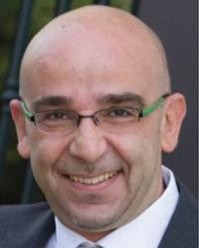 |
Davide Barreca, a research director of the National Council of Research at ICMATE-CNR, Padova, Italy, is engaged in the field of research, development and characterization of multi-functional inorganic nanosystems for sustainability and energy applications. He is a member of the International EUROCVD Board, an Associate Editor of Surface Science Spectra, and a member of the Editorial Board of Materials. He has acted as an expert on evaluation panels for research products and projects (ERC, NSF, AAPG, UEFISCDI, …), as well as a scientific coordinator/local responsible of national/international research projects and industrial contracts. He is a tutor of BSc/MSc/PhD theses, responsible for PhD/Post-Doc formation, and is a member of Scientific and Organizing Committees of various conferences. His scientific activity is documented by more than 370 papers (H-index = 62) and he has participated in more than 35 invited talks and seminars. He has been awarded various prizes, including the Vincenzo Caglioti–Accademia dei Lincei Prize (2008), the CNR Prize for Strategic/Excellence Results (2009), and the Italian SAPIO Junior Prize (2010). He has been included among the Top Italian Scientists in Chemistry (TIS) and the Top 2% World Scientists – Stanford University – Italia Career (2021-26).
|
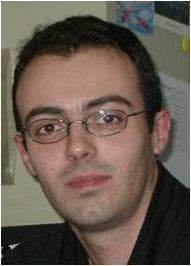 |
Alberto Gasparotto is a Professor at the Department of Chemical Sciences (DiSC) – Padova University (UNIPD), whose scientific activity is mainly devoted to the fabrication of inorganic/hybrid materials by synthetic routes based on cold plasmas or on the synergic combination of CVD, Sputtering, ALD, Sol-Gel etc., and the investigation of the resulting structure-property relationships. He has published nearly 260 papers (H-index = 56), 1 book chapter, 1 patent (licensed to Strem Chemicals®) and over 290 conference communications. Professor Gasparotto has received various awards for his research, including the Prize for the Best Ph.D Thesis in Inorganic Chemistry-Italian Chemical Society (2006), the Eni Italgas Prize for Energy and Environment – Debut in Research (2007), the Regional Prize on Innovation – category “Ph.D Thesis” (2007), and the Alceste Mion Prize for Pure Chemistry (2007). He has been a member of the Groups of Evaluation Experts (GEV) of Area 03 – Chemistry, in the Italian Evaluation of Research Quality 2015-2019 (VQR), referee of national/international programs, supervisor of BSc and MSc students in Chemistry/Industrial Chemistry/Materials Science, and has held lectures and specialized seminars for masters, PhD schools and international workshops. He was an organizer of the SAMIC (Syntheses and Methodologies in Inorganic Chemistry) conference (Brixen, BZ, Italy) from 2002 to 2008, co-organizer of an SSI conference symposium (Padova, 2017), and scientific committee member of an E-MRS Symposium (Strasbourg, 2013).
|
 |
Chiara Maccato is a Full Professor of Inorganic Chemistry at DiSC-UNIPD, where she is responsible for the Multi-Functional Nanomaterial group. She is a member of the Supervision Board for the Material Science and Engineering PhD school – Padova University (since 2018), member of the Chemistry Degree Committee – Padova University (since 2022), and member of the Space Committee – DiSC (since 2023). The scientific interests of Prof. Maccato initially involved theoretical modelling of coordination compounds and short-range interactions on solid surfaces, and, over the last 20 years, multi-functional inorganic and hybrid nanoarchitectures for sustainable energy production, environmental protection, and gas sensing. Her scientific activity is documented by more than 250 publications (H-index = 53), 1 patent and more than 235 contributions to conferences/workshops, including various invited talks, lecturers and seminars at national and international conferences and foreign universities. She is an RSC fellow, a member of the Editorial Board of Nanomaterials (since 2018), and is a member of the Advisory Board of CrystEngComm (since 2020). She has been a tutor/co-tutor of over 40 Bachelor/Master/PhD degree theses in Chemistry/Materials Science and Engineering, and has been a supervisor of Post-Doc Research Fellows. She has coordinated or been a member of various national and international research projects (INSTM, Padova University, MIUR, CNR, FP7-ITN, NMP) and various industrial contracts. She has also acted as an evaluator of Research Products for the National Agency for the Evaluation of the Research Quality (ANVUR) and for the Chemical Sciences Panel – Institutes of the Czech Academy of Sciences.
|
 |
Gian Andrea Rizzi, an Inorganic Chemistry Professor at DiSC-UNIPD, has co-authored nearly 170 scientific papers (H-index = 38), focusing on the growth and characterization of ordered, surface stabilized oxide and metal nano-phases, of relevance as sensors, model catalysts and, more recently, electrocatalysts and photo-electrocatalysts. Prof. Rizzi has gained a remarkable know-how in the use of photoemission spectroscopies and other standard surface science techniques. He was involved in the development of innovative 2D materials for sustainable energy conversion devices, and catalytic processes for solar fuel generation. He co-supervised the research projects of 2 PhD candidates from Tsinghua University (bilateral Italy−China GRAPE-MAT and GINSENG projects of the MAECI) and was responsible for research units in the framework of the Italian PRIN and P-DiSC research projects. He is a member of the Editorial Board of Nanomaterials and is a reviewer for several international journals, such as ACS Applied Materials & Interfaces, Biosensor-Bioelectronics, Small, Applied Surface Science etc.
|
Tailored synthesis of bixbyite-type MnxFe2−xO3 electrocatalysts for alcohol oxidation
Alessandro Bigiani; Alberto Gasparotto; Gian Andrea Rizzi; Andrea Basagni; Cinzia Sada; Raffaella Signorini; Marta De Zotti; Davide Barreca; Andraž Šuligoj; Urška Lavrenčič Štangar; Chiara Maccato
RSC Appl. Interfaces (2026) 3 (5): 1519–1531. DOI: 10.1039/d6lf00181e

 |
RSC Applied Interfaces is a dedicated, interdisciplinary reference journal for cutting-edge research on the applications of surfaces and interfaces. In addition to the applied focus, work considered for publication in RSC Applied Interfaces is expected to be highly original and of top quality. The journal seeks to report major scientific advances beyond the state of the art, at the cutting edge of this interdisciplinary field. |