

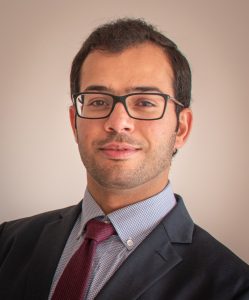
 Dr. Mim Rahimi is a Kaspar J. Willam Assistant Professor of Environmental Engineering at the University of Houston (UH), where he also holds an affiliate appointment with the Materials Science and Engineering Program. Before joining UH in 2021, he was a postdoctoral associate at MIT working with Prof. T. Alan Hatton. He earned his Ph.D. in Chemical Engineering from Penn State University in 2017 under the supervision of Prof. Bruce Logan. Dr. Rahimi’s research group develops electrochemical processes for separation and sustainability applications, with particular emphasis on carbon management, resource recovery, and environmental remediation. His work has been recognized through the 2024 NSF CAREER Award, DOE’s National EnergyTech University Prize, and the UH-Chevron Energy Transition Innovation Challenge. He was selected for the American Academy of Environmental Engineers and Scientists (AAEES) 40 Under 40 Recognition Program in 2025 and received the AAEES 2025 Excellence in Environmental Engineering and Science Competition Award. He also received the University of Houston 2024–2025 Faculty Research Excellence Award and the 2025–2026 Early Innovator Award. Most recently, Dr. Rahimi was selected as an Emerging Investigator in Electrochemistry by ACS Electrochemistry.
Read Mim’s Emerging Investigators article titled “Electrochemical Reactive Carbon Capture: What Has Been Achieved and What Remains to Be Explored” and find out more about him in the interview below:
What do you see as the most significant insights or conclusions from your Perspective article?
One of our main goals was to provide a more balanced view of reactive carbon capture (RCC). Much of the early discussion around RCC has focused on its thermodynamic advantage, particularly the possibility of bypassing energy-intensive CO2 desorption and compression. That advantage is real, but our analysis shows that it needs to be considered alongside kinetic and mass-transport limitations that currently prevent us from fully realizing that potential. We tried to identify where those limitations come from and, more importantly, what research directions could help move RCC closer to its theoretical promise.
What aspect of your work excites you most right now?
What excites me most is working across a fairly wide range of technology readiness levels. We do fundamental research to understand the underlying chemistry and electrochemistry, but we also try to translate those ideas into practical systems, including larger-scale demonstrations. I particularly enjoy the feedback loop between the two. Practical implementation often reveals questions that we would not necessarily identify at the fundamental level, while fundamental understanding helps us design better systems.
Which profession would you choose if you weren’t a scientist?
I would probably be a movie director. During my undergraduate, graduate, and postdoctoral years, photography and some beginner-level cinematography were always side interests of mine. I really enjoyed the creative process of turning an idea into something visual and telling a story through images. Directing a movie always seemed like a fascinating combination of creativity, storytelling, and bringing many different pieces together.
What one piece of career advice would you share with other early career scientists?
I would say follow the questions you are genuinely passionate about, while staying open to learning and adapting. There is a lot to gain from the experience of more senior researchers, but every generation of scientists also has to become comfortable with new tools and ways of working. Right now, I think developing good AI literacy is part of that. Understanding how to use these tools thoughtfully, rather than simply ignoring them or following every trend, will increasingly be an important part of doing research well.
 Dr Yanwei Lum obtained his BEng degree in Materials Science and Engineering at Imperial College London in 2012. He then received his PhD degree in Materials Science and Engineering at the University of California, Berkeley in 2018 under Prof. Joel W. Ager III. This was followed by a PostDoctoral stint at the University of Toronto with Prof. Edward H. Sargent. He joined the Department of Chemical and Biomolecular Engineering (ChBE) at the National University of Singapore (NUS) as a Presidential Young Assistant Professor in 2021. His research interests include electrocatalysis for CO2/NO3- reduction, electroorganic reactions and hydrogen storage. His research has been recognized by awards such as Waterloo Institute of Nanotechnology (WIN) 2025 Rising Star Award, MIT TR35 Innovators Under 35 (Asia Pacific) and ASEAN-ROK Next Innovator Award.
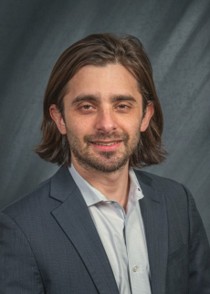 Professor Marc Porosoff is an Associate Professor of Chemical and Sustainability Engineering at the University of Rochester. He received his BS in 2009 and MS in 2010, both in Chemical and Biomolecular Engineering from the Johns Hopkins University. In 2015, he completed his PhD in Chemical Engineering at Columbia University under the supervision of Prof. Jingguang G. Chen. He then worked as a National Research Council sponsored postdoctoral fellow at the Naval Research Laboratory on the seawater to fuel project. Porosoff has been awarded funding by the Office of Naval Research, American Chemical Society-Petroleum Research Fund, the National Science Foundation, and the Department of Energy. In 2026, he was appointed to the Early Career Board of the journal, EES Catalysis. At Rochester, Porosoff investigates relationships between chemical reactivity and catalyst electronic/structure properties through catalyst synthesis, in situ analytical techniques, and reactor studies. He is also working on new mechanisms of catalyst representation and energy transfer to accelerate development and implementation of carbon-neutral processes in the 21st century. Porosoff is also a co-host of