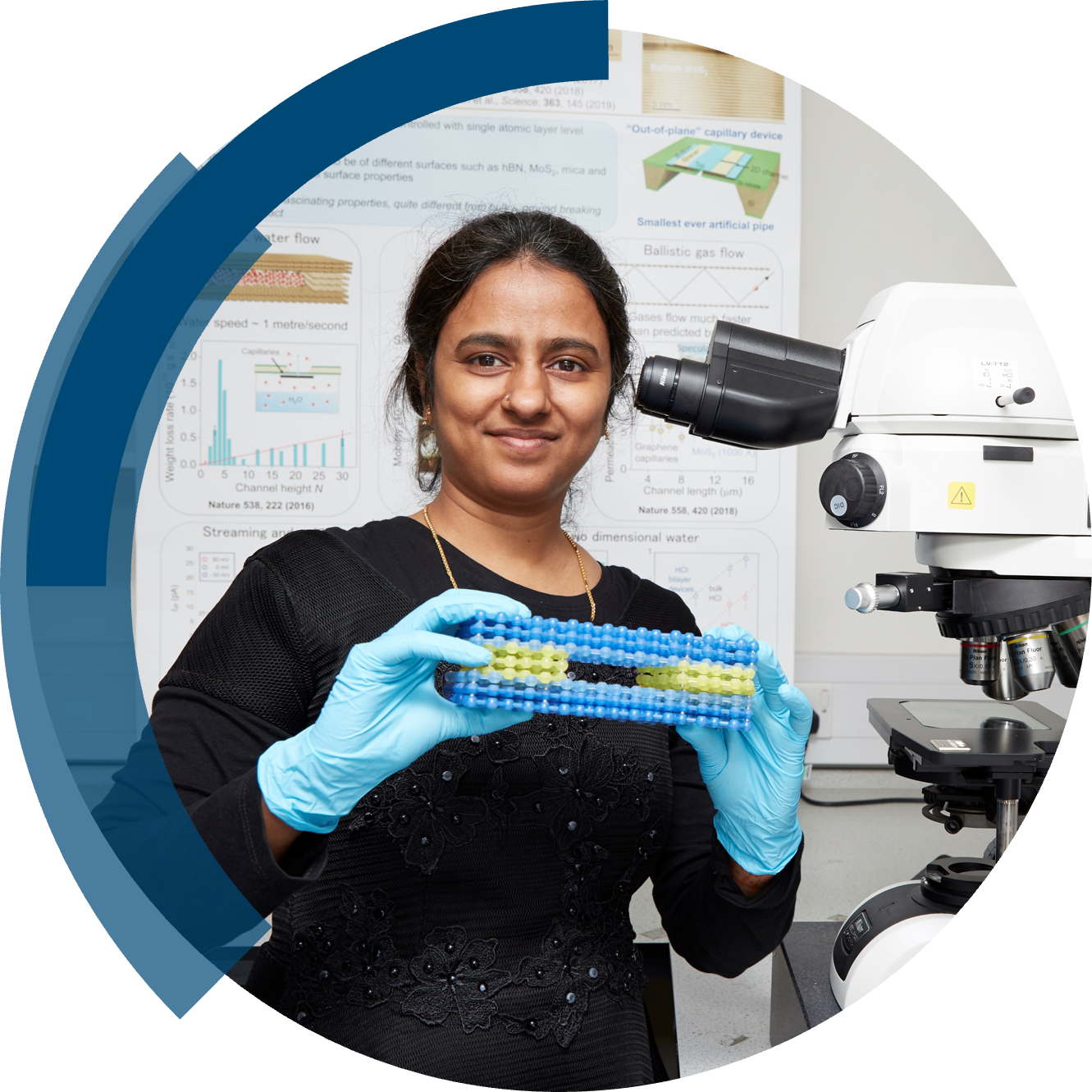

On behalf of the ChemSocRev Editorial Board, we are delighted to announce the joint winners of the 2025 ChemSocRev Pioneering Investigator Lectureship – Keary Engle (The Scripps Research Institute) and Garret Miyake (Colorado State University).
Keary and Garret join our recent past winners Radha Boya (2024), Timothy Noël and Ryan Shenvi (2022/23), and Daniele Leonori and Connie Lu (joint 2021 winners).
Get to know more about Keary and Garret below:
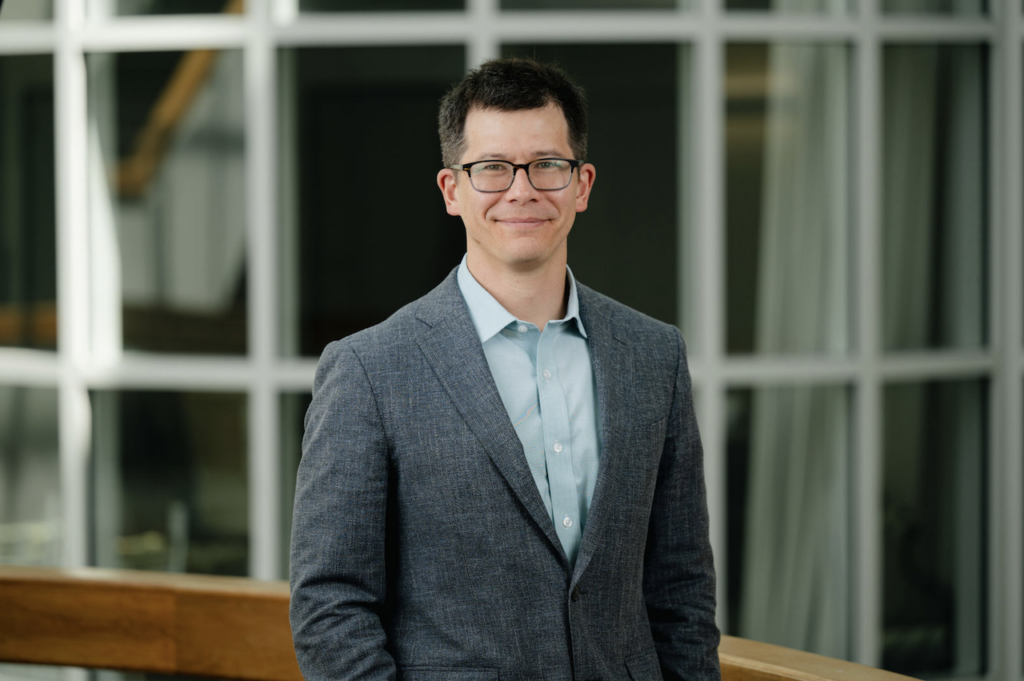
Keary Engle is the John and Susan Diekman Dean of Graduate & Postdoctoral Studies at The Scripps Research Institute and a professor in the Department of Chemistry. His research focuses on accelerating the synthesis of organic molecules that are used in medicines, biological probes, agrochemicals, and materials building blocks. Many of these molecules are difficult to prepare, requiring several steps to create, costing a substantial amount of time and effort, and generating large quantities of waste. His group develop catalysts that enable efficient, effective and sustainable methods of chemical synthesis to better produce small molecules. Catalysts developed in the Engle lab have been rapidly adopted in academic and industrial labs around the world.
Prior to joining Scripps Research as an assistant professor in 2015, Engle was an NIH Postdoctoral Research Fellow at the California Institute of Technology. He is also a recipient of the 2021 NSF CAREER Award, 2021 Amgen Young Investigator Award, 2020 Eli Lilly Organic Chemistry Award, and 2018 Bristol Myers Squibb Unrestricted Grant, among many other honors. Since joining Scripps Research, he has served on more than 90 graduate student advisory committees.
He earned a PhD in Chemistry and a DPhil in Biochemistry after completing his graduate studies jointly at The Scripps Research Institute with Prof. Jin-Quan Yu, and the University of Oxford with Profs. Véronique Gouverneur and John M. Brown.
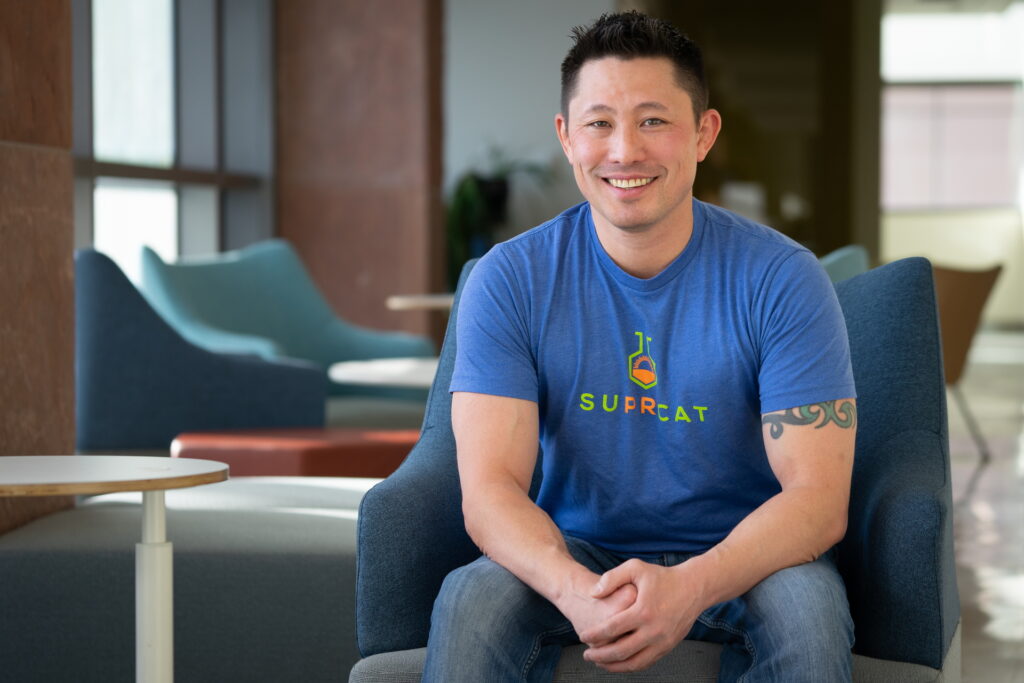
Garret Miyake is the Dr. Robert Williams Professor of Organic Chemistry at Colorado State University, the Director of the NSF CCI Center for Sustainable Photoredox Catalysis (SuPRCat), and an Associate Editor for Macromolecules. He earned his B.S. in Chemistry from Pacific University. He completed his Ph.D. studies with Eugene Chen at Colorado State University before conducting postdoctoral research with Robert Grubbs at Caltech.
The Miyake group has research interests focusing on photoredox catalysis and sustainable polymers.
Highly-commended nominees
Each year, a large number of excellent researchers gets nominated for the ChemSocRev Pioneering Investigator Lectureship award. Due to the exceptionally high standard of nominations this year, we have again decided to select a number of Highly Commended candidates, whose diverse contributions to both science and the scientific community are appreciated by our Editorial Board.
 |
Serena Arnaboldi is an Associate Professor of Analytical Chemistry at the Department of Chemistry, University of Milan (UniMi), Italy. Her research is at the cutting edge of chiral electrochemistry, focusing on the development of “inherently chiral” materials and their applications in sensing, motion, and sustainable technologies.
She is the Principal Investigator of the PAC-MAN project, an initiative supported by the Seed4Innovation (S4I) program and awarded the Seal of Excellence PoC (ERC Proof of Concept). This project focuses on the development of innovative, wireless, and miniaturized systems for the detection and separation of chiral molecules, bridging the gap between fundamental electrochemical research and industrial application. In recognition of her scientific contributions and commitment to innovation, Dr. Arnaboldi was awarded the “Gian Giacomo Drago e Fausta Rivera Drago 2025” Prize by the Istituto Lombardo Accademia di Scienze e Lettere. Her research, which is also supported by a prestigious ERC Starting Grant (CHEIR), stands out for the use of sustainable media, such as ionic liquids, to create high-performance electrochemical interfaces with reduced environmental impact.
|
 |
Federico Bella is Full Professor of Chemistry at Politecnico di Torino (Italy). His main scientific activity covers post-lithium batteries and electrochemical ammonia production, through sustainable chemistry-oriented and multivariate approaches. He has published more than 130 papers and counts a h-index of 80.
He has received awards from the most important worldwide scientific associations, such as the International Society of Electrochemistry (2023 Tajima Prize), the Royal Society of Chemistry (2021 Horizon Prize), the Accademia Nazionale dei Lincei (2019 Piontelli International Award), etc. He is coordinating an ERC Starting Grant project (SuN2rise), with an overall fund of 1.5 million Euros, and has recently launched the first Italian research laboratory on potassium-based batteries.
|
 |
Anna K. H. Hirsch is W3 (full) professor for Pharmaceutical Chemistry at Saarland University and head of the department for drug design and optimization at the Helmholtz Institute for Pharmaceutical Research Saarland (HIPS). Her work focuses on anti-infective drug design by adopting rational approaches such as structure- and fragment-based drug design in combination with the protein-templated strategies dynamic combinatorial chemistry and kinetic target-guided synthesis.
She received her Ph.D. from the ETH Zurich in 2008 in the group of Prof. François Diederich. Subsequently, she joined the group of Prof. Jean-Marie Lehn at the Institut de Science et d’Ingénierie Supramoléculaires (ISIS) in Strasbourg as an HFSP postdoctoral fellow, before taking up a position as assistant professor at the Stratingh Institute for Chemistry at the University of Groningen in 2010 where she was promoted to associate professor in 2015. Anna has authored more than 200 peer-reviewed papers and has received numerous awards such as the Gratama Science Prize in 2014, the SCT-Servier Prize for Medicinal Chemistry in 2015, the Innovation Prize for Medicinal Chemistry of the GdCh/DPhG in 2017, in 2019, the EFMC Young Medicinal Chemist in Academia runner-up Prize, in 2024, the RSC Capps Green Zomaya Award and the Grand Prix en Sciences Chimiques de l’Institut Grand Ducal and in 2025 and the SCT Award for Drug Discovery Chemistry.
|
 |
Xu Hou is the Nanqiang Distinguished Professor at Xiamen University. He is a Fellow of the Royal Society of Chemistry and currently serves as Deputy Director of the State Key Laboratory of Physical Chemistry of Solid Surfaces. Professor Hou obtained his B.Sc. from Sichuan University and pursued his graduate studies at the National Center for Nanoscience and Technology, where he received the Outstanding Doctoral Dissertation Award of the Chinese Academy of Sciences. He then conducted postdoctoral research at Harvard University starting in 2012. In 2014, he was selected as one of the American Chemical Society CAS Future Leaders. He subsequently received a lectureship appointment from the Harvard-MIT Health Sciences and Technology before returning to China and joining Xiamen University in 2016.
His research focuses on bioinspired materials and interfacial chemistry. As a pioneering scientist in the field, he originally proposed the groundbreaking concepts of liquid gating technology (LGT) and bioinspired nanofluidic iontronics (BNI), which represent a paradigm shift in modern chemical science. Both innovations have gained global recognition from IUPAC, the world’s leading authority in chemistry: LGT was selected as one of the IUPAC Top Ten Emerging Technologies in Chemistry in 2020, and BNI received the same distinction in 2024.
|
 |
Guiliang Xu is a chemist in the Chemical Sciences and Engineering Division at Argonne National Laboratory and a CASE scientist at the Pritzker School of Molecular Engineering at the University of Chicago. He received his Bachelor’s degree in 2009 and Ph.D. in 2014 from Xiamen University.
Dr. Xu has over 15 years of research experience in the design, synthesis and processing of multifunctional materials for advanced energy storage systems, including lithium-ion, sodium-ion, lithium–sulfur, and solid-state batteries. His research utilizes cutting-edge characterization techniques to elucidate the fundamental relationships between material structure and electrochemical performance, enabling the development of safer, higher-energy-density battery materials. He is currently leading multiple DOE-funded programs and has published >140 publications in high-impact journals including Science and Nature with a total citations of > 15,000. He is recipient of several awards including 2025 Advanced Light Source Early Career Award, 2025 Argonne Board of Governors Distinguished Performance Award, MIT Technology Review 35 under 35 Innovators.
|
About our Lectureships
RSC journal lectureships are intended to inspire and support the wider scientific community and to promote the value of science to broader society. They cover various subject areas and support talented and eligible scientists primarily in the earlier stages of their careers. Full details of all our lectureships, including nomination timelines, can be found here: https://www.rsc.org/standards-and-recognition/prizes/journal-lectureships