

Author Archive

Sensors & Diagnostics July 2026 Newsletter

Welcome to the latest Sensors & Diagnostics newsletter! We’re pleased to share a round-up of the latest journal news, as well as information on our themed collections and upcoming events.

Get future updates directly to your inbox with our email alerts. Sign up here.

Latest News

In scientific research, acknowledging methodological limitations is essential for responsible reporting. To uphold these principles, authors submitting to Sensors & Diagnostics are now required to clearly outline the limitations of their study in the Discussion section, emphasising the need for further research and transparency in reporting. To assist authors in this process, we encourage them to read our “Discussion of study limitations strengthens research through transparency” Editorial, which outlines our expectations and provides helpful examples. We welcome comments and questions, which can be sent in reply to this email.

A graphic showing the prize winners' portraits.

We were delighted to announce the recipients of the Outstanding Early Career Research Award 2025 from Sensors & Diagnostics: a team comprising Tao Yu, Aditi Dey Poonam, Amy Halbing, Shengwei Zhang, Yingmiao Liu, Zheng Li, William Marx, Andrew B. Nixon and principal investigator Qingshan Wei.

Their award-winning paper, “A digital nonenzymatic nucleic acid amplification assay for ultrasensitive detection of cell-free microRNA in human serum“, introduces a simpler and more compact tool than PCR for amplifying diagnostically-important nucleic acid fragments, which they have dubbed sequential nonenzymatic amplification or SENA. Find out more about the winners and their work at our earlier blog post.

Our latest Journal Impact Factor, for 2025, has increased to 5.9! We would like to thank our authors for contributing their best work to the journal, and our editors and reviewers for their prompt and professional handling of these contributions. We’d particularly like to highlight our Outstanding Reviewers for 2025 who can be found in our recent Editorial.

We are pleased to announce that the Editor in Chief of Sensors & Diagnostics Prof. Dr Xueji Zhang has been selected as the Chair of the International Engineering and Technology Institute Strategic Advisory Committee. This is a fantastic achievement, and we would like to congratulate Prof. Zhang on this well‑deserved honour and wish him every success in this important role.

Research Spotlight
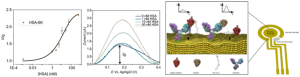
A molecular switch framework for reagentless electrochemical detection of proteins”, Shirzadi, Poudineh et al., Sens. Diagn., 2026, 5, 837–847, DOI: 10.1039/d6sd00048g
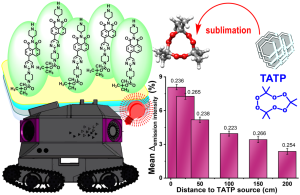
A multilayer fluorogenic material for the ultrasensitive detection of TATP in air, suitable for implementation on a mechanized semi-autonomous robotic platform”, Torroba et al., Sens. Diagn., 2026, 5, 828–836, DOI: 10.1039/d5sd00218d

Themed Collections

The submission deadline for our Wearable Sensors for Health Monitoring and Disease Diagnosis themed collection has been extended to 30th September 2026. This collection is Guest Edited by Tailin Xu, Yu Song, Ming Zhou and Hnin Yin Yin Nyein, and will highlight cutting-edge research on wearable sensors for health monitoring and disease diagnosis, with an emphasis on innovations in materials, device engineering, multimodal sensing platforms, data analytics, and clinical translation. Find out more on the collection’s web page.

A banner with the event details

Events

Sensors & Diagnostics proudly sponsored awards at 2027 Gordon Research Conference on Bioanalytical sensors, “Applying the Fundamentals of Recognition and Amplification to Current Challenges”. Our congratulations to the prize winners, Brooke Bendarke (Tufts University,United States), Jenny Ji (Stanford University, United States), and Roozbeh Moakhar (McGill University, Canada).
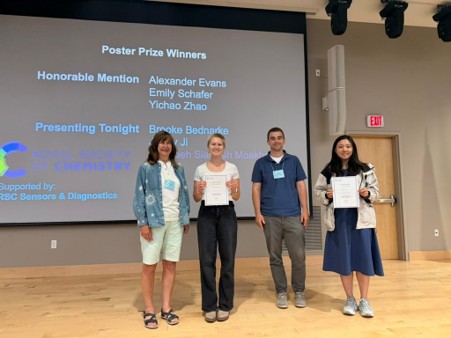
The award winners and journal editor

We were also pleased to sponsor the best poster prize at the 13th Royal Society of Chemistry Analytical Biosciences Group Early Career Researcher Meeting, along with Analyst and RSC Advances. Brian van’t Veer of Da Vinci Laboratory Solutions received the Sensors & Diagnostics prize. Congratulations to Dr. van’t Deer!

Follow our channels below to keep up to date on the events we’re supporting later in 2026.

Submit your work to Sensors & Diagnostics

Find out more about Sensors & Diagnostics on our webpage, where you can also find our author guidelines. Sensors & Diagnostics has received a 2025 Impact Factor of 5.9, and provides a first decision on articles sent to peer review in an average of 41 days.

Publishing open access with RSC journals unlocks the full potential of your research – bringing increased visibility, wider readership and higher citation potential to your work. As a not-for-profit organisation serving the chemical sciences community, we ensure that our article processing charge (APC) remains the most competitive of major publishers. More details can be found here and the APC for Sensors & Diagnostics is £2200. You can also use our journal finder tool to check if your institution currently has an agreement with the RSC that may entitle you to a discount of the APC.

Stay Connected

Follow us on LinkedIn and Bluesky for new articles and the latest news from Sensors & Diagnostics and related journals at the Royal Society of Chemistry.

Amplifying Innovation: Sensors & Diagnostics’ Outstanding Early Career Research Award 2025

A banner with the journal title and message topic.

We are delighted to announce the recipients of the Outstanding Early Career Research Award 2025 from Sensors & Diagnostics: a team comprising Tao Yu, Aditi Dey Poonam, Amy Halbing, Shengwei Zhang, Yingmiao Liu, Zheng Li, William Marx, Andrew B. Nixon and principal investigator Qingshan Wei.

A graphic showing the prize winners' portraits.

Their award-winning paper, “A digital nonenzymatic nucleic acid amplification assay for ultrasensitive detection of cell-free microRNA in human serum, introduces a simpler and more compact tool than PCR for amplifying diagnostically-important nucleic acid fragments, which they have dubbed sequential nonenzymatic amplification or SENA.

In their own words:

“In this work, we demonstrated an enzyme-free nucleic acid amplification strategy for point-of-care (POC) use, such as detecting disease-related cell-free microRNA in human serum samples. The assay was constructed based on two layers of isothermal DNA-only amplification circuits, first hybridization chain reaction (HCR) and then catalyzed hairpin assembly (CHA). One of the key innovations of this work is the transformation of the solution assay into a digital chip-based format, which not only enables assay miniaturization but also improves the detection sensitivity down to 5 femtomoles (fM), orders of magnitude better than many other nonenzymatic nucleic acid amplification assays. The chip format also makes the assay compatible with smartphone readout. The developed assay was beta-tested to quantify miR-21 and miR-92 expression levels in colorectal cancer patient serum with accuracy comparable to RT-PCR. ”

About the team:

  • Tao Yu received his PhD in Analytical Chemistry from Nanjing University, China. After completing postdoctoral training at North Carolina State University, he is now an R&D Engineer at SMIC, focusing on the research of plasma etching for chips.
  • Aditi Dey Poonam is currently a PhD student in Wei’s group at North Carolina State University. Her research interests include point-of-care molecular assays, microfluidics, and lab-on-a-chip devices.
  • Amy Halbing, previously an undergraduate researcher in Wei’s group, is now a PhD student at Charité Universitätsmedizin Berlin, studying the relationship between childhood maltreatment, diurnal cortisol patterns in pregnancy, and immune cell profiles in mid-gestation.
  • Shengwei Zhang completed his PhD in Chemical and Biomolecular Engineering at North Carolina State University. He has research interests span from nanomaterials synthesis, characterization, to 3D printing.
  • Yingmiao Liu is a Senior Research Associate at Duke Phase I Biomarker Laboratory. With more than 30 years of experience in RNA and protein biomarker research, Dr. Liu is dedicated to searching for predictive markers that enable precision medicine across diverse cancer patient populations.
  • Zheng Li received a PhD in Chemistry from the University of Illinois at Urbana-Champaign and finished postdoctoral training at North Carolina State University. He is currently a full professor at Jinan University, China, focusing on developing wearable sensors, noninvasive diagnostics, and nano-enabled technologies for human health, agriculture, and environmental monitoring.
  • William Marx, previously an undergraduate researcher in Wei’s group, is now an Associate Specialist at Merck.
  • Andrew B. Nixon is a Professor of Medicine and Director of the Phase I Biomarker Laboratory at Duke University. He is a nationally recognized expert regarding the development of biomarkers, bringing extensive experience in coordinating multi-investigator and multi-center correlative analyses at Duke and the NCI-NCTN network. Dr. Nixon serves in various leadership roles within the NCI, working with diverse multi-disciplinary teams focused on improving cancer patient outcomes through biomarker science.
  • Qingshan Wei is an Associate Professor of Chemical and Biomolecular Engineering and also the lead investigator for this work, who leads a research team at NC State, focusing on developing point-of-care diagnostic and sensing technologies for human and plants.

Accepting the award, the team added:

“We are very honored to receive the Sensors & Diagnostics Outstanding Early Career Research Award 2025. We would like to extend our special thanks to the award selection committee of Sensors & Diagnostics for this nice recognition. We would also like to highlight that this study is a result of wonderful interdisciplinary collaborations between different institutes and fields. The contributors include engineers and chemists from NC State, and medical researchers and clinicians from Duke. This award is the best reward for collaborative research at the interface of engineering and biomedicine, which will encourage us to continue this path, with the ultimate goal of moving the best diagnostic technology from the lab to the clinic and eventually into patients’ hands.”

We are proud to celebrate the team’s accomplishment, and look forward to following their future work.

Read the winners’ paper here.

Follow us on LinkedIn and Bluesky for new articles and the latest news from Sensors & Diagnostics and related journals at the Royal Society of Chemistry.

Get future updates directly to your inbox with our newsletters and email alerts. Sign up here.

Sensors & Diagnostics April 2026 Newsletter  

Welcome to the latest Sensors & Diagnostics newsletter! We’re pleased to share a round-up of the latest journal news, as well as information on our themed collections and upcoming events.

Get future updates directly to your inbox with our email alerts. Sign up here.

Latest News

Our 2026 #RSCPoster conference took place on LinkedIn for 24 hours, from 3-4 March. We’re pleased to share the winner in the #RSCAnalytical category is Karolina Kuczyńska for the poster Monitoring Photopolymerization Reactions: The Essential Role of Quantitative and Qualitative Techniques in Understanding Rapid Polymerization!

This year’s runner-up Jeriko Ho presented A holistic approach to understanding biochemical degradation of human tissues using high resolution MALDI MS.

Congratulations to the winner and runner up, and our thanks to the all of the contributors for their excellent posters. Find out about the winners in other categories on our web page: 2026 #RSCPoster winners.

We were pleased to highlight the contributions of women in sensing and diagnostics research, with a special article collection which you can read here: Celebrating International Women’s Day 2026: Women in Sensing & Diagnostics.

Themed Collections

A banner with the collection's details.

We’re pleased to share our latest themed collection on ‘Paper-based point-of-care diagnosis’, guest edited by Daniel Citterio, Thiago Paixão, and William Reis de Araujo. This collection aims to explore the advancements, challenges, and future directions in developing and applying paper-based POC diagnostics. Read the collection here

A banner with the event details

Submissions are still open for our themed collection on ‘Wearable sensors for health monitoring & disease diagnosis’, guest edited by Dr Tailin Xu (Shenzhen University)Prof. Song Yu (City University Hong Kong)Prof. Ming Zhou (Northeast Normal University)Dr Hnin Yin Yin Nyein (The Hong Kong University of Science and Technology). The deadline for submissions is 30 June 2026. Find out more on our blog post.

Events

Sensors & Diagnostics was proud to sponsor a best speaker award at the 4th edition of the Biophotonics & Artificial Intelligence School which took place in Florence, Italy offering an advanced training programme at the intersection of biophotonics and AI. Our congratulations to the winner, Rebeca Tudor of IMT Bucharest!

A banner with the event details

Sensors & Diagnostics is proud to support the upcoming Asilomar Bioelectronics Symposium 2026, taking place 1-4 September in Pacific Grove, CA, USA. Our Editorial Board member Sahika Inal is helping organise this year’s meeting which draws together research at the interface of materials, biology, engineering and much more. Find out more and register here: https://www.asilomarbioelectronics.com/

We’re also pleased to support the RSC Analytical Biosensors interest group’s 13th Early Career Research Meeting, which aims to engage early career researchers in debate and discussions about all areas of analytical biosciences, and provide the opportunity to build networks with other researchers in the field. Find out more at the event web page here.

Sensors & Diagnostics and Analyst are collaborating to support the Royal Australian Chemical Institute’s Analytical and Environmental Chemistry Division at the RACI National Congress 2026. Both journals are supporting awards for the best posters for the division. We look forward to finding out the identities of the winners, and wish all the participants an exciting and informative meeting! Register here for the meeting which takes place 5-10 July 2026, in Perth, WA, Australia.

Follow our channels below to keep up to date on the events we’re supporting in 2026.

Submit your work to Sensors & Diagnostics

Find out more about Sensors & Diagnostics on our webpage, where you can also find our author guidelines. Sensors & Diagnostics has received a 2024 Impact Factor of 4.1, has an article acceptance rate of 52%, and provides a first decision on articles sent to peer review in an average of 33 days.

Publishing open access with RSC journals unlocks the full potential of your research – bringing increased visibility, wider readership and higher citation potential to your work. As a not-for-profit organisation serving the chemical sciences community, we ensure that our article processing charge (APC) remains the most competitive of major publishers. More details can be found here and the APC for Sensors & Diagnostics is £2200. You can also use our journal finder tool to check if your institution currently has an agreement with the RSC that may entitle you to a discount of the APC.

Stay Connected:

Follow us on LinkedIn and Bluesky for new articles and the latest news from Sensors & Diagnostics and related journals at the Royal Society of Chemistry.

New themed collection on ‘Supramolecular Sensors: From Molecules to Materials’

We’re pleased to announce that a new themed collection from Sensors & Diagnostics has now been published online!

The Guest Editors of this collection

Read the collection

This themed collection, guest edited by Sankarasekaran Shanmugaraju (Indian Institute of Technology Palakkad, India), Robert Elmes (Maynooth University, Ireland) and Valeria Amendola (University of Pavia, Italy) , highlights the current advancements and recent progress on the use of supramolecular structures and materials for applications in chemosensing and host-guest chemistry.

Supramolecular structures are often composed of discrete molecules or molecular assemblies that can accommodate suitable guest analytes through various non-covalent interactions. Supramolecular sensor chemistry has long been a topic of research that is receiving significant attention and many advancements have been made over the past few decades in the rational design of chemosensors for detecting various important analytes. The collection showcases recent developments in this important area of supramolecular chemistry research to inspire and attract the next generation of researchers into the field.

You can find a list of the articles below. All articles in Sensors & Diagnostics are open access and free to read.

Editorial

Introduction to ‘Supramolecular Sensors: From Molecules to Materials’
Sankarasekaran Shanmugaraju, Robert B. P. Elmes and Valeria Amendola
Sens. Diagn., 2024, 3, DOI: 10.1039/D4SD90034K

Perspectives and Reviews

An overview of Schiff base-based fluorescent turn-on probes: a potential candidate for tracking live cell imaging of biologically active metal ions
Yanahi Posadas, Carolina Sánchez-López and Liliana Quintanar
Sens. Diagn., 2023, 2, 988–1076, DOI: 10.1039/D3SD00110E

Recent developments in pyrene-based fluorescence recognition and imaging of Ag+ and Pb2+ ions: Synthesis, applications and challenges
Suvendu Paul, Prasenjit Barman, Nilanjan Dey and Michael Watkinson
Sens. Diagn., 2024, 3, 946–967 DOI: 10.1039/D3SD00289F

Reactivity-based amino-1,8-naphthalimide fluorescent chemosensors for the detection and monitoring of phosgene
Mannanthara Kunhumon Noushija, Alenthwar Vamshi Krishna, Thorfinnur Gunnlaugsson and Sankarasekaran Shanmugaraju
Sens. Diagn., 2024, 3, 783–798 DOI: 10.1039/D4SD00048J

Modified synthetic peptides: from therapeutics to chemosensors
Conor Wynne and Robert B. P. Elmes
Sens. Diagn., 2024, 3, 987–1013 DOI: 10.1039/D4SD00022F

Communications and Papers

Extracellular vesicle analysis in supramolecular 3D hydrogels: a proof-of-concept
Greta Bergamaschi, Roberto Frigerio, Angelo Musicò, Giulia Lodigiani, Paola Gagni, Riccardo Vago, Marina Cretich and Alessandro Gori
Sens. Diagn., 2024, 3, 395–399, DOI: 10.1039/D3SD00313B

A Zn-MOF functionalized with alkyne groups: ultrasensitive detection of Cu+ and Pd2+ ions in aqueous medium
Ana Dreab and Craig A. Bayse
Sens. Diagn., 2023, 2, 1585–1596, DOI: 10.1039/D3SD00188A

Artificial light-harvesting nanoparticles based on a tripodal fluorescence sensor mediated by multiple luminescence mechanisms
Zhiying Wu, Qiaona Zhang, Dengli Chen and Tangxin Xiao
Sens. Diagn., 2024, 3, 295–900, DOI: 10.1039/D3SD00297G

Synthesis and fluorescence properties of 2′-benzyloxy flavone—a dual probe for selective detection of picric acid and pH sensing
Vengatesh Gopal, Jayasankar Sudhakaran, Nirenjana Ramachandran, Thejus Kozhiyottu Mana, Aravind Remesh Kana, Anandhu Omanakuttan Nair, Priyanka Mohan, Tejaswini Madhusudhan, Sankarasekaran Shanmugaraju and Pandurangan Nanjan
Sens. Diagn., 2024, 3, 1263–1271, DOI: 10.1039/D4SD00151F

We hope you enjoy this new themed collection from Sensors & Diagnostics.