Author Archive

Prof. Tian Ding joins Sustainable Food Technology as an Associate Editor

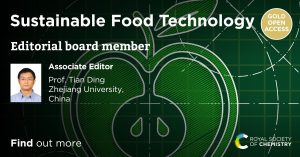
A banner with Prof. Ding's photograph.

Please join us in welcoming Prof. Tian Ding to the Editorial Board of Sustainable Food Technology as an Associate Editor! Prof. Ding serves as deputy director of the Institute of Food Processing Engineering and deputy director of the Future Food Laboratory, Innovation Center of Yangtze River Delta, Zhejiang University. His research focuses on food safety, nonthermal processing and microbial risk assessment.

Dr. Ding is a member of the WHO/FAO Microbiological Risk Assessment Committee and was recognized as a Clarivate Highly Cited Researcher in 2022, 2023 and 2024. He is a committee member of the Institute of Food Technologists (IFT) Nonthermal Processing Division, the Youth Council of Chinese Institute of Food Science and Technology (CIFST), the International Association of Food Protection (IAFP), and American Society for Microbiology (ASM).

You can join us in welcoming Prof. Ding to the Editorial Board on LinkedIn and Bluesky.

Sustainable Food technology July 2026 Newsletter

Welcome to the latest Sustainable Food Technology newsletter! We’re pleased round-up of the latest journal news, as well as information on our themed collections and upcoming events.

Get future updates directly to your inbox with our email alerts. Sign up here.

Latest news

We are pleased to announce the winners of the Outstanding Early Career Research Award 2025 from Sustainable Food Technology: Luke Wayne Browning, Huafu Wang, James Ward Taylor, Pete Wilde, Marc Rodriguez-Garcia, Lynette Anne Makins Holland and Tuomas P. J. Knowles for their paper “Digestibility and enteric release achieved with microencapsulates made from emulsion-templated plant proteins.”

Read the winners’ paper here, and find out more about the team and their work on our blog post.

We’re also delighted to share that Sustainable Food Technology’s 2025 Journal Impact Factor has risen to 9.0! The journal remains in Quartile 1 for “Food Science & Technology”. Our thanks to all of our authors for contributing their high-quality work, and to our editors and reviewers for their professional and prompt handling of these manuscripts. We’d particularly like to highlight our Outstanding Reviewers for 2025 who can be found in

Our Deputy Editor Dr Alexander Whiteside visited China in early June, and with Content Development Editor Dr Hongwan Liu visited researchers at a number of important research institutes. We’d like to thank their hosts in particular for their hospitality and insights. We look forward to building on these connections with deeper collaboration in the future.
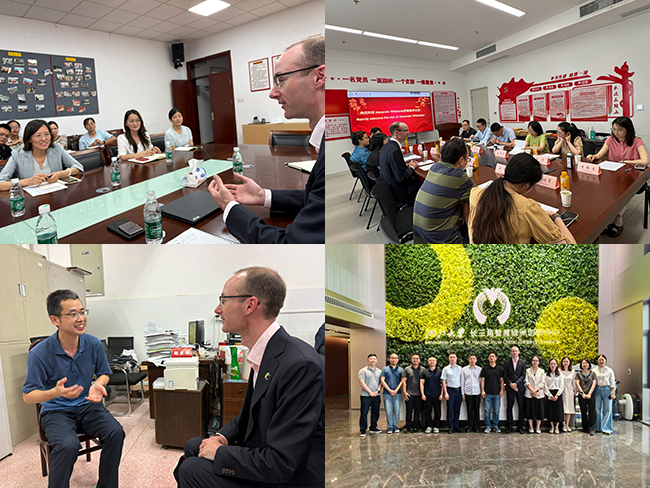
A set of 4 photographs

Clockwise from top left: Prof. Xiaoli Liu hosted an RSC presentation, group discussion and tour at Jiangsu Academy of Agricultural Sciences. Prof. Xin Rui, Editorial Board Member, hosted an RSC presentation and a group discussion at Nanjing Agricultural University. Prof. Tian Ding, Advisory Board Member, hosted an Academic Salon and group discussion at the Zhejiang University Innovation Center of Yangtze River Delta, and provided a tour of its facilities including the Future Foods Laboratory. Prof. Yu Xiao provided an insightful discussion and tour of the research facilities at Hunan Agricultural University.

Dr Whiteside’s visit ended with the 25th IAPRI World Packaging Conference, hosted by Hunan University of Technology in Zhuzhou. Food packaging and packaging sustainability were key themes at this event, which offered an opportunity to deepen the journal’s connections with and understanding of this community. Dr Whiteside shares his thanks to the organisers, host institution and fellow delegates for their warm welcome, and we look forward to the 2027 conference in Linköping, Sweden.
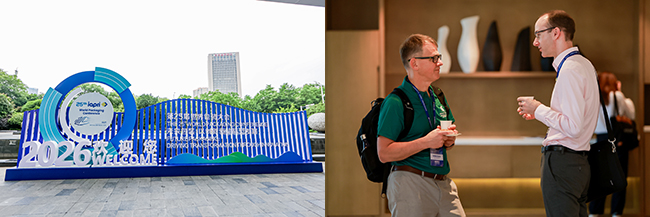
A photograph of the IAPRI entrance, and a photograph of Alexander Whiteside meeting Rafael Auras

This year’s Editorial Board Meeting for Sustainable Food Technology was held at Burlington House in London, and brought together the Board and the staff from the Editorial Office to discuss the journal’s progress through the previous year and strategy in to 2027.

The board members and Editorial Office of Sustainable Food Technology

We’re pleased to welcome Prof. Fereidoon Shahidi to the Sustainable Food Technology Advisory Board. Prof. Shahidi is a University Research Professor and Distinguished Scholar in the Department of Human Biosciences (formerly Biochemistry) at Memorial University of Newfoundland, Canada. He has authored over 1,000 peer-reviewed publications as research papers and book chapters, 80 books, and 12 patents. His research interests include nutraceuticals and functional foods with emphasis on lipids, proteins, polyphenols, natural antioxidants and oxidation control. Sustainable and full use of the harvest and valorization of processing by-products constitutes an integral part of his research.

A portrait photograph of Prof. Fereidoon Shahidi

He has received numerous awards from different societies, including the American Chemical Society (ACS), American Oil Chemists’ Society (AOCS), Institute of Food Technologists (IFT), the Canadian Institute of Food Science and Technology (CIFST), and three lifetime achievement awards from IFT, IUFoST and ISNFF. He is a past chair of the Scientific Council of the International Union of Food Science and Technology (IUFoST) and now the President of its Academy. He serves as the editor-in-chief (EiC) and editorial board member of several journals.

Shahidi is the principal founder of the International Society for Nutraceuticals and Functional Foods (ISNFF), and the Founding EiC of the Journal of Functional Foods. He was a principal founder of the Nutraceutical and Functional Food Division of IFT. He has trained over 200 graduate students, highly qualified personnel, visiting professors, scholars, and PDFs, now his colleagues in over a dozen countries.

Research Spotlight
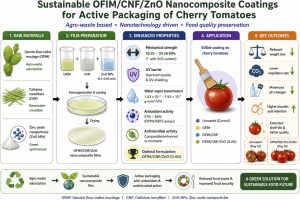
A graphical summary of the paper

Development and application of Opuntia ficus-indica mucilage films incorporated with zinc oxide nanoparticles for active packaging of cherry tomatoes”, Fawole et al., Sustainable Food Technol., 2026, DOI: 10.1039/d6fb00067c
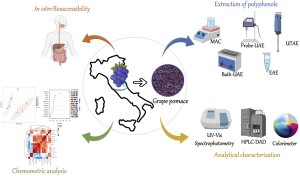
A graphical summary of the paper

Repurposing grape pomace as a functional ingredient: in-depth analytical characterization and in vitro bioaccessibility evaluation of the phenolic fraction”, Ianni et al., Sustainable Food Technol. (2026), DOI: 10.1039/d5fb00944h

Themed Collections

A banner with the event details

Our themed collection on “Advances in Nature-Inspired Nanotechnologies for a Safer and Sustainable Food Future” is still open for submissions! Guest edited by Editorial Board Member Professor Adriano Brandelli, along with Professor Mustafa Akbulut and Dr Miguel Ângelo Cerqueira, this collection aims to promote sustainable advances in food-based nanotechnology. Find out more and contribute your work by the 28th July 2026.

Events

Prof. Xin Rui, Associate Editor, gave an invited talk and introduction to Sustainable Food Technology at the 2026 International Symposium on Plant-Based Foods in July.

Prof. Xin Rui giving a talk in front of the audience at the plant based foods conference.

Sustainable Food Technology was delighted to sponsor two poster prizes at the recent Shelf Life International Meeting 2026, which was held in Santiago de Compostela, Spain. Congratulations to the winners Andrea Pulvirenti and Amparo Chiralt. We would also like to thank our Editor-in-Chief, Professor Jorge Barros-Velázquez for presenting the awards on behalf of the journal. You can find out more about what happened at this event through their website.
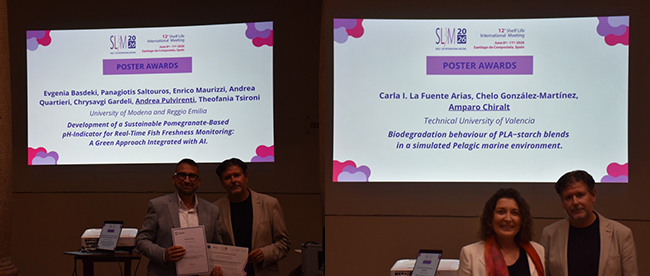
Prof. Barros-Velazquez with Left: Andrea Pulvirenti and Right: Amparo Chiralt

Sustainable Food Technology is supporting the upcoming XII International Forum on Industrial Bioprocesses, taking place at the University of Minho, Portugal, from the 9th – 12th September 2026. This is sure to be an excellent event, and you can register your interest and find out more on their website.

One of our Assistant Editors, Dr Michael Whitelaw, will also be attending the upcoming RETASTE 2026 meeting in Rethymno, Greece, from the 16th – 18th September 2026. If you are interested in connecting with Michael during this event, please do feel free to reach out.

Follow our channels below to keep up to date on the events we’re supporting in 2026.

Submit your work to Sustainable Food Technology

Find out more about Sustainable Food Technology on our webpage, where you can also find our author guidelines. Sustainable Food Technology has received a 2025 Impact Factor of 9.0, and provides a first decision on articles sent to peer review in an average of 42 days.

Publishing open access with RSC journals unlocks the full potential of your research – bringing increased visibility, wider readership and higher citation potential to your work. As a not-for-profit organisation serving the chemical sciences community, we ensure that our article processing charge (APC) remains the most competitive of major publishers. More details can be found here and the APC for Sustainable Food Technology is £2200. You can also use our journal finder tool to check if your institution currently has an agreement with the RSC that may entitle you to a discount of the APC.

Stay Connected

Follow us on LinkedIn and Bluesky for new articles and the latest news from Sustainable Food Technology and related journals at the Royal Society of Chemistry.




Fortifying Sustainably: Sustainable Food Technology’s Outstanding Early Career Research Award 2025

We are delighted to announce the recipients of the Outstanding Early Career Research Award 2025 from Sustainable Food Technology: a team comprising Luke Wayne Browning, Huafu Wang, James Ward Taylor, Pete Wilde, Marc Rodriguez-Garcia, Lynette Anne Makins Holland  and Tuomas P. J. Knowles.

Their award-winning paper, Digestibility and enteric release achieved with microencapsulates made from emulsion-templated plant proteins, introduces a plant protein microcapsule which stabilises functional ingredients in food and drinks from manufacture through to digestion, while avoiding polymers and microplastic formation.

In their words:

“We have developed a novel plant protein microencapsulate containing vitamin D2 and the study described in our manuscript characterises the digestibility and controlled release of cargo throughout digestive phases. With our unique processing and oil-emulsification of pea protein, we show that robust microcapsules can be formed by spray drying with microscopic sizing that are dispersible and stable in aqueous systems under conditions relevant to beverage manufacture. Importantly, our production process does not negatively impact the digestibility of the microcapsules, and it promotes a favourable digestion profile for the enteric release of the vitamin D2 cargo.

“Employing the static in vitro INFOGEST digestion model, we examined the disintegration of microcapsules throughout digestive phases whilst quantifying release of vitamin D2 cargo by HPLC simultaneously. Our results demonstrate that these microcapsules exhibit resilience in the oral and gastric phases and are completely susceptible to the intestinal phase, thereby delivering the cargo to the site where small molecules, such as vitamins, are effectively absorbed. This novel encapsulate addresses the growing need for robust microcapsules made from natural, biodegradable and edible materials.”

Receiving the award, they add:

“We are completely thrilled to receive the Outstanding Early Career Research Award from our research published in the RSC Sustainable Food Technology journal. The award recognises all the creative and diligent efforts these past few years, and showcases fruitful collaborations between Xampla, Quadram Institute and the Department of Chemistry, University of Cambridge.

Our work represents a collaborative effort of highly multidisciplinary scientists from both academia and industry and we believe our findings will inspire further advances in encapsulates and other structured materials made from natural polymers. We want to thank and congratulate all the team who have contributed to this work.”

We are proud to celebrate this outstanding contribution to the field and look forward to what this team uncovers next!

🔗 Read the  winners’ paper here!

About the team:

Luke Browning works as Senior Protein Scientist for Xampla, following a PhD and Post-doc at Department of Plant Sciences, University of Cambridge, and two years in industry as a manufacturing and QC scientist. His background and research themes have included the detection, quantification and characterisation of various plant proteins in fundamental, agricultural and biomaterials contexts. At Xampla, he leads on ways to extract and manipulate the physico-chemical properties of plant proteins from a variety of sources for producing biodegradable microcapsules, films and coatings.

Huafu Wang worked as a Senior Analytical Chemist for Xampla. From a background in chemistry and biochemistry, he has extensive experience in analytical method development and validation for beverage, food and pharmaceutical sectors. His role in this paper involved HPLC analyses for vitamin D.

James Ward Taylor works as Innovation Manager for Xampla, following a PhD at the University of Glasgow, and a Post-doc at Radboud University, Nijmegen. From a background in physical organic chemistry and self-assembly of soft matter, he researches new ways to control the self-assembly of proteins and other biomolecules to produce edible, biodegradable microcapsules, films and coatings. His role in this paper was in the microencapsulation process, using Xampla’s technology to effectively encapsulate vitamin D, and demonstrating its controlled release properties.

Professor Pete Wilde is an Emeritus Fellow of Quadram Institute. His early research focused on the interfacial properties of proteins and their role in food functionality such as foams and emulsions. Later, his research investigated how food microstructure changes during digestion and how this influences nutrient absorption, satiety, and metabolic health. He has a broad interest in how food structure impacts health outcomes, including obesity and type 2 diabetes, and how digestion can be modulated to improve physiological responses. He has published over 135 papers, delivered invited international lectures, and holds editorial and honorary academic positions in the field of food science.

Marc Rodriguez-Garcia is Xampla’s co-founder, having developed the technology with Professor Knowles at the University of Cambridge. With a PhD from the University of Glasgow, his expertise lies in the use of natural biopolymers in microencapsulation and other structured materials. Marc is a unique CTO with incredible scientific knowledge combined with strong commercial acumen.

Lynette Holland is Principal Scientist at Xampla, developing natural biodegradable fragrance encapsulates using plant polymers. Lynette has over 20 years of R&D experience in the fragrance industry previously developing fragrance delivery systems at Procter & Gamble and Coty, with over 40 patent filings. She leads the encapsulation technology development at Xampla and manages the IP portfolio.

Professor Tuomas Knowles is Board Scientific Advisor at Xampla, and the co-founder of three other Cambridge University spin-outs, Fluidic Analytics, Wren Therapeutics and Transition Bio. Professor Knowles has received a number of distinguished awards, including the Corday-Morgan Prize from the Royal Society of Chemistry and the Raymond and Beverly Sackler International Prize in Biophysics.

Follow us on LinkedIn and Bluesky for new articles and the latest news from Sustainable Food Technology and related journals at the Royal Society of Chemistry.

Get future updates directly to your inbox with our newsletters and email alerts. Sign up here.

Sustainable Food technology April 2026 Newsletter 

Welcome to the latest Sustainable Food Technology newsletter! We’re pleased round-up of the latest journal news, as well as information on our themed collections and upcoming events.

Get future updates directly to your inbox with our email alerts. Sign up here.

Latest news

Our 2026 #RSCPoster conference took place on LinkedIn for 24 hours, from 3-4 March. We’re pleased to share the winner in the #RSCFood category is Bhawana Yadav for the poster Gum arabic/PVA nanofiber encapsulating perillyl alcohol-inclusion complex for sustainable active fruit packaging!

This year’s runner-up is Jessica Frahn, who presented Characterising Pure Glucose Fatty Acid Esters Impact on Monoglyceride Crystallisation.

Congratulations to the winner and runner up, and our thanks to the all of the contributors for their excellent posters. Find out about the winners in other categories on our web page: 2026 #RSCPoster winners.

We were pleased to highlight the contributions of women in sustainable food technology research, with a special article collection which you can read here: Celebrating International Women’s Day 2026: Women in Sustainable Food Technology.

Themed Collections

A banner with the event details

We are delighted to announce a new open call for papers for our themed collection on “Advances in Nature-Inspired Nanotechnologies for a Safer and Sustainable Food Future“. Guest edited by Editorial Board Member Professor Adriano Brandelli, along with Professor Mustafa Akbulut and Dr Miguel Ângelo Cerqueira, this collection aims to promote sustainable advances in food-based nanotechnology. Submissions are open now until the 28th July 2026.

Submit your work to Sustainable Food Technology

Find out more about Sustainable Food Technology on our webpage, where you can also find our author guidelines.

Publishing open access with RSC journals unlocks the full potential of your research – bringing increased visibility, wider readership and higher citation potential to your work. As a not-for-profit organisation serving the chemical sciences community, we ensure that our article processing charge (APC) remains the most competitive of major publishers. More details can be found here and the APC for Sustainable Food Technology is £2200. You can also use our journal finder tool to check if your institution currently has an agreement with the RSC that may entitle you to a discount of the APC.

Stay Connected:

Follow us on LinkedIn and Bluesky for new articles and the latest news from Sustainable Food Technology and related journals at the Royal Society of Chemistry.