Emerging Investigator Series – Seungdae Oh

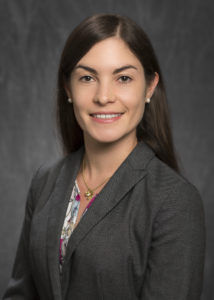
Seungdae Oh is an assistant professor in the Department of Civil Engineering at Kyung Hee University. Prior to joining KHU, he was an assistant professor (2015–2017) in the School of Civil and Environmental Engineering at Nanyang Technological University in Singapore and a postdoctoral research associate at University of Illinois at Urbana-Champaign. He received his PhD from Georgia Institute of Technology, after obtaining his BS from Chung Ang University and MS from KAIST in Korea, respectively.

He is interested in diverse aspects of environmental microbiology and biotechnology. Recent interests include fate, risk, and abatement of micropollutants, antibiotic resistance, and infectious pathogens in urban water cycles and advanced biological treatment of water and waste streams.

Read his Emerging Investigator article “activated sludge upon antibiotic shock loading: mechanistic description of functional stability and microbial community dynamics” and read more about him in the interview below:

Your recent Emerging Investigator Series paper focuses on activated sludge upon antibiotic shock loading: mechanistic description of functional stability and microbial community dynamics. How has your research evolved from your first article to this most recent article?

My master’s study involved process optimization of anaerobic sludge systems treating organic wastes. One day, I happened to look at tiny microbes swimming in the sludge through a microscope, which fascinated/led me to be more interested in microbial communities and their life. I could learn about ecology and develop genomic/bioinformatic techniques for characterizing diverse microbial communities during my PhD/postdoctoral works. Those fundamentals/techniques (and still with a microscope) help our laboratory explore microbes in sludge and various environments

What aspect of your work are you most excited about at the moment?

I’m excited when I find out the role of a microbe in the environment one-by-one. The more excited is that there are countless to be characterized.

In your opinion, what are the most important questions to be asked/answered in this field of research?

Water can be circulated via closed loops in urban cities, from toilet to tap. Since microbes/viruses (harmful or beneficial) are always carried with water, it would be interesting to address how they travel, whether they matter for health, and what affects their traveling.

What do you find most challenging about your research?

Training students is challenging but worthwhile.

In which upcoming conferences or events may our readers meet you?

No plan due to the pandemic. Conferences I often attend include IWA, ASM Microbe and ISME.

How do you spend your spare time?

Spending time with my family. We enjoy going to parks/playgrounds and travel over the country.

Which profession would you choose if you were not a scientist?

If I had to pick, maybe performing art? I participated in a school theater club and performed acting in a play. I didn’t do well but surely enjoyed.

Can you share one piece of career-related advice or wisdom with other early career scientists?

Work hard but not to the extent disturbing the family.

Digg This
Reddit This
Stumble Now!
Share on Facebook
Bookmark this on Delicious
Share on LinkedIn
Bookmark this on Technorati
Post on Twitter
Google Buzz (aka. Google Reader)

Emerging Investigator Series – Noémie Elgrishi

Noémie Elgrishi is an assistant professor in the Chemistry Department at Louisiana State University. She began her higher education in Paris at École Normale Supérieure and Université Pierre et Marie Curie – Paris VI. During her Master’s degree she studied host-guest chemistry with Johnathan Nitschke at the University of Cambridge and energy storage with Daniel Nocera at the Massachusetts Institute of Technology. Next, she completed her PhD on electrocatalytic reduction of carbon dioxide under the guidance of Marc Fontecave in Collège de France in Paris. She then pursued postdoctoral studies under the mentorship of Jillian Dempsey at UNC-Chapel Hill, which focused on mechanistic investigations of proton-coupled electron transfer (PCET) processes.

Read her Emerging Investigator article “Carbon Electrodes are Effective for the Detection and Reduction of Hexavalent Chromium in Water” and read more about her in the interview below:

Your recent Emerging Investigator Series paper focuses on Carbon Electrodes for the Detection and Reduction of Hexavalent Chromium in Water. How has your research evolved from your first article to this most recent article?

My background is in chemistry for environmental and energy-related challenges. A key aspect of the research is focused on understanding the fundamental processes that underpin the key transformations. These transformations all rely on the movement of protons and electrons in either a stepwise or concerted fashion. These processes are, for example, central to the chemistry of catalytic mechanisms for energy storage. My first paper as a first author was on photocatalytic H-X splitting with a focus on enhancing the stability of catalysts. This work was in the lab of Dan Nocera, at MIT at the time. This theme stayed with me throughout my PhD in Paris with Marc Fontecave. I was then exploring the mechanism of simple complexes for electrocatalytic reduction of carbon dioxide. The focus was on strategies to both control the competition between the production of hydrogen and of carbon containing fuels and orient the stability of the catalysts. These reactions all rely on understanding the detailed mechanisms of the chemical transformation, in particular the movements of protons and electrons (Proton Coupled electron transfer, or PCET). I continued this thread as a postdoctoral researcher at UNC-Chapel Hill under the mentorship of Jillian Dempsey.

It occurred to me that PCET reactions are central to much more than energy storage. As I started my independent career, I decided to expand beyond 2-electron/2-proton processes and explore how these reactions could impact the chemistry of oxyanions, in particular for water purification. This led me to study the electrochemistry of hexavalent chromium in water, as the fundamental challenge is the reduction of Cr(VI) to Cr(III) in an energy efficient manner. This relies on facilitating the movement of protons and electrons in PCET transformations. In this new paper, my group explores the reactivity in the absence of catalysts, and demonstrates that carbon electrodes are effective for both the detection and the reduction of Cr(VI). We identify a key rate limiting PCET step across a wide range of conditions, and we are looking forward to developing catalysts for these transformations.

What aspect of your work are you most excited about at the moment?

My lab currently focuses on several projects related to energy and the environment. Parts of my lab are exploring how to use confinement of molecular catalysts to improve stability for sustainability. We are also exploring ways to encapsulate and selectively degrade emerging contaminants, as well as how solvent interactions shape the properties of ions in solution. All these projects rely on understanding PCET and non-covalent interactions.

For water purification, I am excited to explore electrochemical methods to control PCET processes in the reduction or oxidation of oxyanions. Oxyanions are a large class of polyatomic ions which impact our water. We can think of nitrite, nitrates, phosphate, sulfate from agriculture for example, or arsenate, pertechnetate, and, of course, chromate.

In your opinion, what are the most important questions to be asked/answered in this field of research?

I truly believe that to advance beyond making observations of higher efficacy/activity/selectivity, we need to focus on understanding the mechanisms of underlying transformation. In particular, for hexavalent chromium reduction in water, I believe that understanding the mechanisms of the PCET processes involved is the key to cheaper and more effective water purification technologies. Shifting away from a concern about IF things happen and towards HOW things happen is a difficult but exciting task! In general, I think recognizing the strong influence of acid specificity, beyond simply the solution pH, will have a huge impact of the understanding of PCET in water.

The understanding of the fundamental steps will allow the development of catalysts for these transformations, mimicking the development of energy storing catalytic cycles, with a goal of highly active, selective and long-lasting catalysts for functionalized electrodes.

What do you find most challenging about your research?

When considering the chemistry of oxyanions in water, especially for chromate, the speciation is highly sensitive to conditions. This leads to challenges in measuring accurate thermodynamic data. As a result, a lot of the fundamental numbers and constants are not yet fully fixed in the literature.

In which upcoming conferences or events may our readers meet you?

This is a tough one with Covid-19. If the conferences are not cancelled, I will be at the Fall ACS in San Francisco in August 2020 as part of the GSSPC symposium Pushing the Boundaries: Women Scientists Catalyzing Change. I am also looking forward to the 2020 Joint SE-SW Regional Meeting of the American Chemical Society in New Orleans in October where I will be organizing a symposium on Energy and the Environment. Whether or not the current situation is under control enough for these conferences to meet in safe conditions is another question!

How do you spend your spare time?

I spend time cooking and I enjoy walking. The LSU campus is fantastic for walking, and I am still amazed by the wonderful live oak trees everywhere.

Which profession would you choose if you were not a scientist?

It is hard to imagine a career not related to science at all. I used to really enjoy learning new languages, so probably a translator.

Can you share one piece of career-related advice or wisdom with other early career scientists?

Read broadly and attend talks/seminars outside your field. It helps to make new connections between ideas and gain new perspectives.

Digg This
Reddit This
Stumble Now!
Share on Facebook
Bookmark this on Delicious
Share on LinkedIn
Bookmark this on Technorati
Post on Twitter
Google Buzz (aka. Google Reader)

Emerging Investigator Series – Biplob Pramanik

Dr Biplob Pramanik is a Lecturer in the Civil & Infrastructure Engineering Discipline and member of Water: Effective Technologies and Tools (WETT) Research Centre at RMIT University, Australia. Before joining RMIT, he worked at LaTrobe University, Australia as a Lecturer and the University of Wollongong as a Vice-Chancellor Postdoctoral Research Fellow between Jan 2017 and Jan 2019. Biplob obtained his PhD degree from RMIT University in 2016. His research focuses on the development of a technology platform for simultaneous recovery of water, energy and resources from wastewater. His research also focuses on the fate of road dust associated emerging pollutants in stormwater.

Read his Emerging Investigator article “Phosphorus recovery from municipal wastewater by adsorption on steelmaking slag preceding forward osmosis: an integrated process” and read more about him in the interview below:

Your recent Emerging Investigator Series paper focuses on Phosphorus recovery from municipal wastewater by adsorption on steelmaking slag preceding forward osmosis: an integrated process. How has your research  evolved from your first article to this most recent article.

My first paper was on understanding the fate of perfluorinated chemicals in the water environment. Since then I have been focusing on the development of a separation-based technological platform (i.e., adsorption and membrane separation) for removing pollutants and resource recovery (e.g., phosphorus and lithium) from different water sources. This Emerging Investigator Series paper proposed a combined adsorption-membrane process can effectively remove, and thus recover, phosphorus from municipal wastewater. This article will further advance the separation-based technologies for water treatment and resource recovery.

What aspect of your work are you most excited about at the moment?

My current work focuses on performing mapping (identify, classify and quantify) of the microplastics present in different water sources. At this stage, I am most excited about understanding the fate of road dust associated microplastics in stormwater. We identified the presence of microplastics in Australian road dust and stormwater. We plan to develop a simple flotation process to remove microplastics from stormwater before they are discharged into open waterways.

In your opinion, what are the most important questions to be asked/answered in this field of research?

Dissolved air flotation is widely used for removal of suspended and colloidal solids from municipal wastewater and industrial wastewater. However, the fate of microplastics during flotation process is largely unknown. Hence, we need to understand the major kinetics of the interactions between air bubbles and microplastics in the flotation system.

What do you find most challenging about your research?

Identifying different types of microplastics is one of the most challenging in my current research.

In which upcoming conferences or events may our readers meet you?

I do not have any plan to travel this year due to COVID19. But I will be attending virtual conference (Challenges in Environmental Science and Engineering) on 7-8 November 2020. I will attend IWA Leading Edge Conference on Water and Wastewater in 2021.

How do you spend your spare time?

I enjoy spending my spare time with my wife. We watch movie together. I usually talk to my parents and relatives.

Which profession would you choose if you were not a scientist?

I would like to become a school teacher, more particularly math teacher.

Can you share one piece of career-related advice or wisdom with other early career scientists?

I would advise to early career researcher for collaborating strategically with people from diverse research portfolio and developing your own research strength.

Digg This
Reddit This
Stumble Now!
Share on Facebook
Bookmark this on Delicious
Share on LinkedIn
Bookmark this on Technorati
Post on Twitter
Google Buzz (aka. Google Reader)

Emerging Investigator Series – Andrea Achilli

Andrea Achilli is an Assistant Professor in the Chemical and Environmental Engineering Department at the University of Arizona (UA) and affiliated faculty at the UA Water and Energy Sustainable Technology (WEST) Center. His main fields of research are membrane processes for desalination and water reuse, including membrane distillation and energy recovery. Additional research focuses on process integration, modelling, and optimization for water and wastewater treatments. Dr. Achilli is the principal investigator of several funded research projects focusing on membrane contactor processes, hybrid systems for desalination, and water reuse membrane processes.

Read his Emerging Investigator article “Membrane Distillation and High Salinity: Analysis and Implications in Water” and read more about him in the interview below:

Your recent Emerging Investigator Series paper focuses on the analysis of membrane distillation for high salinity waters. How has your research evolved from your first article to this most recent article?

I started my PhD because of my passion on advanced wastewater treatment using membranes. Since then I have been increasingly focusing on desalination and water reuse, mainly because these systems are at the intersection between energy and water. There is a huge opportunity in managing concentrated waste streams from inland desalination and water reuse by realizing full resource recovery in wet streams.

What aspect of your work are you most excited about at the moment?

Interacting with talented PhD students. Without any doubts. They challenge me and they’re doing great research. I am very proud of the work they are putting out and how they shaped the lab in the past couple of years. In terms of research, I am very fortunate to work in a research center that was created to tackle water reuse challenges. There I can do research at different scales, from surface chemistry to operating pilot-scale systems 24/7, and I am also forming close collaborations outside of engineering.

In your opinion, what are the most important questions to be asked/answered in this field of research?

Overall, I think it goes back to the basics: how do we make sure that everybody has safe drinking water and a good environmental health? We just need to realize that the world we live in is rapidly changing. We are already observing large people displacement for various reasons and it is not going to decrease anytime soon. The water infrastructure is not designed for it. We need to move towards life support systems to support humans in harsh environments.

What do you find most challenging about your research?

In a relatively new lab, it took time to build a lab culture between all the members.

In which upcoming conferences or events may our readers meet you?

Because of the Covd19 disease I am not traveling much at the moment. Conferences I regularly contribute to are NAMS, the AEESP Conference, the Gordon Conference on Membranes, and the AMTA/AWWA Membrane Technology Conference.

How do you spend your spare time?

I like to be outdoor as much of possible and ride my bicycle, and spend time with my family. Now that I have a two-year son, I combine these activities towing Arturo around on his bike trailer from one Mexican pastries shop to the next J

Which profession would you choose if you were not a scientist?

My not so secret dream was to be as good and eloquent as Noam Chomsky. I love geopolitics and history, so that would have been a fun work and research area. Also, bike mechanic would have been another excellent choice.

Can you share one piece of career-related advice or wisdom with other early career scientists?

It may be cliché, but follow your passion, stick to your guns, and play your strengths. Also, treat everybody well. Then remember to breathe and be kind to your body, even when you are too busy. And perform the task you hate the most first, it makes the rest of your day much better.

Digg This
Reddit This
Stumble Now!
Share on Facebook
Bookmark this on Delicious
Share on LinkedIn
Bookmark this on Technorati
Post on Twitter
Google Buzz (aka. Google Reader)

Outstanding Reviewers for Environmental Science: Water Research & Technology in 2019

We would like to highlight the Outstanding Reviewers for Environmental Science: Water Research & Technology in 2019, as selected by the editorial team, for their significant contribution to the journal. The reviewers have been chosen based on the number, timeliness and quality of the reports completed over the last 12 months.

We would like to say a big thank you to those individuals listed here as well as to all of the reviewers that have supported the journal. Each Outstanding Reviewer will receive a certificate to give recognition for their significant contribution.

Kyle Bibby, University of Notre Dame, ORCID: 0000-0003-3142-6090
Maarten Biesheuvel, Wetsus, ORCID: 0000-0002-5468-559X
Sunayna Dasgupta, American Water
Takahiro Fujioka, Nagasaki University, ORCID: 0000-0001-9111-5628
Younggy Kim, McMaster University, ORCID: 0000-0001-7766-9990
Tamar Kohn, EPFL, ORCID: 0000-0003-0395-6561
James Landon, University of Kentucky, ORCID: 0000-0001-8113-5166
Yang Liu, University of Alberta
Zhiyong Ren, Princeton University, ORCID: 0000-0001-7606-0331
Dengsong Zhang, Shanghai University, ORCID: 0000-0003-4280-0068

We would also like to thank the Environmental Science: Water Research & Technology board and the Environmental Nanotechnology community for their continued support of the journal, as authors, reviewers and readers.

If you would like to become a reviewer for our journal, just email us with details of your research interests and an up-to-date CV or résumé.  You can find more details in our author and reviewer resource centre

Digg This
Reddit This
Stumble Now!
Share on Facebook
Bookmark this on Delicious
Share on LinkedIn
Bookmark this on Technorati
Post on Twitter
Google Buzz (aka. Google Reader)

Latest HOT, Review and Open Access content from ESWRT


We are delighted to share with you a hand-picked selection of papers recently published in Environmental Science: Water Research & Technology (ESWRT).

HOT papers – as recommended by our referees

Biodegradation and attenuation of MIB and 2,4-D in drinking water biologically active sand and activated carbon filters
Kyle Shimabuku et al

Antifouling UV-treated GO/PES hollow fiber membranes in a membrane bioreactor (MBR)
Miao Yu et al

Oily bilge water treatment using DC/AC powered electrocoagulation
Zhiyong Jason Ren et al

Read more HOT papers at rsc.li/eswrt-hot

Reviews – timely and insightful overviews of water research and water technologies

Resource recovery and wastewater treatment modelling
Mark C. M. van Loosdrecht et al

 Guide for using green infrastructure in urban environments for stormwater management
Larissa Larsen et al

Membrane distillation crystallization for brine mining and zero liquid discharge: opportunities, challenges, and recent progress
Saravanamuthu Vigneswaran et al

Read more Reviews at rsc.li/eswrt-reviews

Open Access – read for free!

Evaluation of the novel substrate RUG™ for the detection of Escherichia coli in water from temperate (Zurich, Switzerland) and tropical (Bushenyi, Uganda) field sites
Timothy Julian et al

 Monitoring the integrity of reverse osmosis membranes using novel indigenous freshwater viruses and bacteriophages
Luc M. Hornstra et al

Waterworks-specific composition of drinking water disinfection by-products
Anna Andersson et al

Read more Open Access content at rsc.li/eswrt-oa

**************************************************

We hope you enjoy reading these papers, and we welcome your future submissions to the journal.

Digg This
Reddit This
Stumble Now!
Share on Facebook
Bookmark this on Delicious
Share on LinkedIn
Bookmark this on Technorati
Post on Twitter
Google Buzz (aka. Google Reader)

GTSW2019 Prize Winner!

We are delighted to announce the winner of the Poster Prize at Green Technologies for Sustainable Water 2019 (GTSW2019) that took place in Vietnam from 1st – 5th December 2019. The poster prize was awarded to Tot T. Pham of Ho Chi Minh City University of Technology. The award was presented by Professor Long Nghiem from (University of Technology Sydney, Australia) pictured.

On behalf of the Royal Society of Chemistry, we would like to congratulate Tot on this outstanding achievement.

Green Technologies for Sustainable Water 2019 was a very successful event with over 200 delegates from 26 countries and territories.

The next conference will be held in Bandung Indonesia in Nov 2020.

Digg This
Reddit This
Stumble Now!
Share on Facebook
Bookmark this on Delicious
Share on LinkedIn
Bookmark this on Technorati
Post on Twitter
Google Buzz (aka. Google Reader)

New Editorial Board member for ESWRT: Professor Eveline Volcke (Ghent University, Belgium)

We are delighted to announce that Professor Eveline Volcke (Ghent University, Belgium) has joined the Environmental Science: Water Research & Technology team as an Editorial Board member.

Eveline Volcke is a Professor at Ghent University, Belgium. Her ‘Biosystems Control (BioCo)’ research group focuses on efficient and sustainable process design and control. Eveline has a specific expertise in biological wastewater treatment. She aims at process optimization through physical-based modelling and simulation, data treatment techniques and experimental studies. In doing so, she profits from a chemical engineering background, a PhD in environmental technology, a strong international network, e.g. as a Fellow of the International Water Association (IWA), and 20+ years of research experience.

Read Eveline’s latest Perspective on resource recovery and wastewater treatment modelling

Read more of Eveline’s work here

Digg This
Reddit This
Stumble Now!
Share on Facebook
Bookmark this on Delicious
Share on LinkedIn
Bookmark this on Technorati
Post on Twitter
Google Buzz (aka. Google Reader)

Drinking water oxidation and disinfection processes: Themed Issue in Environmental Science: Water Research & Technology

Environmental Science: Water Research & Technology (ESWRT) seeks your high-impact research for our upcoming Themed Issue on Drinking water oxidation and disinfection processes.

Guest Edited by Tom Bond (University of Surrey), Wenhai Chu (Tongji University), Maria José Farré (ICRA Catalan Institute for Water Research) and Urs von Gunten (EAWAG), this interdisciplinary issue will feature the latest advances in chemical, toxicological, epidemiological, microbiological, public health and engineering aspects of drinking water oxidation and disinfection processes. A wide range of contributions are encouraged, including investigation of the formation, impacts and control of transformation products and disinfection byproducts associated with the use of chlorine, chloramines, chlorine dioxide, ozone, ferrate and advanced oxidation processes.

Submissions for this Themed Issue are due by 31st March 2020 – if you would like to submit to this Themed Issue, please contact the Environmental Science: Water Research & Technology Editorial Office at eswater-rsc@rsc.org to let us know.


Guest Editors (Left to Right)
: Tom Bond (University of Surrey), Wenhai Chu (Tongji University), Maria José Farré (ICRA Catalan Institute for Water Research) and Urs von Gunten (EAWAG)

Click here to return to the journal homepage


Digg This
Reddit This
Stumble Now!
Share on Facebook
Bookmark this on Delicious
Share on LinkedIn
Bookmark this on Technorati
Post on Twitter
Google Buzz (aka. Google Reader)

International Membrane Science & Technology Conference (IMSTEC) 2020

IMSTEC2020

2-6 February 2020 – Sydney Australia

Abstract Submission Deadline: 15 August 2019

Sydney skyline

The International Membrane Science & Technology Conference (IMSTEC) is Australia’s premier membrane science and technology event connecting membrane researchers, developers, manufacturers and users. IMSTEC2020 will be held from 2-6 February 2020 at the University Technology Sydney, Australia. IMSTEC2020 will bring together delegates from around the world, and cover a range of topics including water and wastewater treatment, gas separation, mining & agriculture applications, membranes for biomedicine, membrane bioreactors, forward osmosis and more.

MembranesKangaroo

For further information, visit the IMSTEC 2020 website at: https://www.imstec2020.com/

Digg This
Reddit This
Stumble Now!
Share on Facebook
Bookmark this on Delicious
Share on LinkedIn
Bookmark this on Technorati
Post on Twitter
Google Buzz (aka. Google Reader)