Emerging Investigator Series – Xiao Su

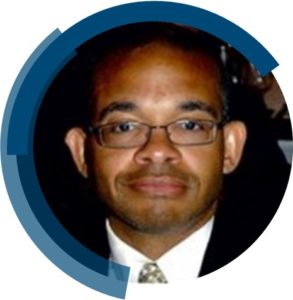
Xiao Su is an Assistant Professor in Chemical and Biomolecular Engineering at the University of Illinois, Urbana-Champaign, and an Affiliate of the Department of Civil and Environmental Engineering. He obtained his Bachelor in Applied Sciences in Chemical Engineering from the University of Waterloo in 2011, and PhD in Chemical Engineering from MIT in 2017. His group focuses on the design of stimuli-responsive materials for advanced separations, and the fundamental study of molecular selectivity at electrochemical interfaces. Current research directions of interest include developing electrochemically-mediated separations for (a) for water treatment, resource recovery, and environmental remediation, (b) critical element recovery and fine chemical purification, and the (c) integration of reactions and separations for process intensification. Since joining Illinois, Xiao has been the recipient of the NSF CAREER Award (2019), the ACS Victor K. Lamer Award (2020), and the ISE-Elsevier Prize for Green Electrochemistry (2021).

Read his Emerging Investigator article “Emerging investigator series: electrochemically-mediated remediation of GenX using redox-copolymers” and read more about him in the interview below:

Your recent Emerging Investigator Series paper focuses on the electrochemical remediation of PFAS from water. How has your research evolved from your first article to this most recent article?

My research has evolved significantly from my first article, which came from my undergraduate work at the University of Waterloo. I did my first co-op internship at the School of Optometry at UW, back in the winter of 2007. The article was published in 2009, presenting accurate measurements of the density of bovine ocular components. And yes, the experiments did involve collecting cow eyes and dissecting them!

Since then, my research has evolved significantly, both through my PhD at MIT and my tenure-track research here at UIUC, to encompass areas of research in chemical engineering, environmental engineering, and materials chemistry. My current group at UIUC focuses on developing new separation processes to solve energy and sustainability problems, including the integration of reaction and separations for water treatment and environmental remediation. The principal platform explored by my group are redox-active materials, which through electron-transfer, can modulate adsorption and release of target molecules, while providing selectivity.

Our recent article at ESWRT came from the very timely need for PFAS remediation. PFAS are a difficult yet highly interesting challenge for separations science, due to their unique properties and chemical stability. Our contribution is a demonstration of the capabilities of redox-polymers to selectively remove PFAS electrochemically and assist in environmental remediation, with a focus on GenX. I hope our work can help provide sustainable and efficient alternatives to this very timely environmental challenge.

In sum, I would say that research trajectories can often surprise us, such as going from bovine eyes to electrochemical water treatment!

What aspect of your work are you most excited about at the moment?

I am very excited about the growing interest in electron-transfer based technologies, and the opportunities for connecting fundamental molecular interactions with practical environmental processes. It has been exciting to see how our insights at a molecular and nanoscale can have an impact on macroscopic selectivity and the adsorption performance.

In your opinion, what are the most important questions to be asked/answered in this field of research?

I think important questions include (1) how electrochemical systems can achieve or maintain molecular selectivity within complex matrices, especially with different water sources and co-contaminants, and (2) to understand why these selectivity arise, and on the long-term, gain more predictive capabilities over the materials design.

What do you find most challenging about your research?

Broadly for electrochemical separations, it is always challenging to find the balance between capacity, selectivity, and stability, and solutions often focus on one or at most two of the components. On the long-term, systems may need to meet all three criteria to be translatable to large-scale applications. I think this will require interdisciplinary collaborations between different academic fields, partnerships with industrial stakeholders, etc.

In which upcoming conferences or events may our readers meet you?

I usually attend the American Chemical Society (ACS) Spring meeting (including the ENVR division sessions), the American Institute of Chemical Engineers (AIChE) meeting in the Fall, and the Electrochemical Society (ECS). Internationally, I often attend the International Society of Electrochemistry (ISE) meetings, and the biannual CDI&E meetings. I look forward to connecting more with the broader community from ESWRT at future conferences and events!

How do you spend your spare time?

I really enjoy playing/watching soccer, some occasional Fifa on the Xbox, and more often, just hanging out with friends and family. My family and friends live now in various different places, so traveling is always a large part of my holiday activities.

Which profession would you choose if you were not a scientist?

I would definitely want to be a manager/coach for a soccer team. I have watched soccer since growing up in Brazil, and I have followed both the Brazilian national team and my home team Fluminense. More recently, I have watched a lot more of the English Premier League. I find all aspects of the managerial side fascinating, including the team selection and tactics, style of play, as well as all the excitement surrounding the transfer market.

Can you share one piece of career-related advice or wisdom with other early career scientists?

Do not be afraid to be creative, and try to come up with new solutions. I think even when all questions seem to be answered in a certain topic or area, there could be surprising insights and innovation if we think outside the box.

Digg This
Reddit This
Stumble Now!
Share on Facebook
Bookmark this on Delicious
Share on LinkedIn
Bookmark this on Technorati
Post on Twitter
Google Buzz (aka. Google Reader)

New ESWRT Advisory Board members!

The Environmental Science: Water Research & Technology team is very pleased to welcome two new researchers to our Advisory Board!


Professor Chris Gordon

Prof. Chris Gordon is the Founding Director of the Institute for Environment and Sanitation Studies at the University of Ghana. He holds a PhD in Human Environmental Health and Ecotoxicology from King’s College, London. He serves as the CDKN Country Engagement Lead for Ghana He has 35 years of experience in teaching, research, and outreach. He has contributed to the development of several policy documents for the Ghana Government, such as Climate Change Policy, Biodiversity, Science, Technology and Innovation, Water, Buffer Zone, as well as the State of the Environment Report 2016. Chris Gordon has won several awards including the Order of the Volta, awarded by the Government of Ghana for service in Development, Education and Research.


Professor Vincenzo Naddeo 

Prof. Vincenzo Naddeo is a professor at the Department of Civil Engineering and Director of the Sanitary Environmental Engineering Division (SEED), University of Salerno (Italy). He is also an affiliated professor both at University of Washington (Seattle, WA, USA) and at Tamkang University (Taiwan), and his research interests range from Environmental Science to Green Technologies.


Please join us in warmly welcoming Professors Gordon and Naddeo to the ESWRT Advisory Board.

Digg This
Reddit This
Stumble Now!
Share on Facebook
Bookmark this on Delicious
Share on LinkedIn
Bookmark this on Technorati
Post on Twitter
Google Buzz (aka. Google Reader)

Emerging Investigator Series – James Landon

Dr. James Landon is the Founder & CTO of PowerTech Water, Inc. (PTW), a water treatment start-up company in Lexington, KY and an Adjunct Assistant Professor in the Department of Chemical Engineering at the University of Kentucky. Dr. Landon has spent over a decade on electrochemical water treatment, carbon electrode synthesis and surface chemistry, and electrochemical engineering including. Prior to transitioning to full-time employment at PTW in 2019, Dr. Landon was a Research Program Manager at the University of Kentucky Center for Applied Energy Research, where he lead or helped to lead many state and federal research projects. He has authored and co-authored over 50 peer-reviewed publications and patents filed in the field of electrochemical separations as well as numerous conference presentations. Dr. Landon received his BS in Chemical Engineering from Lehigh University in 2006 and a PhD in Chemical Engineering from Carnegie Mellon University in 2011.

Read his Emerging Investigator article “Emerging investigator series: local pH effects on carbon oxidation in capacitive deionization architectures” and read more about him in the interview below:

Your recent Emerging Investigator Series paper focuses on Local pH Effects on Carbon Oxidation in Capacitive Deionization Architectures. How has your research evolved from your first article to this most recent article?

Initial research focused on the importance of carbon structure towards its desalination properties. However, it became evident early on that desalination with carbon electrodes depended on more than just the pore space and that surface properties of the electrode played one of the most critical roles. Since this realization, along with other exciting work completed in the field of capacitive deionization, manipulation of these surface properties allowed for the creation of an exciting new desalination technique, which was coined inverted capacitive deionization. Publications from Gao et al. and Omosebi et al. highlight the importance of these advances. In more recent years, the variance of carbon surface surface properties in relation to the bulk pH and the local pH has been used to further evaluate and advance capacitive deionization systems, which was the focus of this manuscript.

What aspect of your work are you most excited about at the moment?

I am most excited on how local pH effects can be used to perform more refined and selective salt separations. There is some exciting work being carried out by others in this area as well, and it could lead to more widespread adoption of capacitive deionization as a separation technique.

In your opinion, what are the most important questions to be asked/answered in this field of research?

Coordinating carbon electrode properties under various electrolyte conditions in order to perform specific separation processes is quite intriguing. Competing with membrane-based technologies to conduct general salt removal will be tough given currently available commercialized systems. If carbon surface characteristics can be used for designed separations that can be modulated under applied voltages, there could be some notable breakthroughs achieved in the field.

What do you find most challenging about your research?

The ability to achieve not only a separation but also achieve it reliably is quite important. This necessity means that longer experiments must be performed, and a multitude of characterization techniques must be carried out in addition to taking into account electrolyte compositions. All of these factors lead to needing a diverse research group to assess all of these factors. While this makes the research exciting, it also means that coordination and planning are needed to achieve reliable and impactful results.

In which upcoming conferences or events may our readers meet you?

Typically, you can find me at Electrochemical Society conferences as well as CDI&E conferences, which are held every other year.

How do you spend your spare time?

I truly like to reconnect with nature as much as I can in my spare time. Hiking, running, and playing tennis are all great activities to me. I find that spending time outdoors can help provide clarity in the ever increasing pace of the world.

Which profession would you choose if you were not a scientist?

Funny enough, I nearly pursued a career as a lawyer, specifically in the area of patent law. While I am certainly glad that I choose to pursue a career in science, the legal profession was next on my interest list.

Can you share one piece of career-related advice or wisdom with other early career scientists?

Keep your ears open. People can surprise you with their insights. Also, there is no substitute for hard work. It is discipline that keeps us all moving forward.

Digg This
Reddit This
Stumble Now!
Share on Facebook
Bookmark this on Delicious
Share on LinkedIn
Bookmark this on Technorati
Post on Twitter
Google Buzz (aka. Google Reader)

Emerging Investigator Series – Ray Xiao

Ray received his Ph.D. degree from the Ohio State University, U.S, following two years postdoctoral training in Stockholm University, Sweden. He took up a faculty position at Central South University, China, where he is now a full professor. His research topics cover a diverse set of organic contaminants related investigations. He is interested in understanding how to remove trace organic contaminants using advanced oxidation technologies and how to develop different modelling tools to predict reaction kinetics and mechanisms. He has received over 5 M (RMB) in research funding and has over 80 publications. His h-index is 35, and there are 15 papers selected as ESI (Essential Science Indicator) 1% highly cited papers. He was awarded for excellent reviewers for many renowned journals. He also severs as associate editor for Environmental Chemistry Letters, editorial boards for Chemical Engineering Journal, Process Safety and Environmental Protection, and Scientific Reports.

Read his Emerging Investigator article “Emerging investigator series: Could superoxide radical be implemented in decontamination processes?” and read more about him in the interview below:

Your recent Emerging Investigator Series paper focuses on superoxide radicals. How has your research evolved from your first article to this most recent article?

I did ultrasound sonochemistry for my Ph.D. degree back in Columbus Ohio. I remember one of reactive oxidative species bursting from cavitation bubbles was said to be superoxide radical. For a long period of time, I really wanna understand what kinds of role does it play and how it can be implemented into decontamination processes. But I cannot find too much information on this radical from environmental engineering perspective. So shortly after being academically independent, me and my students developed a reliable approach to generate superoxide radical at micromolar level in aqueous solution. We then constructed an in situ long-path spectroscopy to investigate the kinetics and mechanisms of superoxide-mediated degradation of various organic contaminants. This perspective is based on our knowledge accumulation on superoxide radical these years. We hope that the perspective motivates researchers in the field of water quality and treatment for further exploration of this exciting area.

What aspect of your work are you most excited about at the moment?

I am really into the reactivity and reaction mechanisms of superoxide radical with various organic contaminants. The fundamental knowledge we gained will be beneficial to environmental engineers/chemists.

In your opinion, what are the most important questions to be asked/answered in this field of research?

In this paper, we emphasize challenges that we are facing ahead (e.g., lack of solid kinetic reactivity data, unclear synergistic mechanisms with other ROS). We believe that the environmental applications of superoxide chemistry deserve more thorough debate in the water engineering communities,

What do you find most challenging about your research?

I found elucidation of reaction mechanism is always a difficult task to do, especially in a complex system with different kinds of radicals coexisting.

In which upcoming conferences or events may our readers meet you?

I usually attend the ACS conference and National Conference on Environmental Chemistry in China.

How do you spend your spare time?

With my family. I spend lots of time with my daughter Jiyuan.

Which profession would you choose if you were not a scientist?

I am very passionate about writing. If I didn’t embark on the academic path, I guess I could be a novel writer?

Can you share one piece of career-related advice or wisdom with other early career scientists?

I am honored to be able to share some of my professional experience here. I did learn a lot is that we should be bold and try hard when good ideas come to minds right away.

Digg This
Reddit This
Stumble Now!
Share on Facebook
Bookmark this on Delicious
Share on LinkedIn
Bookmark this on Technorati
Post on Twitter
Google Buzz (aka. Google Reader)

Live Webinar: Data-intensive water systems management and operation themed issue

Recently, we launched a Data-intensive water systems management and operation themed issue, which is open for submissions until September 10th 2021. This issue is Guest Edited by Branko Kerkez (University of Michigan, USA), Kris Villez (Oak Ridge National Laboratory, USA) and ESWRT Editorial Board member Eveline Volcke (Ghent University, Belgium).

We’d like to invite you to attend a free live webinar with the Guest Editors, to hear them speak about the scope of this issue and answer your questions about where your research might fit into this topic.

Our Editor-in-Chief, Paige Novak, tells you more below:

“We always strive to make the publishing process clear, equitable, and transparent, and our themed issues are no exception. We are particularly excited about our themed issue on Data-intensive water systems management and operation, which is currently open for submissions, but realize that although this topic is of great interest for many of you, the topic can be confusing. To address this, on July 28th 2021 at 10am ET/3pm BST, we will hold a brief webinar that we invite you to attend (or watch the recorded version) in which our Guest Editors, Kris Villez, Branko Kerkez, and Eveline Volcke, will hold a panel discussion to introduce the theme of the issue, describe the types of papers that they are looking for, and generally help researchers submit their best and most exciting work to this themed issue. We invite you to attend or watch the recorded version and think about how your work can fit into this issue and check back in early 2022 to read what promises to be a very exciting collection of papers.”


Click here to register to attend this webinar

Can’t attend? Click here to access the recording after the event

Click here to submit your question in advance


Digg This
Reddit This
Stumble Now!
Share on Facebook
Bookmark this on Delicious
Share on LinkedIn
Bookmark this on Technorati
Post on Twitter
Google Buzz (aka. Google Reader)

New Advisory Board Member: Joel Ducoste

We are delighted to announce that Joel Ducoste (North Carolina State University) has joined the Environmental Science: Water Research & Technology Advisory Board.

Dr. Joel Ducoste is a Professor in the Civil, Construction, and Environmental Engineering Department at North Carolina State University (NCSU) and Interim Associate Dean for Faculty Advancement.  He holds a B.S. (1988) and M.Eng. (1989) in Mechanical Engineering from Rensselaer Polytechnic Institute, and a Ph.D. in Environmental Engineering (1996) from the University of Illinois at Urbana-Champaign. Dr. Ducoste is a board certified environmental engineering member with the American Academy of Environmental Engineers and Scientists and is a recognized expert in modeling water and wastewater treatment processes using Computational Fluid Dynamics (CFD).

His current research interests include physico-chemical processes in water treatment, computational fluid dynamics modeling, water/wastewater process optimization, wastewater sewer collection system sustainability, renewable energy, plant biosystems engineering, and solid waste process modeling.

He is a respected researcher and productive scholar with over 85 peer reviewed journal publications and another 90 peer reviewed conference proceedings and research reports. Dr. Ducoste has received a number of awards including: an NSF Career Award, a Fulbright fellowship, Visiting Professorships at Ghent University, South East University, and Yangzhou University, NC State mentoring awards, and most recently, elected Fellow of the Water Environment Federation. He has served on EPA Science Advisory Boards and 2020-2021 President of the Association of the Environmental Engineering and Science Professors. Dr. Ducoste also spent 5 years in industry at CH2M Hill as a senior process engineer and as an advance-manufacturing engineer at GE Aircraft Engines.


Digg This
Reddit This
Stumble Now!
Share on Facebook
Bookmark this on Delicious
Share on LinkedIn
Bookmark this on Technorati
Post on Twitter
Google Buzz (aka. Google Reader)

Themed Issue Open for Submissions: Data-intensive water systems management and Operation

Environmental Science: Water Research & Technology seeks your high-impact research for our upcoming Themed Issue on Data-intensive water systems management and Operation

Guest Edited by Branko Kerkez (University of Michigan, USA), Kris Villez (Oak Ridge National Laboratory, USA) and Eveline Volcke (Ghent University, Belgium)
image block

The water sector increasingly looks at intensified instrumentation, data collection and automation as tools for daily use. Still, a massive opportunity remains in fully embracing emerging methods and technologies such as artificial intelligence, data analytics, machine learning, low-cost sensor hardware, and edge and cloud computing. Indeed, sensing and automation technology has already infiltrated many facets of society today. As such, the time is ripe to evaluate the role of novel technologies for systems monitoring, diagnostics, and automation of aquatic processes and large-scale water systems. When leveraged, the water sector will do more with less.

In this special issue we seek to publish articles that report a significant advance in the theory, understanding, practice or application of emerging techniques and
technologies, including:

  • Instrumentation, including state-of-the-art sensors and novel sensor concepts
  • Data analytics and machine learning
  • Low-cost and energy-efficient hardware for computation, and automation
  • Advances in decision support systems
  • Real-time monitoring and control
  • Autonomy & Automation
  • Privacy and cybersecurity
  • Integration of data-intensive techniques, such as scale, model-based tools for
    real-time operation and management

The reported studies should be rooted in applications across aquatic science and engineering, including but not limited to:

  • Chemical and microbial contaminants
  • Water distribution and wastewater collection
  • Stormwater infrastructure, green and gray
  • Potable reuse
  • Residue management
  • Watersheds

All submitted manuscripts will undergo initial assessment and peer review as per the usual standards of the journal. Please quote “EWData21” in the “Comments to the Editor” section during the submission process.

Click here to find out more

Submissions due: 10th September 2021

Submit your work now: https://mc.manuscriptcentral.com/esw 

Digg This
Reddit This
Stumble Now!
Share on Facebook
Bookmark this on Delicious
Share on LinkedIn
Bookmark this on Technorati
Post on Twitter
Google Buzz (aka. Google Reader)

Emerging Investigator Series – Niveen Ismail


Niveen Ismail is currently an assistant professor in the Picker Engineering Program at Smith College, an all-women’s liberal arts college. She received her MS (2011) and PhD (2015) in Environmental Engineering from Stanford University. She received her MS in Biology (2010) from Temple University and B.S. in Chemical Engineering (2003) from New Jersey Institute of Technology. The Ismail research lab examines the use of natural systems to improve water quality with a focus on the understanding the interaction of filter feeders with aquatic contaminants.

Read her Emerging Investigator article “Emerging investigator series: interacting effects of environmental factors on Daphnia magna removal of Escherichia coli from wastewater” and read more about her in the interview below:


Your recent Emerging Investigator Series paper focuses on removal of E. colifrom wastewater with zooplankton. How has your research evolved from your first article to this most recent article?

My research interests have expanded quite a bit with respect to the suite of contaminants we study in my lab, which now includes microbial pollutants, metals, microplastics, and nanoparticles. This particular area of research examining zooplankton interaction with microbial pollutants has evolved over the years to include more complex matrices and experimental designs that better mimic environmental systems.  My very first published paper looked at PCB maternal transfer in diamondback terrapins. I have been interested in aquatic contaminants since I started conducting research as an undergraduate.

What aspect of your work are you most excited about at the moment?

It’s hard to pick one specific topic, but I am really excited to have my undergraduate students back in lab after a long hiatus due the pandemic closures. Since I am a faculty member at a primarily undergraduate institution, my undergraduate students are the heart of my lab and are critical to the success of my research. With regards to specific research, we have restarted our work looking at various zooplankton species interactions with phages/viruses. We also are about to scale up our work examining the impact of silver nanoparticles on zooplankton to a mesocosm level. It’s always exciting to have experimental work progress from microcosm/batch scale to mesocosm scale and see how the kinetics change as we consider different variables and move closer to environmentally realistic conditions.

In your opinion, what are the most important questions to be asked/answered in this field of research?

Like many other scientists researching water technology, trying to improve water quality is a driving motivator behind all the research I do. Specific to my research focus, zooplankton are such critical species to natural treatment systems, but so little is known about their overall contributions to improving water quality and the effects of contaminants on their ability to filter feed. Ultimately, to effectively implement natural treatment systems, we need to be able to model and predict all the different factors that impact system performance. Often zooplankton grazing is excluded from inactivation and fate/transport models, so the mechanisms and the kinetics related to these filter feeders need to be elucidated.

What do you find most challenging about your research?

Balancing experimental specificity of working with a particular zooplankton species with broad applicability to the water treatment sector is a challenge we think about a lot. There is also the logistics of working with different biological species that can be challenging when it comes to maintaining cultures and dealing with culture crashes at the most inopportune moments.

In which upcoming conferences or events (online or in person) may our readers meet you?

I always look forward to attending AEESP and GRC Environmental Science: Water conferences. I also usually attend SETAC and ACS conferences.

How do you spend your spare time?

Right now, I have a 6-month-old so she is the focus of my time outside of work. I do still prioritize finding time to run in the woods almost every day and recently have tried to embrace New England winters by starting to cross country ski.

Which profession would you choose if you were not a scientist?

I always loved science so it is hard to imagine a different profession. I toyed with idea of being a veterinarian based on my love of animals so perhaps I would reconsider that option. Also, I could envision doing something related to running which I am extremely passionate about, but not sure what that would actually be.

Can you share one piece of career-related advice or wisdom with other early career scientists?

Give yourself time to get into a rhythm in lab and do not be discouraged if progress seems to be very slow (or non-existent). Also take the time to truly connect with your students and build a positive lab culture.


Digg This
Reddit This
Stumble Now!
Share on Facebook
Bookmark this on Delicious
Share on LinkedIn
Bookmark this on Technorati
Post on Twitter
Google Buzz (aka. Google Reader)

New Advisory Board Members for Environmental Science: Water Research & Technology

We are delighted to announce new members of the Environmental Science: Water Research & Technology Advisory Board.

David Weissbrodt
David is an Assistant professor at TU Delft, the Netherlands. His research interests are in microbial systems, process engineering, water, energy and health sciences.

Read his work in the journal

Tom Bond
Tom is a Senior Lecturer at the University of Surrey, UK. His research interests are drinking water disinfection byproducts, aquatic microplastics and sustainable treatment technologies.
Read his work in the journal

Jingyun Fang
Jingyun is a Professor at Sun Yat-Sen University, China. Her research focuses on the aqueous chemistry of radicals and high-valent manganese in both natural and engineering systems.

Read her work in RSC journals

Maria José Farré
Maria is a Research Scientist at ICRA, Spain. She researches water treatment, including disinfection byproducts and novel strategies for the holistic diagnosis of water samples.

Read her work in the journal

Jochen Hack
Jochen is Leader of the Engineering Ecology department and SEE-URBAN-WATER research group at TU Darmstadt, Germany. His research interests include urbanization and water resources, green infrastructure, nature-based solutions and water management.

Yong Sik Ok
Yong is a Professor at Korea University, South Korea, and Director, APRU Sustainable Waste Management. His research focuses on strategies for waste management, including conversion to energy and value-added products.

Read his work in RSC journals

Xin Wang
Xin is a Professor at Nankai University, China. His research focuses on electroactive bacteria in the environment, and their uses to recover energy from waste, sense biotoxicity and accelerate anaerobic bio-processes.

Defeng Xing
Defeng is a Professor at Harbin Institute of Technology, China. His research interests are in genomics and proteomics of hydrogen-producing bacteria, metagenomic analysis of activated sludge and biofilms, and bioelectrochemical systems.

Read his work in RSC journals

Long Nghiem
Long is the Director of the Centre for Technology in Water and Wastewater and a Professor in Environmental Engineering at the University of Technology Sydney, Australia. His work focuses on technologies for improving the provision of clean water, and wastewater purification.

Read his work in the journal

Michael Templeton
Michael is a Professor at Imperial College London, UK. His research focuses on addressing public health challenges related to water supply and sanitation.

Read his work in the journal

April Gu
April is a Professor at Cornell University, USA. Her research focuses on water quality and environmental health, including biotechnology for wastewater treatment, the impact of climate change on global phosphorus cycling, and next-generation toxicogenomics-based toxicity assessment technology to enable water quality monitoring.

Read her work in RSC journals

Peng Liang
Peng is a Professor at Tsinghua University, China. His research interests are in the development of novel wastewater treatment technologies to recover water, energy, nutrients and value-added products from wastewater.

Read his work in the journal

Digg This
Reddit This
Stumble Now!
Share on Facebook
Bookmark this on Delicious
Share on LinkedIn
Bookmark this on Technorati
Post on Twitter
Google Buzz (aka. Google Reader)

New Associate Editor: Wenhai Chu

We are glad to announce that Wenhai Chu (Tongji University) has joined the Environmental Science: Water Research & Technology team as an Associate Editor.

Wenhai Chu is a Professor at College of Environmental Science and Engineering at Tongji University, China. His research focuses on water disinfection and disinfection by-products (DBPs). He has made achievements in identification, transformation and collaborative control of DBPs as well as other emerging contaminants. His interests also include exploring the relationship between micro pollutants such as disinfection by-products and human health, and exploring the migration, transformation and source prevention and control of new pollutants from the perspective of whole urban water systems.

He has published more than 150 papers and edited two monographs. He also authorized 20 invention patents in China and the United States, his relevant patent technology has been applied in water quality monitoring institutions and large-scale water plants in the Yangtze River Delta and Taihu Lake Basin, China.


Read his work in the journal:

Ecotoxicological effects of disinfected wastewater effluents: a short review of in vivo toxicity bioassays on aquatic organisms
Xinmiao Luan, Xiaoyu Liu, Chao Fang, Wenhai Chu* and Zuxin Xu*
Environ. Sci.: Water Res. Technol., 2020,6, 2275-2286

Emerging investigator series: formation of brominated haloacetamides from trihalomethanes during zero-valent iron reduction and subsequent booster chlorination in drinking water distribution
Pengzhou Luo, FeiFei Wang, Stuart W. Krasner, Chao Fang, Shenghua Chenab  and  Wenhai Chu*
Environ. Sci.: Water Res. Technol., 2020,6, 1244-1255

Digg This
Reddit This
Stumble Now!
Share on Facebook
Bookmark this on Delicious
Share on LinkedIn
Bookmark this on Technorati
Post on Twitter
Google Buzz (aka. Google Reader)