Let’s dip our toes into water (footprint)

an article by webwriter Paramjeet Pati (PhD Candidate at @VTSuN)

“Think you need 8 glasses of water a day? Think again.” reads an infographic on The Nature Conservancy website. All the things we consume – the food in our pantries, the clothes in our closets, the appliances in our homes and the gadgets in our pockets – have gallons of embodied water in them.

Save water by turning off lights and unplugging unused chargers

The average light bulb consumes 1.4 gallons of water per hour (Last Call at the Oasis). “Water is needed for energy production and energy is needed for water supply.” say Mekonnen et al. in their recent paper on the consumptive water footprint (WF) of electricity and heat. “The consumptive WF of electricity, expressed as the total volume of water consumed over the supply chain, per unit of gross electricity produced, primarily depends on the energy source.”
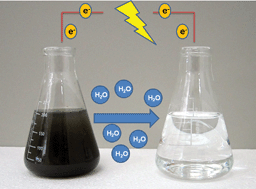
Water and energy are intimately interlinked

Recent research shows that the energy can also be produced during water treatment [1,2,3,4]. At the same time, reducing our energy consumption would also reduce our water footprint. But how much would our reduced energy consumption absolve us of our environmental sins depends on what keeps our lights on – fossil fuels, solar energy, hydroelectricity, wind energy or biofuels.

How green is renewable energy?

Renewable energy sources such as solar and hydropower are often promoted as low-carbon alternatives to fossil fuels. But Mekonnen et al. deliver some sobering news: “The WF of solar energy from CSP [concentrated solar power] is in the same order of magnitude as the WF of electricity from fossil fuels and nuclear energy, because of the need for cooling.” What does this say about massive fields of solar panels in deserts and other water stressed areas?

Wendy Wilson, Executive Director of Advocates for the West has said, “[E]ach day, enough water to meet the demands of more than 50 million people evaporates from reservoirs behind hydroelectric dams.” So what is the carbon footprint of water?

Rethinking green

Buying green and installing solar panels on our rooftops may give us the warm fuzzies, but we need to reassess what we mean by ‘green’. Of course, a single metric (such as carbon footprint or water footprint) cannot capture the complexity of the life cycle impacts of a product or a process. We need an array of complementary metrics and life cycle assessment to analyse the sustainability of renewable energy [5]. Nonetheless, Mekonnen et al. have provided ample fodder for us to chew on and think about the intertwined challenges of sustainable energy and water.

What is your water footprint?

Find out by using this personal water footprint calculator and the statistics and infographics developed by the Water Footprint Network.

—————-

You can read the full paper for free* using the link below:

The consumptive water footprint of electricity and heat: a global assessment
Environ. Sci.: Water Res. Technol., 2015, Advance Article
Mesfin M. Mekonnen, P. W. Gerbens-Leenes and Arjen Y. Hoekstra
DOI: 10.1039/C5EW00026B

—————-

About the webwriter

Paramjeet Pati is a PhD Candidate at the Virginia Tech Center for Sustainable Nanotechnology (@VTSuN).
You can find more articles by him in the VTSuN blog, where he writes using the name
coffeemug.

—————-

*Access is free through a registered RSC account.

Digg This
Reddit This
Stumble Now!
Share on Facebook
Bookmark this on Delicious
Share on LinkedIn
Bookmark this on Technorati
Post on Twitter
Google Buzz (aka. Google Reader)

A deep dive into shame: Our sanitation woes

an article by webwriter Paramjeet Pati (PhD Candidate at @VTSuN)

The top three everyday things that still amaze me after several years of living in the developed world are 1) safe-to-drink water in the tap, 2) near-ubiquitous wireless internet, and 3) microwaveable meals. The next everyday miracle on my list would be public restrooms (or washrooms/ lavatories/ toilets, depending on which city in the developed world you are exploring).

Can’t hang up when nature calls: Let’s take a moment to appreciate that we get to go when we need to go. That the answer to our question, “Excuse me, where’s the restroom?” is usually “That way.”, instead of a potentially terrifying “What’s a restroom?”.

We see our roads, railways, bridges and dams, but the sanitation infrastructure in our “flushed and plumbed world” is quietly tucked away underground, out of sight and out of mind. We are, however, reminded how much we depend on it when we are stuck behind a long queue in front of a porta potty, or when an uncooperative toilet refuses to flush, or rebels by regurgitating its long-forgotten contents.

An “urgent, shameful issue”
Readers of the British Medical Journal chose the ‘sanitary revolution’ as the greatest medical advancement since 1840, rating it above antibiotics and anaesthesia. Despite our phenomenal scientific progress, economic growth and improved living standards in the modern world, nearly 2.5 billion people worldwide lack access to adequate sanitation, which Rose George, in her brilliant TED talk, called an “urgent, shameful issue”.

Nearly 1800 children under the age of five die every day from diarrhoeal diseases due to lack of clean water, sanitation and hygiene. “If 90 school buses filled with kindergartners were to crash every day, with no survivors, the world would take notice. But this is precisely what happens every single day because of poor water, sanitation and hygiene.”, said Sanjay Wijesekera, the Chief of Section for Water, Sanitation and Hygiene at UNICEF. Improved sanitation can decrease the occurrence of diarrhoeal diseases and reduce diarrhoea-related deaths by 37.5%.

Beyond the ick factor
Sanitation seldom features in polite dinner table conversations. But we need to bring this unmentionable topic into our collective public consciousness. And it goes beyond the direct health impacts. In a recent paper on the challenges related to sanitation, Dr. Michael Templeton said, “Health is not the only intended outcome of improved sanitation, with other objectives including ensuring personal dignity, safety, and a cleaner environment.”

Today, even developed nations face challenges to adequate sanitation. The aging sanitation infrastructures in our cities are vulnerable to financial as well and natural disasters.

Improved sanitation will require not only technological innovations, but also behavioural changes through community-led campaigns and policy innovations.  Which leads to many intriguing questions: What is Community-Led Total Sanitation (CLTS) approach? Why do well-intentioned, but narrowly focused funding programmes for sanitation interventions fail? What are the economic paybacks from improved sanitation?

Here, take my hand – let’s wade through the muck, take a deep breath, and plunge headfirst into these urgent, smelly, and icky topics by reading the full article for free*. In the end, we will come out smelling like roses.

Pitfalls and progress: a perspective on achieving sustainable sanitation for all
Environ. Sci.: Water Res. Technol.
, 2015, 1, 17-21
DOI: 10.1039/C4EW00087K

—————-

About the webwriter

Paramjeet Pati is a PhD Candidate at the Virginia Tech Center for Sustainable Nanotechnology (@VTSuN).
You can find more articles by him in the VTSuN blog, where he writes using the name
coffeemug.

—————-

*Access is free through a registered RSC account.

Digg This
Reddit This
Stumble Now!
Share on Facebook
Bookmark this on Delicious
Share on LinkedIn
Bookmark this on Technorati
Post on Twitter
Google Buzz (aka. Google Reader)

Sanitation Themed Collection

Submit to this Environmental Science: Water Research & Technology collection

The Editorial Board of Environmental Science: Water Research and Technology is encouraging submissions in the area of sanitation research.


Accepted articles on this topic will be gathered in an online themed collection to be highlighted on the journal website. Submissions on research in the following areas are welcome:

  • Novel onsite sanitation technologies
  • Sanitation solutions for areas with high water tables
  • Sanitation for emergency relief situations
  • Faecal sludge properties, emptying methods, and treatment
  • Biogas recovery technologies at household or small community scales
  • Sanitation service models
  • The role of sanitation in improving health
  • Cost-benefit and sustainability assessments of sanitation options
  • Simplified sewerage and drainage
  • Urban sanitation challenges and large-scale solutions
  • We welcome original research articles, communications and review papers on these topics.


    Submit your paper by 31st December 2015!

    Prospective authors may wish to read ‘Pitfalls and Progress: A Perspective on Achieving Sustainable Sanitation for All*’ by Dr Michael R. Templeton of Imperial College London and an Editorial Board member, which was published in the first issue of the journal.

    There are many benefits to publishing with us, including wide exposure to your publication, as all content published during 2015 & 2016 is free* to access.

    For more information on our scope and author guidelines, please visit our website or email us at eswater-rsc@rsc.org.


    ESWRT Banner

    *Access is free through an RSC registered account.

    Digg This
    Reddit This
    Stumble Now!
    Share on Facebook
    Bookmark this on Delicious
    Share on LinkedIn
    Bookmark this on Technorati
    Post on Twitter
    Google Buzz (aka. Google Reader)

    Our first Editorial Board Meeting!

    Issue 1The first Environmental Science: Water Research & Technology Board Meeting was hosted in Chicago last week and it was an absolute success, with an astonishing 100% of attendance. It was an incredibly busy day, full of development ideas, plans for exciting new projects and long term vision plans.

    We aspire to be the premier journal in the area of water resource management for the built environment, and our team is working enthusiastically to achieve this goal. To that end, we have assembled a tremendous group of respected global leaders in the area of water research and technology for our editorial board and associate editors.

    There are also several practical advantages to submitting to Environmental Science: Water Research & Technology: we have no page or word restrictions, fast publication (< 90 days), colour figures are free, and if accepted, our team in Cambridge will work tirelessly to promote your work through social media and our blogs. But this is not all, please see the full list of benefits!

    “Although Issue 1 was only recently published, we believe it is the start of something incredibly special.”

    David Cwiertny, Editor-in-Chief

    Editorial Board Meeting

    We sincerely hope you will join us in this great new adventure!

    Digg This
    Reddit This
    Stumble Now!
    Share on Facebook
    Bookmark this on Delicious
    Share on LinkedIn
    Bookmark this on Technorati
    Post on Twitter
    Google Buzz (aka. Google Reader)

    First issue is now available!

    Read the inaugural issue of Environmental Science: Water Research & Technology

    ESWRT Cake

    Last week, we were tremendously excited to announce the publication of our first issue of Environmental Science: Water Research & Technology. This inaugural issue was introduced by David M. Cwiertny, Editor-in-Chief of the journal.

    In his editorial ‘To new beginnings and a better alternative’, he stated our strong commitment to grow a footprint in the water and environmental research.

    The launch of this journal would not have been possible without an incredibly professional and capable Editorial Board. Therefore, we included a Profile article with mini-biographies so you can meet them and read more about their background.

    Cake cutting

    This issue contained three HOT articles which obtained particularly high scores during peer review.

    In the first of them, researchers from the Manchester Metropolitan University discussed the quantification of corrosion inhibitors used in the water industry for steam condensate treatment.

    The second article was brought to us by Michael Templeton, who wrote an insightful perspective on achieving sustainable sanitation for all.

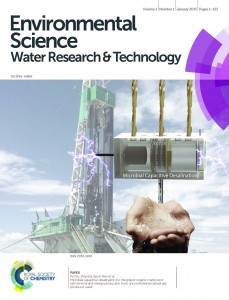
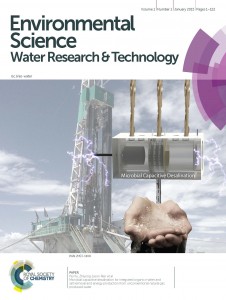
    And last but not least, the group of Zhiyong Jason Ren presented a research on microbial capacitive desalination and energy production from unconventional natural gas produced water in our third HOT article.

    In our office in Cambridge, this special event called for some celebration and we enjoyed an incredible cake with the cover of this first issue.

    We hope you enjoy reading Issue 1 as much as we did. We are now relentlessly working on our next ones to keep up the incredible high standards set up in the inaugural issue. Be ready!

    —————————-
    Read our first issue:
    01 January 2015, Issue 1,  Page 1 to 122
    Environmental Science: Water Research & Technology
    Digg This
    Reddit This
    Stumble Now!
    Share on Facebook
    Bookmark this on Delicious
    Share on LinkedIn
    Bookmark this on Technorati
    Post on Twitter
    Google Buzz (aka. Google Reader)

    Energy-water-food nexus: “All the pieces matter”

    an article by webwriter Paramjeet Pati (PhD Candidate at @VTSuN)

    As far as technical reports go, the Soggy Lettuce Report (2004) is as delightful a name as any. According to the report: “More money is wasted on food each year [in the United Kingdom] than any other category of goods and services – a whopping ₤424 per person.” But money isn’t the only loss – gone with the wasted soggy lettuce are its embodied energy and water.

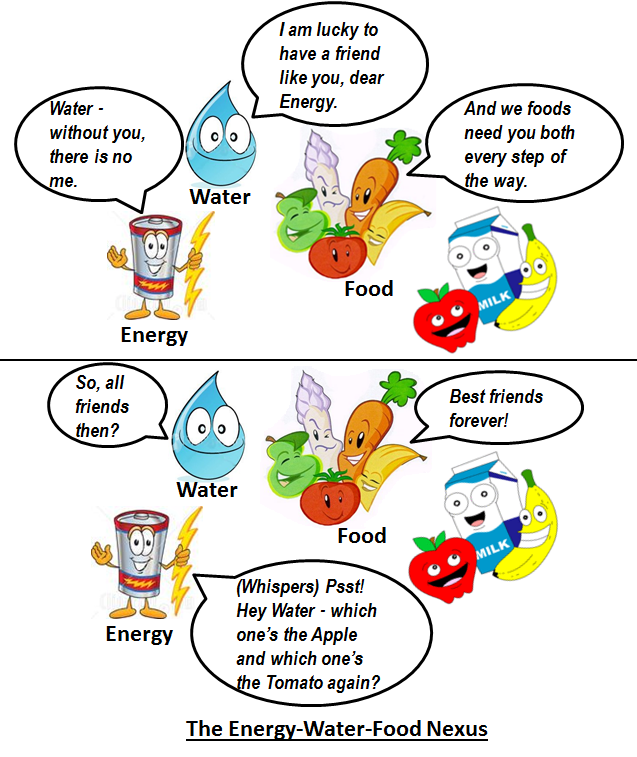
    The Nexus: Energy, water and food are inextricably intertwined. In a recent forum, Machell et al. discuss the interdependencies between the three (also called the Energy-Food-Water Nexus). “Food production consumes both water and energy in order to grow, harvest, clean and prepare food.” (Machell et al.) Water and energy are interdependent too. Water is indispensable for every phase of energy production. Steam generation for electricity, extraction of fossil fuels, and cultivation of biofuel crops – all of these depend on water. On the other hand, it takes energy to treat and distribute water for human use.Energy-Water-Food Nexus

    So, letting food go to waste means we are also wasting water. Leaving a faucet running unnecessarily wastes not only water, but also the energy it took to extract, treat and send the water to that faucet. By leaving the lights on or letting an idling car needlessly guzzle fuel (petrol, diesel, and yes, even electricity), we are wasting energy that could have been used to clean water or grow food.

    Policy implications: It is important that we develop future policies using the nexus perspective. “…[C]auses that might upset the nexus balance are increasingly requiring global solutions and there is a great need for joined-up activities between stakeholders to mitigate future resource conflicts.” (Machell et al.)

    A deeper understanding of this nexus balance will help us change our perceptions and consumption patterns. That soggy lettuce that we throw away has far-reaching environmental implications as well as opportunities for energy recovery [1,2,3]. International trade [4], climate and water policies [5], renewable energy [6,7], and wastewater treatment [8] have interlinked environmental and social impacts [9] that can be identified only through comprehensive nexus analysis. As mentioned in the article, “The complex relationships in the water energy food nexus, require informed production and consumption decisions for the near future that can mitigate negative impacts on risk, security, and the environment.”

    The Wire had it right: The interdependencies between energy, water and food cannot be compartmentalized and studied in isolation. Detective Lester Freamon said it best: “All the pieces matter.”

    Find out how by reading the full article for free*:

    The water energy food nexus – challenges and emerging solutions
    Environ. Sci.: Water Res. Technol., 2015, 1, 15-16
    DOI: 10.1039/C4EW90001D

    —————-

    About the webwriter

    Paramjeet Pati is a PhD Candidate at the Virginia Tech Center for Sustainable Nanotechnology (@VTSuN).
    You can find more articles by him in the VTSuN blog, where he writes using the name
    coffeemug.

    —————-

    *Access is free through a registered RSC account.

    Digg This
    Reddit This
    Stumble Now!
    Share on Facebook
    Bookmark this on Delicious
    Share on LinkedIn
    Bookmark this on Technorati
    Post on Twitter
    Google Buzz (aka. Google Reader)

    Environmental Science: Water Research & Technology Special Issue

    Environmental Science:Water Research & Technology introduce a special issue on recent advances associated with the potable reuse of water

    Are you currently doing research in an area of potable water reuse?

    We are delighted to announce a special themed issue, dedicated to recent advances associated with the potable reuse of water, which will be published in 2015 in Environmental Science: Water Research & Technology.

    The Editor-in-Chief David. M Cwiertny, and Associate Editor Stuart Khan, are encouraging submissions highlighting research technology and engineering development at the leading edge of potable water reuse.

    This special issue will combine a variety of topic areas that are relevant to Environmental Science: Water Research & Technology. Submissions in the following areas are welcome:

    •           Technical innovations facilitating potable reuse

    •           Human health risk assessment of potable reuse

    •           The role and efficiency of environmental buffers in indirect potable reuse

    •           Monitoring strategies in potable water reuse systems

    •           Assessment and regulation of potable water reuse projects

    •           Public perception of direct and indirect potable reuse

    •           Sustainability assessment for potable reuse

    •           Technical challenges, particularly relating to direct potable reuse

    •           Novel applications of direct and indirect potable reuse

    Submit your Paper!

    We welcome original research papers, communications and Review articles.

    For more information on the scope of Environmental Science: Water Research & Technology and our author guidelines, please visit our website or email us at ESWater-rsc@rsc.org

    Submission Deadline: 15th February 2015

    We hope to receive a manuscript from you or your group soon!

    Digg This
    Reddit This
    Stumble Now!
    Share on Facebook
    Bookmark this on Delicious
    Share on LinkedIn
    Bookmark this on Technorati
    Post on Twitter
    Google Buzz (aka. Google Reader)

    Switching desalination plants from carbon dioxide source to sink

    An Environmental Science: Water Research & Technology article highlighted in Chemistry World by Katie Lim

    A UK researcher has proposed a new process to decompose waste desalination brine using solar energy that could allow desalination plants to act as a sink rather than a source of atmospheric carbon dioxide, and help to neutralise ocean acidity.

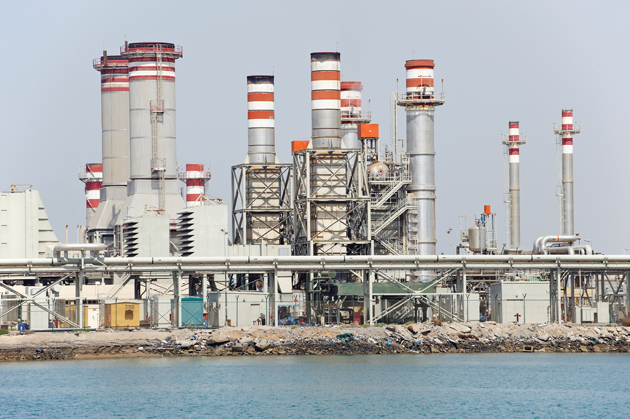
    Desalination plants

    Phil Renforth, a geo-environmental engineer from Cardiff University, highlights that a major advantage of Davies’ process is that it can be appended to existing technology. ‘This approach may allow the industry to transform itself from a carbon dioxide villain into a force for good in the climate change debate.’


    Read the full article in Chemistry World.


    Read the full research paper for free* in Environmental Science: Water Research & Technology:
    Solar thermal decomposition of desalination reject brine for carbon dioxide removal and neutralisation of ocean acidity

    P. A. Davies
    Environ. Sci.: Water Res. Technol.
    , 2015, Advance Article
    DOI:
    10.1039/C4EW00058G, Communication


    *Access is free through a registered RSC account
    Digg This
    Reddit This
    Stumble Now!
    Share on Facebook
    Bookmark this on Delicious
    Share on LinkedIn
    Bookmark this on Technorati
    Post on Twitter
    Google Buzz (aka. Google Reader)

    Environmental Science: Water Research & Technology

    The benefits of publishing with us

    Here is a few reminders of the great benefits of publishing with Environmental Science: Water Research & Technology:

    Environmental Science Water
    – Free colour on all figures

    – No page charges and no page limits

    – Fast Publication (average of 40 days from receipt to acceptance)

    – Wide exposure: free access to all content for the first 2 years after launch*

    – Individual promotion of HOT articles

    – Papers processed by peers in the field

    – High quality content

    – Free electronic reprints

    – Simple and effective submission process

    Submit now!

    *ES: Water Research & Technology was launched in 2015. Access is free through a registered RSC Publishing account.

    Digg This
    Reddit This
    Stumble Now!
    Share on Facebook
    Bookmark this on Delicious
    Share on LinkedIn
    Bookmark this on Technorati
    Post on Twitter
    Google Buzz (aka. Google Reader)

    Removing phosphate from water

    an article by our webwriter Paramjeet Pati (PhD Candidate at @VTSuN)

    On 5th October 2014, Drake took a short swim in the lake in Lindon Harbor, Utah. Drake was a black Labrador retriever. Like most dogs, he loved to play in the water. After the swim, Drake started vomiting and became lethargic. Shortly after that, Drake died. “[D]og deaths have emerged as an unfortunate early warning…” An early warning of what?

    When blooms aren’t beautiful and nutrients don’t nourish

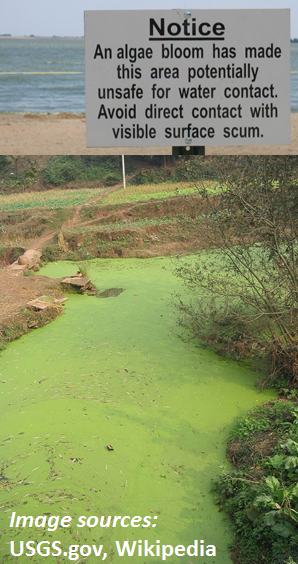
    Recent dog deaths have pointed to one suspect: pond scum – or more specifically – harmful algal blooms. Some algae produce toxins that have been linked to the deaths of cattle, elks, fishes, and even endangered species such as sea otters. These toxins can also bioaccumulate in shellfish and oysters. Eat enough seafood seasoned with these toxins, and you are at risk too.

    What’s causing these algal blooms?

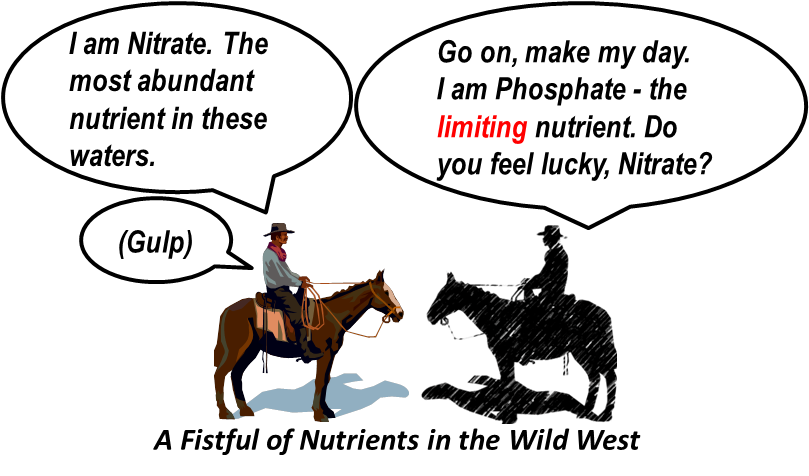
    Natural waters contain small amounts of nutrients (mostly nitrate and phosphate). Under normal conditions, planktons and algae grow using these nutrients, fish feed on the plankton, and things are in balance.

    But excess nutrients in the water can skew the balance in favour of the algae, allowing them to spread unchecked like weeds. Even if they don’t produce toxins the algae block light as they sun themselves on the water surface. These harmful algal blooms alter marine and freshwater habitats, smothering other forms of aquatic life. This map gives an idea of how bad the situation has become.

    Why are nutrient concentrations increasing?

    Excess nutrients enter the water when rain washes fertilizers from agricultural land into the nearby water bodies. Other major sources of nutrients are industrial and domestic wastewater. In short, the blame falls squarely on us humans – me and you.

    Water treatment and nutrient removal

    It is our mess and we have to clean it. Researchers have been actively developing more efficient ways for removing nutrients from drinking water and wastewater. In a recent article, Lalley et al. reported a novel method for removing phosphate (a growth-limiting nutrient).

    The authors present clever modifications of an absorptive medium (originally developed for removing arsenic from water) using silver and manganese nanoparticles. One of these modifications involves tea extract.

    What could the humble tea have to do with this method for phosphate removal? Find out by reading the full article for free*:

    Phosphate removal using modified Bayoxide® E33 adsorption media
    Environ. Sci.: Water Res. Technol., 2015, Advance Article
    DOI: 10.1039/C4EW00020J

    —————-

    About the webwriter

    Paramjeet Pati is a PhD Candidate at the Virginia Tech Center for Sustainable Nanotechnology (@VTSuN).
    You can find more articles by him in the VTSuN blog, where he writes using the name
    coffeemug.

    —————-

    *Access is free through a registered RSC account – click here to register

    Digg This
    Reddit This
    Stumble Now!
    Share on Facebook
    Bookmark this on Delicious
    Share on LinkedIn
    Bookmark this on Technorati
    Post on Twitter
    Google Buzz (aka. Google Reader)