Analyzing prioritized indicator compounds of TOrC in wastewater using rapid direct injection method

An article by webwriter Jesper Agrelius (@JesperAgrelius) at Linköping University, Sweden

Trace organic compounds (TOrCs) – potential risks to public health

Running water from tap

TOrCs in drinking water can be present at low levels - with potential harmful risk to public health.

To evaluate drinking water quality, one needs to consider physical, chemical and microbiological parameters. Physical and chemical parameters can be heavy metals, turbidity and trace organic compounds for instance, whilst viruses, parasites and bacteria are microbiological parameters.

Trace organic compounds originate from pesticides, pharmaceuticals, industrial compounds, chlorinated flame retardants and consumer product chemicals such as household chemicals, amongst others. TOrCs in water can be present at low levels but with potential harmful risk to public health. Due to the potential harmful risk, TOrCs are highlighted in the World Health organization (WHO) guidelines for drinking water quality.

Diving into the unknown

Wastewater discharge is the main contributor to TOrCs in drinking water, one reason being that these compounds are poorly attenuated in conventional water treatment processes. There are several hundred identified TOrCs, with numerous new organic chemicals being released daily. To monitor all these compounds is unfeasible, which is the reason we need to establish prioritized indicator compounds.

Rapid direct injection methods

By doing a detailed literature review and using a scoring system, Tarun Anumol and colleagues from University of Arizona present new research where they established 20 prioritized indicator TOrC which can be detected with a rapid direct injection method.

A rapid direct injection method for examining wastewater is beneficial for many reasons:
  • Minimal sample preparation reduces the risk for contamination – conventional analysis of these compounds is challenging with various sample extraction and several human intervention steps, which increase contamination risks and reduce accuracy and reproducibility.
  • Rapid direct injection methods increase efficiency and  functions with low sample volume – the method only needs one injection and < 100 μL sample volume while providing reporting limits of 3-39 ng L-1(302 ng L-1 for sucralose), minimal sample preparation increases efficiency.

By analyzing effluent from four different wastewater treatment plants, the 20 prioritized TOrC were detected in three out of four effluents. Certain of the prioritized TOrCs are also effective indicators for seasonal variability, consumption patterns and treatment process efficiency.
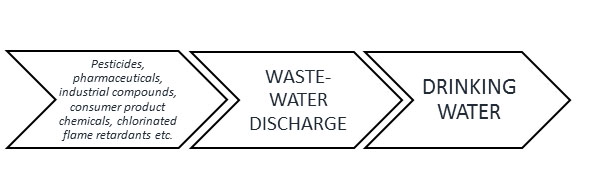
Trace organic compounds to waste-water discharge to drinking water

Trace organic compounds are poorly attenuated in conventional water treatment processes and wastewater discharge is the main contributor to TOrCs in drinking water.

The research by Tarun Anumol and colleagues provides knowledge and guidance towards effective wastewater monitoring schemes to detect trace organic compounds, an important piece of the puzzle towards increased drinking water quality.

You can read the full paper for free* using the link below:

Tarun Anumol, Shimkin Wu, Mauricius Marques dos Santos, Kevin D. Daniels and Shane A. Snyder.
Env. Sci: Water Res. Technol. 2015, Advance Article.
DOI: 10.1039/c5ew00080g.

—————-

About the webwriter

Jesper Agrelius is a MSc student in Environmental Science at Linköping University, Sweden. His main interests regards environmental science, especially climate change and biogeochemistry. You can follow him on Twitter @JesperAgrelius.

—————-

*Access is free through a registered RSC account.

Digg This
Reddit This
Stumble Now!
Share on Facebook
Bookmark this on Delicious
Share on LinkedIn
Bookmark this on Technorati
Post on Twitter
Google Buzz (aka. Google Reader)

Emerging Investigators Series author: Krista Wigginton

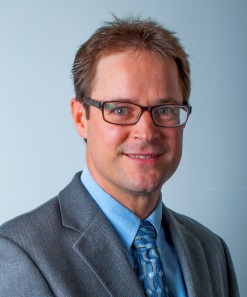
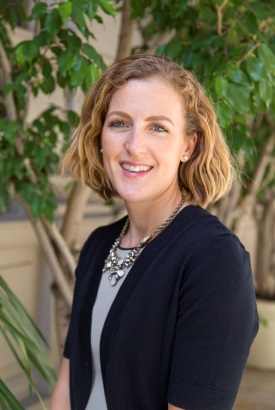
Krista Rule Wigginton received her Ph.D. in Environmental Engineering from Virginia Tech under P. J. Vikesland (2008). She conducted postdoctoral research at École Polytechnique Fédérale de Lausanne (2009–2010) under T. Kohn. She was an Assistant Professor of Environmental Engineering at the University of Maryland (2011–2012) and is now an Assistant Professor of Environmental Engineering and the Borchardt and Glysson Water Treatment Faculty Scholar at the University of Michigan. Her main research interests involve the detection and fate of emerging biological contaminants in drinking and wastewater treatment.

Read Krista’s Emerging Investigators article ‘the source and fate of pandemic viruses in the urban water cycle’ here.

How has your research evolved from your first to your most recent article?
My first article as an undergraduate researcher was on the synthesis of fluorinated organic compounds. This paper is on emerging viruses in the water environment. So my research has definitely evolved since I was an undergraduate student! I still consider myself an organic chemist, but now I study how viruses, which are essentially large organic molecules, behave in natural and engineered environments.

What aspect of your research are you most excited about at the moment?
I’m really enjoying the work we’re doing on environmental viruses. I started working with viruses towards the end of my Ph.D., and I’m still fascinated by them. There is so much we don’t know about the types, concentrations, and fate of human viruses in the environment. Right now, we have projects on human noroviruses, poliovirus, and coronaviruses, and we’re even starting a collaboration studying pig viruses.

What do you see as the biggest challenge or threat to global water supplies?
There are so many challenges to global water supplies, but so much is routed in human behavior. We know where to find water, we know the basics of how to clean water, and we know how to conserve water. The big challenge for scientists and engineers lies in helping the public and policy makers put this knowledge to practice.

In which upcoming conferences may our readers meet you?
I’m co-organizing a session on microorganism fate and detection at the upcoming ACS meeting in Boston. I’ll also be giving a talk on enveloped viruses at the IWA International Symposium of Health-Related Water Microbiology in Lisbon this September.

How do you spend your spare time?
Right now, most of my spare time is dedicated to my two children Lucille (3 years) and Max (1 year). They help me keep my life balanced.  I like to cook, garden, and my guilty pleasure is binge watching TV seasons on Netflix.

Which profession would you choose if you were not a scientist?
Hmm, that’s tough. I took flying lessons in high school and really enjoyed it, so I’ll just say pilot.

Can you share one piece of career-related advice/wisdom with other early career scientists?
With so few academic positions available for scientists and engineers, I think early career researchers need to be open to and prepared for more than one career path. I tried to keep as many doors open as possible all the way up to the point when I received an offer for an assistant professor position. I love my job, but I think I could have been just as happy working in consulting or for the government. Having options is good.

Digg This
Reddit This
Stumble Now!
Share on Facebook
Bookmark this on Delicious
Share on LinkedIn
Bookmark this on Technorati
Post on Twitter
Google Buzz (aka. Google Reader)

Emerging Investigators Series – Open Call for Applications

We are delighted to announce a new initiative in which we wish to highlight the very best work from environmental scientists, working in the area of water engineering and technology, who are in the early stages of their independent career. Environmental Science: Water Research & Technology has created an on-going Emerging Investigators Series that will feature articles published by up-and-coming researchers who have been identified as having the potential to influence future directions in water research and technology.

Environmental Science: Water Research & Technology showcases high quality research and innovative technologies that promote sustainable water resources. The journal provides a comprehensive and relevant forum that unites the diverse communities and disciplines conducting water research relevant to engineered systems and the built environment.

This is an open call for applications to the Series. Environmental scientists who have completed their PhD (or equivalent degree) within the last 10 years, and have an independent career, can apply to have their research highlighted in the Emerging Investigators Series.

To make an application please email eswater-rsc@rsc.org with the following information:

  • Your name, affiliation, position and contact details
  • Your up-to-date CV (no longer than 2 pages), which should include a summary of education and career, a list of relevant publications, any notable awards, honours or professional activities in the field, and a website URL if relevant
  • A synopsis of the article intended to be submitted to the Series, including a tentative submission date. This can be an original research article (Communication or Full Paper) or a review-type article (Critical Review, Frontier Review or Tutorial Review). Please see the journal website for more information on our article types.

Applications will be reviewed by the Executive Editor, Editor-in-Chief and members of the Editorial Board. The selection criteria for the Emerging Investigators Series will be based on the following:

  • Innovation and impact of research program
  • Quality of publications and/or patents and/or software
  • Profile within institute and/or community

Please note that articles submitted to the journal for the Series will undergo the usual peer-review process, and no guarantees of publication can be given to successful applicants.

In return, successful applicants will receive additional visibility of their research through the inclusion of their article in a high profile themed collection on the journal website, a feature interview on the journal blog devoted to the investigator’s research program (read the latest interviews here), and the offer of discounted membership to the Royal Society of Chemistry, at an appropriate level of membership, for the first year.

Environmental Science: Water Research & Technology authors also benefit from rapid publication times, a simple and user-friendly online submission process and all articles are in colour, free of charge.

Contact and further information
Sarah Ruthven, Executive Editor
Environmental Science: Water Research & Technology
Royal Society of Chemistry
Thomas Graham House, Science Park,
Milton Road, Cambridge, CB4 0WF, UK
Tel: +44 (0) 1223 432129
Email: eswater-rsc@rsc.org

Digg This
Reddit This
Stumble Now!
Share on Facebook
Bookmark this on Delicious
Share on LinkedIn
Bookmark this on Technorati
Post on Twitter
Google Buzz (aka. Google Reader)

Top 10 most accessed Environmental Science: Water Research & Technology articles from April – June 2015

From April – June 2015, our most downloaded Environmental Science: Water Research & Technology articles were:

Casey Forrestal, Zachary Stoll, Pei Xu and Zhiyong Jason Ren
DOI: 10.1039/c4ew00050a

Munmun Mukherjee and Sirshendu De
DOI: 10.1039/c4ew00094c

M. Rodríguez Arredondo, P. Kuntke, A. W. Jeremiasse, T. H. J. A. Sleutels, C. J. N. Buisman and A. ter Heijne
DOI: 10.1039/c4ew00066h

David T. Tan and Danmeng Shuai
DOI: 10.1039/c5ew90011e

Diana N. H. Tran, Shervin Kabiri, Ting Rui Sim and Dusan Losic
DOI: 10.1039/c5ew00035a

Somak Chatterjee and Sirshendu De
DOI: 10.1039/c4ew00075g

A. L. Smith, S. J. Skerlos and L. Raskin
DOI: 10.1039/c4ew00070f

Yufeng Cai, Wenming Shen, Jing Wei, Tzyy Haur Chong, Rong Wang, William B. Krantz, Anthony G. Fane and Xiao Hu
DOI: 10.1039/c4ew00073k

Jacob Lalley, Changseok Han, Gayathri Ram Mohan, Dionysios D. Dionysiou, Thomas F. Speth, Jay Garland and Mallikarjuna N. Nadagouda
DOI: 10.1039/c4ew00020j

Blain Paul, Vyom Parashar and Ajay Mishra
DOI: 10.1039/c4ew00034j

Interesting read? Let us know your thoughts below.

And remember, you can submit directly to Environmental Science: Water Research & Technology!

Digg This
Reddit This
Stumble Now!
Share on Facebook
Bookmark this on Delicious
Share on LinkedIn
Bookmark this on Technorati
Post on Twitter
Google Buzz (aka. Google Reader)

Drinking Water Exposome Themed Issue

Drinking water chemistry and microbiology: At the interface of water quality and human health

Are you currently doing research examining the complexities of drinking water chemistry and microbiology at the interface of water quality and human health?

If so, you are encouraged to submit a paper to a themed issue of Environmental Science: Water Research & Technology dedicated to the Drinking Water Exposome.

The Exposome has recently been defined as the environmental exposure complement to the genome. In this themed issue we utilise this construct to consider chemical and microbial exposures that can occur via consumption or use of drinking water.

Editorial Board member Peter Vikesland (Virginia Tech, USA) and Lutgarde Raskin (University of Michigan, USA), Guest Editors of this themed issue, are soliciting submissions highlighting research that covers the diverse array of research topics that are encompassed by drinking water chemistry and microbiology at the interface of water quality and human health:

–       Unintended consequences of disinfectant switching practices
–       Distribution system and premise plumbing corrosion
–       Dissemination of antimicrobial resistance organisms via drinking water
–       Nutrient and carbon cycling within drinking water systems
–       Drinking water disinfectant fate and reactivity
–       Innovative treatment technologies to mitigate exposure
–       Opportunistic pathogens in drinking water systems

Submit your paper by 10th January 2016!

We welcome original research papers, communications and Review articles.

For more information on the scope of Environmental Science: Water Research & Technology and our author guidelines, please visit our website or email us at eswater-rsc@rsc.org.

ESWRT Banner

Digg This
Reddit This
Stumble Now!
Share on Facebook
Bookmark this on Delicious
Share on LinkedIn
Bookmark this on Technorati
Post on Twitter
Google Buzz (aka. Google Reader)

Beach sand – key player in coastal beach water management

an article by webwriter Jesper Agrelius (@JesperAgrelius) at Linköping University, Sweden

Beach sand – not just for sunbathers

After hearing the word “beach”, many people automatically think of sunbathing, long walks near the sea, building sand castles and throwing Frisbees – recreation at its finest. Beaches are one of the most visited ecosystems for human recreation and are of high importance for regional economies, in many cases especially for tourism. Beaches and recreational bathing waters are highlighted by the World Health Organization (WHO) as important for health and wellbeing. But did you know that beaches, and in particular the beach sand itself, also plays a vital part in coastal beach water management?

Worldwide public use of water for recreational purposes and recreational activities that involves water have increased over the years. But this also means that recreational exposure to pathogens in the water environment also increases.

Fecal contamination of coastal waters

There are many different kinds of contaminants that humans can be exposed to with regard to water, such as protozoas and trematodas, bacterias and viruses. Current recreational water management practices tend to focus primarily on the beach water itself, excluding the impacts of beach sand on water quality. A wider approach is needed to fully understand how other components of the beach system can influence the water quality.

New research by Qian Zhang, Xia He and Tao Yan, from the University of Hawaii at Manoa, studied what role beach sand has in coastal beach water management.

Beach sand is often highlighted for its negative impact because it functions as a potential source and reservoir to fecal indicator bacteria, often showing higher levels than the surrounding water. This could cause chronic water quality deterioration and hamper proper health risk assessment. However, to get full knowledge of the beach system, we also need to understand the positive impacts that beach sand can have on water quality.

By using microcosms, small experimental and simplified ecosystems, Zhang and colleagues have examined how subtidal beach sand can enhance the decay of fecal bacteria and which underlying mechanisms contribute to the process.

Indigenous microbiota – a significant factor in bacterial decay

The study identified that beach sand indigenous microbiota was the major factor in bacterial decay rates, and showed that higher indigenous microbiota corresponded to faster bacterial decay. This research proved that beach sand actively facilitates the removal of fecal bacteria, which goes beyond the traditional perception of beach sand only serving for contaminant adsorption and retention.

The study shows that beach sand have other functions than just being for recreation, it also contributes significantly to water quality. Thanks to the research findings from Zhang and colleagues, beach water management practices can be improved to include beach sand and other functions of natural processes in beach systems, which would be a more inclusive systems approach. This would also enhance our understanding and management of recreational exposure to pathogens in water.


You can read the full paper for free* using the link below:

Impact of indigenous microbiota of subtidal sand on fecal indicator bacteria decay in beach systems: a microcosm study
Qian Zhang, Xia He and Tao Yan.
Environ. Sci: Water Res. Technol., 2015, 1, 306-315.
DOI: 10.1039/c5ew00004a

—————-

About the webwriter

Jesper Agrelius is a MSc student in Environmental Science at Linköping University, Sweden. His main interests regards environmental science, especially climate change and biogeochemistry. You can follow him on Twitter @JesperAgrelius.

—————-

*Access is free through a registered RSC account.

Digg This
Reddit This
Stumble Now!
Share on Facebook
Bookmark this on Delicious
Share on LinkedIn
Bookmark this on Technorati
Post on Twitter
Google Buzz (aka. Google Reader)

Purity and character of water

an article by webwriter Paramjeet Pati at @VTSuN

The purity of water can mean different things to different people. When I call a glass of water pure, am I saying that it’s safe to drink, or clean enough to be labeled as “research-grade”, or do I mean that it has two molecules of hydrogen for every molecule of oxygen and absolutely nothing else? And where can we find the purest, cleanest water in nature?

Pure as the driven snow?

Image adapted from Wikipedia

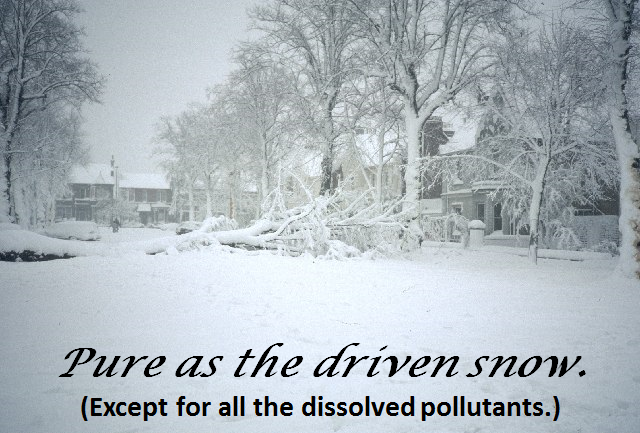
It ain’t pure if it’s natural. It ain’t natural if it’s pure. As rain and snow make their way to the earth, they dissolve particles, minerals and gases. Once on the ground as surface water from rain and snowmelt, the water continues to gather dissolved and suspended materials (including microorganisms), as it flows over the soil and the rocks. Rainwater and snow also contain many pollutants and may not be appropriate for drinking without treatment. So, the next time someone tries to sell you a bottle of “pure natural water”, ask where that pure water came from, because, as Machell et al. say in a recent paper, “Pure water does not exist in nature…”.

If it ain’t pure, is it safe? Indeed this is a key question that links drinking water with public health issues. Very few drinking water quality parameters require legal compliance. The Drinking Water Directive in Europe and the Safe Drinking Water Act in the United States are notable exceptions. But most drinking water quality parameters serve merely as guidelines, rather than specific requirements that can be enforced by law.

Due to increasing stresses on our water infrastructure, we are now forced to look for alternative sources of water (such as wastewater reuse, rainwater harvesting and dual distribution systems for potable and non-potable uses).  So, a clear understanding of purity becomes even more important when these alternative sources are used to provide fit-for-purpose or safe-to-drink water.

Ultrapure water - not good for making tasty ice

Image adapted from Wikipedia

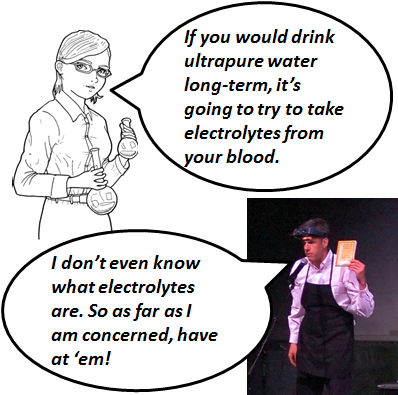
“If I find the world’s cleanest, purest water, I can make the world’s tastiest ice.”, said David Rees in an episode of Going Deep (National Geographic).  But he was disappointed after tasting ultrapure water – i.e., water devoid of any impurity. (Perhaps he was also disappointed that he was not allowed do a keg stand, and had to drink the water from a flask.)

In fact, ultrapure water is quite expensive and is an aggressive solvent used semiconductor industry for cleaning wafers – definitely not meant for making the world’s tastiest ice. Rees succinctly summed up the issue: “Don’t overpurify your water – minerals and salts add character.”

An old saying goes: “Water which is too pure has no fish.” Today, we need a more nuanced understanding about water purity to assess the tradeoffs between the cost of treating water and acceptable levels treatment for providing safe drinking water. Indeed, as Machell et al. say, “Water purity is a vague term… Safe water is economical and attainable, whereas pure water is not.”


How does this idea of water purity govern environmental monitoring and risk assessment? Find out by reading the full paper for free* using the link below:

Drinking water purity – a UK perspective
John Machell, Kevin Prior, Richard Allan and John M. Andresen
Environ. Sci.: Water Res. Technol., 2015,1, 268-271
DOI: 10.1039/C5EW90006A, Forum

————

About the webwriter

Paramjeet Pati is a PhD Candidate at the Virginia Tech Center for Sustainable Nanotechnology (@VTSuN).
You can find more articles by him in the VTSuN blog, where he writes using the name
coffeemug.

————

*Access is free through a registered RSC account.

Digg This
Reddit This
Stumble Now!
Share on Facebook
Bookmark this on Delicious
Share on LinkedIn
Bookmark this on Technorati
Post on Twitter
Google Buzz (aka. Google Reader)

Disinfection by-products during ballast water treatment

an article by webwriter Jesper Agrelius (@JesperAgrelius) at Linköping University, Sweden

Maritime transportation is vital for local and global economies and international trade, but it also causes many environmental problems.

Ballast water – safe and efficient, but also harmful

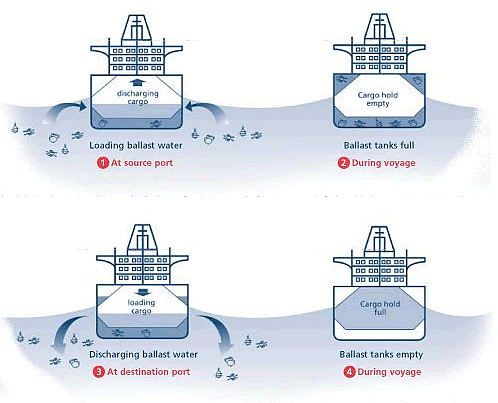
Water has been used as ballast to stabilize ships since the introduction of steel vessels during the last centuries. Ballast water provides stability and manoeuvrability and also compensates for weight changes in cargo loads, fuel and water consumption, among others. Ballast water is crucial for efficient and safe shipping operations, however it also has environmental downsides.

A reason for concern

The transportation of invasive species via ballast water is a serious ecological threat and have received a lot of focus during recent years. There is an International convention for the Control and Management of Ships’ Ballast water and sediment (BWM) that was adopted 2004, which promotes procedures and standards to control and manage the ballast water.

Ballast water management technologies is seen as a key factor in combating ecological and health risks of ballast water. There are several ways to treat ballast water, either mechanical, physical or chemical methods, or in combination. These treatment methods are seen as a response to the ecological threat of invasive species, but the methods themselves also come with certain environmental risks. Chemical treatment of ballast water can result in formation of disinfection by-products, which are thought to have an impact on health.

Formation of disinfection by-products in ballast water treatment
New research by Amisha Shah and colleagues have observed the extent of disinfection by-products (DBP) formation during chemical treatment of ballast water. Chlorine, ozone, peracetic acid (PAA) and chlorine dioxide, predominantly used in ballast water management systems in this order from the former to the later, where used to examine and assess DBP formation in several ballast water types such as seawaters, brackish waters, synthetic- and man-made freshwater. Our knowledge of the potential formation of DBP in saline water is limited and therefore is it important to conduct this type of studies, since many ballast waters often are saline.

Ballast water – hitch-hiking invasive species. Source: http://globallast.imo.org/

Studied DBPs include trihalomethanes (THMs), bromate, and haloacetic acids (HAAs). Approximately 50% of the formation of DBPs occurred within 24 hours of the usual 5 day ballast water treatment holding time. The findings highlight that our understanding of DBP formation in freshwater systems can be partially transferred to saline waters.

The research show several factors that influence DBP formation in saline waters: salinity, dissolved organic matter (DOM) type/concentration, oxidant type/dose and temperature. Particularly salinity seems to influence the bromide concentration and brominated DBPs dominated in high bromide-containing waters. Temperature shows diverse and limited influence on DBP formation: TBAA and CHBr3 formation was not affected by temperature, whereas DBAA and bromide formation decreased following a disminution in temperature.

Thanks to this study, important factors in DBP formation have been examined so ballast water treatment disinfection strategies can be optimized to limit DBP formation and discharge in our waters – one of many steps towards a sustainable transport system.

—————-

You can read the full paper for free* using the link below:

Formation of disinfection by-products during ballast water treatment with ozone, chlorine, and peracetic acid: influence of water quality parameters
Amisha D. Shah, Zheng-Qian Liu, Elisabeth Salhi, Thomas Höfer, Barbara Werschkund and Urs von Gunten
Environ. Sci.: Water Res. Technol., 2015, Advance Article
DOI: 10.1039/C5EW00061K

—————-

About the webwriter

Jesper Agrelius is a MSc student in Environmental Science at Linköping University, Sweden. His main interests regards environmental science, especially climate change and biogeochemistry. You can follow him on @JesperAgrelius.

—————-

*Access is free through a registered RSC account.

Digg This
Reddit This
Stumble Now!
Share on Facebook
Bookmark this on Delicious
Share on LinkedIn
Bookmark this on Technorati
Post on Twitter
Google Buzz (aka. Google Reader)

2nd National Environmental Eco-Toxicology Conference

Held in Xiamen (China), April 2015

The 2nd National Environmental Eco-Toxicology Conference was held in Xiamen, China, 25th-28th of April, 2015.

This exciting conference was jointly organised by the Research Center for Eco-environmental Sciences of the Chinese Academy of Sciences (CAS), Xiamen University and the Institute of Urban Environment of CAS.

More than 700 attendees shared new ideas and recent development on the are six topics discussed during this conference:

  • Screening and assessment of high risk chemical contaminants
  • Transfer and distribution of chemical contaminants in the environment and organisms
  • Chemical hazards evaluation
  • Toxicology mechanism of chemical ecology
  • Toxicological mechanism of chemical health effects
  • Chemical risk management


During the conference, the Environmental Science (ES) series of journals sponsored three poster prizes. Let’s introduce the winners!

– ES: Processes & Impacts: ‘Study on the toxicity behavior of organic phosphate ester flame retardant to pattern fish’, by Liwei Sun (Zhejiang Institute of Technology)

– ES: Water Research & Technology: ‘Bioaccumulation behaviour of short chain chlorinated paraffins in Antarctic ecosystem’, by Huijuan Li and Aiqian Zhang (Research Center for Eco-Environmental Sciences)

– ES: Nano: ‘Proinflammatory effects of silver nanoparticles and silver ions on human skin keratinocytes’, by Yang Di, Wei Hong-ying, Wang Bin, Fan Jing-pu, Qin Yu, Liu Yue, Guo Xin-biao and Deng Fu-rong (Peking Universty)

Congratulations to all the winners!

The judges of the prize thought the quality of the posters was really high and, from the Environmental Science team, we would like to thank all the researchers that attended or presented at the conference.

Digg This
Reddit This
Stumble Now!
Share on Facebook
Bookmark this on Delicious
Share on LinkedIn
Bookmark this on Technorati
Post on Twitter
Google Buzz (aka. Google Reader)

Meet our Advisory Board

Shaping the future of the journal

We are incredibly proud to present our Advisory Board, a group of distinguished experts in the field of water research and technology, who will provide us with valuable external perspectives on our current plans and strategy, and will actively help us shape the future of the journal.

Let’s find out a bit more about them:

Nandita Basu
University of Waterloo, Canada

Nandita is an Assistant Professor of Water Sustainability and Ecohydrology at the University of Waterloo, in Canada. Her research revolves around an interest in the sustainable management of water resources. The question of sustainable management of water is inherently interdisciplinary and requires research at the interfaces of hydrology, biogeochemistry, ecology, social sciences and economics. Her expertise lies at the interface of hydrology and chemistry, but she is also actively involved in collaborations with ecologists, social scientists and economists to explore other interfaces.


Dionysios Dionysiou
University of Cincinnati, USA

Professor Dionysiou is a UNESCO Chair Professor on “Water Access and Sustainability” and a Herman Schneider Professor of Environmental Engineering at the University of Cincinnati where he teaches courses on drinking water quality and treatment, advanced unit operations for water treatment, advanced oxidation technologies, and physical-chemical processes for water quality control. His research interests include treatment of water contaminated by harmful algal blooms with conventional and advanced technologies, advanced technologies for water treatment, advanced oxidation technologies, transition metal-based chemical oxidation, and nanotechnology.

Ferdi L. Hellweger
Northeastern University, USA

Dr. Hellweger is an Associate Professor in the Department of Civil and Environmental Engineering at Northeastern University. His research interests are in the ecology of microbes in surface water systems, including harmful algal blooms in lakes and antibiotic resistance in rivers. He specialises in the development and application of mathematical models, with a focus on agent-based techniques. Locally, he is especially interested in the Charles River and wants to contribute to making it swimmable again. His goal is to build a forecast system that can be used to predict when & where it is safe to swim.


Jun Ma
Harbin Institute of Technology, China

Professor Ma is the Changjiang Scholar Professor at Harbin Institute of Technology and the Deputy Director of the National Engineering Research Center of Urban Water Resources, China. Jun’s interest has been in the area of water and wastewater treatment, he has been working in the processes of oxidation, nanoparticles and membranes.  He is the recipient of China Young Scientist Award, and the Achievement Award of Chiangjiang Scholars (Engineering Science Award) and holds over 80 invention patents and over 180 peer reviewed international journal papers.


Julie Minton
WateReuse Foundation, USA

Julie Minton has been the Director of Research Programs for the WateReuse Research Foundation for nearly five years and previously worked at the Foundation managing research projects.  She is responsible for planning and managing a comprehensive research program and staff.  Collectively, they manage over 50 active projects, worth more than $6 million annually. Ms. Minton has the programmatic responsibility for the Foundation’s fundraising initiatives, federal grants and cooperative agreements and has directed programmatic monitoring, reporting, outputs, and outcomes on multiple federal, state, and partner awards totaling over $20 million. Ms. Minton is also responsible for maintaining collaborative relationships with U.S. and international research organizations, cooperative funding of research programs and projects, and joint outreach activities. She has a B.A. in Biology from St. Mary’s College of Maryland.


Simon Parsons
Scottish Water, UK

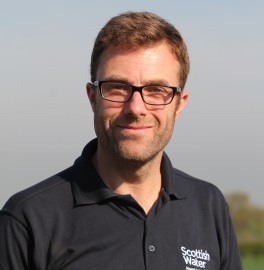
Simon Parsons is Director of Strategic Customer Service Planning at Scottish Water. He was formerly Chief Scientist and General Manager of Scientific Services and represented Scottish Water in science, research and public health communities. Simon won the Royal Society of Chemistry’s prestigious Sustainable Water Award for 2014 for advancing the understanding of natural organic matter in water treatment and for the development of treatment processes to improve water quality and sustainability.


Kai Udert
EAWAG, Switzerland

Dr. Udert has a background in environmental engineering. He received his PhD from the Swiss Federal Institute of Technology (ETH) in Zurich in 2003. After a postdoctoral appointment at the Massachusetts Institute of Technology (MIT), he joined the Swiss Federal Institute of Aquatic Science and Technology (Eawag) in 2006. His main research focus has been on decentralized wastewater treatment and source separation. Besides working as a researcher, Dr Udert is also a lecturer at ETH Zurich for process engineering in water and wastewater treatment.


Lizhong Zhu
Zhejiang University, China

Lizhong Zhu is a Professor in Environmental Science and Director of Faculty of Agriculture, Life and Environmental Sciences at Zhejiang University, Hangzhou, China. His research mainly focuses on interfacial behavior of organic pollutants and its regulation technology, which are essential to understanding source-sink dynamics, predicting bioavailability, and developing new pollution control materials and methods.


———-

All in all, a team of leaders in water research who are happy to join us in our great adventure.

Do you want to know more about the latest news in the journal? Follow us on Twitter @ESWater_RSC!

Digg This
Reddit This
Stumble Now!
Share on Facebook
Bookmark this on Delicious
Share on LinkedIn
Bookmark this on Technorati
Post on Twitter
Google Buzz (aka. Google Reader)