

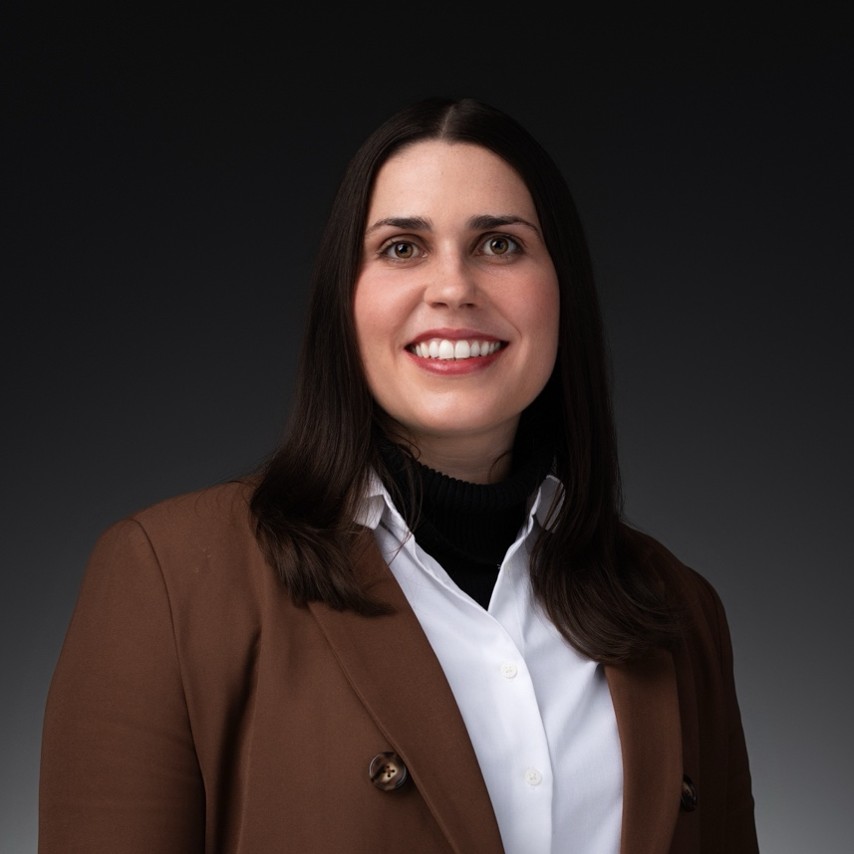
 Lauren Kennedy is an assistant professor in the department of Civil, Environmental, and Construction Engineering at the University of Texas at El Paso, where she focuses on pathogen fate and transport in drinking water, wastewater, and potable reuse systems. She earned her B.S. in Environmental and Ecological Engineering at Purdue University and her M.S. as well as her Ph.D. in Civil and Environmental Engineering from the University of California, Berkeley. She continued her training as a postdoc at Stanford University, where she joined the Sewer Coronavirus Alert Network (SCAN) and wastewaterSCAN teams. The Kennedy Water Lab aims to characterize microbial community dynamics, occurrence, and persistence in the engineered water cycle and apply these data to protect public health and wellbeing as well as the environment.
Read Lauren’s Emerging Investigator Series article “Why we should care about the fate of biological contaminants from municipal wastewater in reverse osmosis concentrate” and learn more about her in the interview below:
Your recent Emerging Investigator Series perspective focuses on the concentrate stream produced from the use of reverse osmosis as a treatment technology in potable reuse. How has your work evolved from your earliest publication to your independent research?
This paper combines aspects that I learned in my PhD research and in my postdoc research. As a PhD student, I studied microbial water quality in pipe loops (i.e., simulated drinking water distribution systems) that transitioned from conventional drinking water to direct potable reuse water. During this time, I learned a lot about potable reuse in the United States, and the use of RO in treatment trains. As a postdoc, I quantified human norovirus and fecal indicator persistence in environmental waters. During this time, I learned that salinity is a complex factor in pathogen persistence studies, with different studies reporting different effects depending on the organism and water matrix. When I moved to El Paso, I started thinking more about how inland facilities manage RO concentrate currently, and I found out that groundwater desalination plants in Texas can manage RO concentrate through surface water discharge. This observation led me to wonder how RO concentrate is managed globally at potable reuse facilities and what happens to microbial contaminants in RO concentrate, and I was surprised by how little information was available. This paper is the result of bringing those experiences together and exploring the unanswered questions surrounding the fate of microbial contaminants in RO concentrate.
What aspect of your work are you most excited about at the moment?
I am excited about research that leads to direct impact because of strong collaborations between academia, the public, and water professionals. When I first started at UTEP, I was focusing almost solely on fundamental science questions. While I am still working on this type of question, I have expanded my view to include more industry, utility, and non-profit collaborations. One of the most rewarding aspects has been conducting community-engaged research that connects research with local needs.
In your opinion, what are the most important questions to be asked/answered in your field of research?
One important question is how can we combine all of the information we have about pathogen decay in the environment or during treatment into generalizable models. Industrial discharges to sewers and in some cases to environmental waters are something we will need to think about more as regulations are changing (e.g., the definition of navigable waters in the United States) and as surface water flows reduce, the discharge proportions will increase. I think that some of the variation we see in pathogen persistence studies in environmental waters could come from variable industrial contributions, and I think we should be looking into how to account for this scientifically in pathogen persistence studies.
What do you find most challenging about your research?
To be honest, for me it has been nuanced conversations about microbial water quality. I aim to communicate findings without undermining public confidence in drinking water or in potable reuse. For example, potable reuse is incredibly important for water stressed regions and RO concentrate is often a waste stream from potable reuse. Balancing the message that we should better understand contaminants in RO concentrate without implying that potable reuse should be limited can be challenging. These ideas are not mutually exclusive, but communicating that nuance, particularly to a public audience, can be difficult.
In which upcoming conferences or events may our readers meet you?
I will be attending the Association of Environmental Engineering and Science Professors (AEESP) Conference in 2027. You can usually find me at the Gordon Research Conference – Microbiology of the Built Environment and at the Texas Water Conference.
How do you spend your spare time?
My hobby is collecting hobbies, but I am currently reading fiction (especially horror), trying out embroidery, and keeping house plants alive. I also spend a lot of time with my husband and my pets. Our border collie mix and energetic pug give us a great excuse to go on walks together and explore El Paso.
Which profession would you choose if you were not a scientist?
About two years before college, I was considering majoring in journalism. However, my calculus teacher encouraged me to explore engineering. Through environmental engineering, I found a way to give back to my community and still write. I have a lot of respect for journalism and the important role it plays in society. If I had not become a scientist, I suspect that I would have pursued a career in journalism.
Can you share one piece of career-related advice or wisdom with other early career scientists?
I have found that grounding my sense of success in more than grants and publications has made the inevitable ups and downs of academia easier to navigate. At this career stage, it can be difficult because grants and publications are traditional measures of success. However, many of these measures of success take years to build. Many of us are constantly coming up with ideas and often hear a lot more “no” than “yes.” I do not want to lose myself while trying to achieve something too soon. At work, I find meaning in mentoring students and watching them gain confidence in research. I find meaning in developing classes and helping students improve throughout the semester. I find meaning in collaborating with other academics and water professionals on ideas even if they do not lead to immediate funding or publications.


