Author Archive

NJC in China: 3rd Stop Beijing

After Hong Kong and Shanghai, the last day of the 2012 NJC Symposium: New Directions in Chemistry took place at the Chinese Academy of Sciences’ Institute of Chemistry (ICCAS) in Beijing.

The day began with a repeat of my presentation to the students on preparing and publishing scientific manuscripts. Two attendees were the winners of the drawing for the classic books “Elements of Style” (William Strunk, Jr. and E. B. White) and “Eats, Shoots & Leaves” (Lynne Truss) offered by NJC.

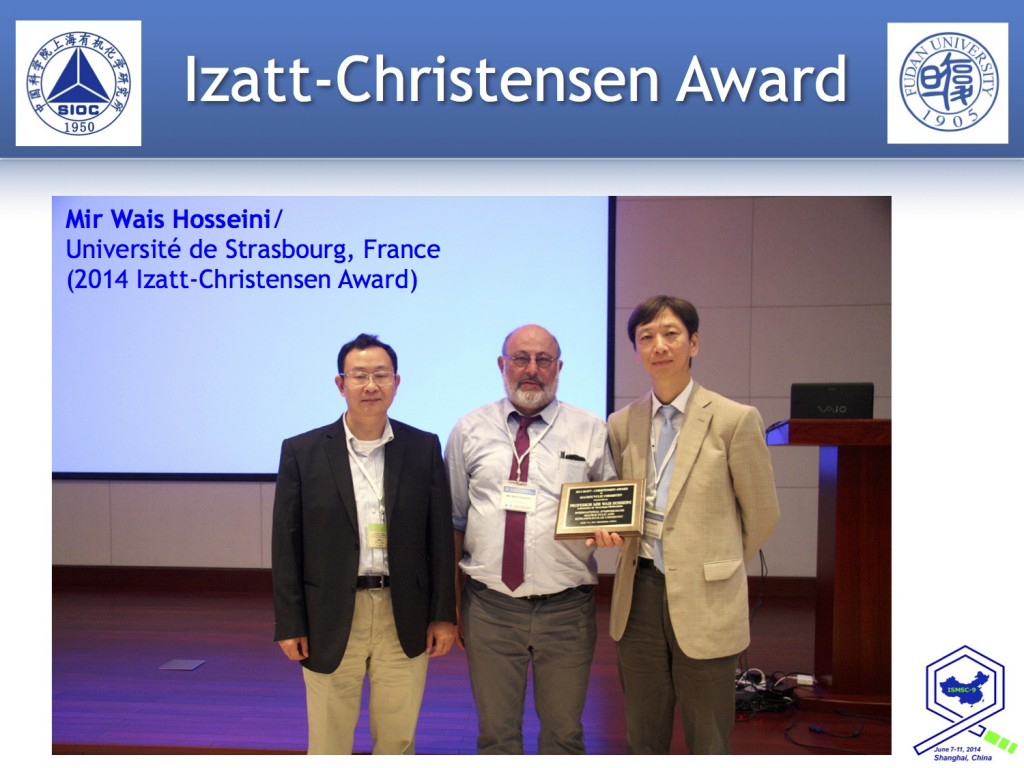
Professor Jiannian Yao (Member of the Chinese Academy of Sciences and NJC Board member) and ICCAS Vice-Director Zhen-Zhong Yang made the opening remarks on behalf of the Institute, while NJC co-Editor-in-Chief Wais Hosseini presented the journal.

A full day of 10 presentations included ones by Profs Deqing Zhang (Laboratory of Organic Solids, ICCAS), Buxing Han (Thermodynamics and Thermochemistry Laboratory, ICCAS), and Zhongfan Liu (Center for Nanochemistry, Peking University).

Prof. Deqing Zhang presents an overview of the Institute to the NJC team.

The scientific attaché of the French Embassy and the director of the CNRS office in Beijing honored us with their presence. I also had the pleasure of meeting the staff of the RSC office in Beijing, who are housed in the Institute.


Deqing Zhang makes a point to Zhen-Zhong Yang and I during dinner.


While our very busy week officially ended with a lovely Chinese banquet with our hosts, some of us were up bright and early the next morning for an expedition to the Great Wall at Badaling, northwest of Beijing. The outing was organized by the Institute and two of the graduate students accompanied us to facilitate the visit. Many thanks to them!


Thus ends our week-long visit to Hong Kong and the People’s Republic of China. All in our group enjoyed it immensely and we were greatly impressed by what we heard and saw in the institutions that we visited.  

We thank our hosts and all who participated in one way or another in these three NJC New Directions in Chemistry Symposia. We are very grateful to them for their kindness and hospitality.

Digg This
Reddit This
Stumble Now!
Share on Facebook
Bookmark this on Delicious
Share on LinkedIn
Bookmark this on Technorati
Post on Twitter
Google Buzz (aka. Google Reader)

NJC in China: 2nd Stop Shanghai

After 2 days in Hong Kong, 9 of us continued on to Shanghai for the 2nd stop on the NJC China tour

We were thrilled to see our name in lights on the front of the East China University of Science and Technology (ECUST) building where the symposium was held. 


ECUST President Xu Hong Qian (in the middle of the front row) and his colleagues, Professors Bozhong Mu (at the left in the back row) and Chunyan Bao (at the right end of the front row), made us feel like visiting royalty with their welcome. 

The programming was top-notch, with interesting lectures on a diverse variety of topics by NJC Board members and invited speakers Professors Yi Yang (ECUST), Guoxin Jin (Fudan University) and Dawei Ma (Shanghai Institute of Organic Chemistry). 

Biological chemistry, chemical methodology & reactivity, organization were the themes of the session. 

Before the symposium opening, I gave a course for the students and younger researchers on writing up their research results for publication in scientific journals. 

After the serious scientific business began, the non-less-serious business of socializing, at a lovely Chinese banquet (with numerous toasts) hosted by Prof. Qian. For those of us who were still feeling energetic, our hosts took us for a visit to the famous Bund area of Shanghai, where we admired the night lights. 


Thursday was our “day off” and a chance to do a little sightseeing. Two lovely ladies from ECUST were our guides for the morning. We bargained in the souvenir shops, visited the famous Yu Yuan Garden, then lunched in a nearby restaurant, before flying to our next, and last, stop of Beijing. 

Left to right: NJC Board members Len Barbour, Odile Eisenstein, Peter Junk and Helen Hailes near the entrance to the Yu Yuan Garden. 

Check back soon to read about Beijing!

Digg This
Reddit This
Stumble Now!
Share on Facebook
Bookmark this on Delicious
Share on LinkedIn
Bookmark this on Technorati
Post on Twitter
Google Buzz (aka. Google Reader)

NJC in China: 1st Stop Hong Kong

Our group of 11 NJC Board members and editors arrived in Hong Kong at the beginning of the week for the first of 3 stops on our 2012 China tour. About half of us are China “virgins” so we are quite excited and are looking forward to the week that awaits us.

University of Hong Kong Professor of Chemistry, Vivian Yam and her group were our hosts; they did such a great job, taking care of us and making sure we didn’t get lost in the 3D topology of the University!

The first symposium was a full program of 14 presentations by NJC board members/editors and Hong Kong chemists. Listening to these, I was struck by the connections between talks that, at first glance, had no relationship. Some of these were:

  • ion channels (for biology and batteries by Dan Yang and Takashi Kato, respectively)
  • use of porous materials (Len Barbour and JN Moorthy)
  • the effects of aggregation (Kato again and Ben Zhong Tang)
  • separating similar species (Michael Scott and Moorthy)
  • fluorine containing systems (Odile Eisenstein and Peter Junk)
  • transaminases (Helen Hailes and Ling Peng)

At the end of a long day, Niamh O’ Connor and Jamie Humphrey (of the RSC Publishing office in Cambridge) hosted the board members, editors and Vivian Yam for a lovely dinner. While sipping a velvety Australian Shiraz wine provided by Vivian, we tasted Shanghai-style delicacies, to give us a fore-taste of our upcoming stop.

Left to right: Vivian Yam welcoming NJC members; Editor-in-chief Mir Wais Hosseini breaking the chicken; tea service. (Thanks to Debbie Crans for these photos.)

Thanks to Vivian and her team, all the participants, and the French Consulate of Hong Kong and Macau (who gave financial support) for making this event such a scientific success and a delight for all of us, who came such a long way!

Next stop: Shanghai!

Digg This
Reddit This
Stumble Now!
Share on Facebook
Bookmark this on Delicious
Share on LinkedIn
Bookmark this on Technorati
Post on Twitter
Google Buzz (aka. Google Reader)

Catalyst expert named to NJC Advisory Board

The Editors-in-Chief of NJC welcome 3 new members to the boards. Earlier this year Len Barbour of Stellenbosch University in South Africa and Takashi Kato of the University of Tokyo were appointed to the Editorial Board, while Davit Zargarian, at the University of Montreal in Québec, Canada, has joined the International Advisory Board.

In this post, I present Professor Davit Zargarian, who has been at the University of Montreal since 1993.

Davit Zargarian began his studies at the University of Toronto as an undergraduate in the group of Professor Martin Moskovits, working on the oxidation of ethylene. After his B. S. degree, he moved to the University of Waterloo to join the new organometallic chemistry/homogenous catalysis laboratory led by Professor Todd Marder. His M. S. studies centered on the preparation of Rh-alkynyl complexes. The University of Ottawa was his next home, where Davit prepared his Ph. D. thesis with Professor Howard Alper on the Ni- and Pd-catalyzed carbonylation of alkenes and alkynes. In 1991, Davit moved to the Scripps Institute for his first postdoctoral stint. After working on Os-catalyzed dihydroxylation of olefins in the group of Professor Barry Sharpless, Davit moved across the street to the San Diego campus of the University of California to work in the research group of Professor Don Tilley, studying the chemistry of Hf-silyl complexes.

Davit returned to Canada in 1993 to take up a position as Assistant Professor at the University of Montreal, where he learnt to teach inorganic and organometallic chemistry in French and moved up the ranks to become Full Professor in 2004. The Zargarian research group typically consists of a small group of enthusiastic students focused on the coordination and organometallic chemistry of first-row transition metals (primarily nickel) featuring ligands such as indenyls, bis- and tris(pyrazolyl)alkanes, and various types of pincer ligands. The main theme of their studies is homogeneous catalysis promoted by new complexes designed and synthesized by the group.

Davit has a message to address to the chemistry community worldwide: “I look forward to joining my colleagues on the international advisory  board in their efforts to strengthen New Journal Chemistry as a society publication that will contribute to the advancement of the chemical sciences. With the rapid worldwide growth of chemical research over the past two decades, it is incumbent on all of us to take steps to avoid fragmentation of our research results, strive to interpret the avalanche of new data being generated worldwide, and formulate this data into new knowledge that can be communicated to the research community and the society at large. In this spirit, I urge my fellow inorganic and organometallic chemists to consider publishing their latest research results in the form of articles and perspectives in NJC.”

We wish a warm welcome to Davit and look forward to a fruitful collaboration with him as a representative of the Canadian chemistry community.


Digg This
Reddit This
Stumble Now!
Share on Facebook
Bookmark this on Delicious
Share on LinkedIn
Bookmark this on Technorati
Post on Twitter
Google Buzz (aka. Google Reader)

South African chemist joins NJC Editorial Board

The Editors-in-Chief of NJC welcome 3 new members to the boards. Earlier this year Len Barbour of Stellenbosch University in South Africa and Takashi Kato of the University of Tokyo were appointed to the Editorial Board, while Davit Zargarian, at the University of Montreal in Québec, Canada, has joined the International Advisory Board. Len and Takashi will be participating in the 2012 NJC Symposia: New Directions in Chemistry, which will be held in Hong Kong, Shanghai and Beijing during the last week of April.

In this post I present Len Barbour, professor of chemistry at Stellenbosch University in South Africa.

Len completed his Ph.D. research in 1994 at the University of Cape Town, where he studied physico-chemical aspects of inclusion compounds under the direction of Professor Luigi Nassimbeni. He then moved to the University of Missouri-Columbia (UMC) to work as a postdoctoral fellow with Professor Jerry Atwood. Len continued at UMC as a Research Assistant Professor until 2003, at which time he moved back to South Africa to take up an Associate Professor position at Stellenbosch University. Len was promoted to Full Professor in 2005 and two years later was awarded a South African Research Chairs Initiative (SARChI) Chair in Nanostructured Functional Materials, a position that was recently renewed.

Len’s research interests centre on structure-property relationships in molecular crystals. Properties of interest include porosity, nonlinear optics, and anomalous thermal expansion, with the main objective being to gain new insights into physical processes that occur at the molecular scale. Using a crystal engineering approach, the group carries out multifaceted studies that include the synthesis of molecular building blocks, crystallisation studies, kinetic and thermodynamic measurements, X-ray structure elucidation, computation and process engineering.  Methodology development is also a strong research theme within the group.

Of his nomination to the NJC Board, Len had this to say: “I was greatly honoured when asked to join the editorial board of the New Journal of Chemistry—an invitation that I accepted without hesitation. NJC has a longstanding record of publishing outstanding papers that cover a broad range of subdisciplines within chemistry, and I very much look forward to making meaningful contributions aimed at maintaining and even improving the journal’s profile.

We look forward to welcoming Len Barbour onto the Editorial Board of NJC at the upcoming Board meeting.

Digg This
Reddit This
Stumble Now!
Share on Facebook
Bookmark this on Delicious
Share on LinkedIn
Bookmark this on Technorati
Post on Twitter
Google Buzz (aka. Google Reader)

Professor Takashi Kato appointed to NJC Editorial Board

The Editors-in-Chief of NJC welcome 3 new members to the boards. Earlier this year Len Barbour of Stellenbosch University in South Africa and Takashi Kato of the University of Tokyo were appointed to the Editorial Board, while Davit Zargarian, at the University of Montreal in Québec, Canada, has joined the International Advisory Board. Len and Takashi will be participating in the 2012 NJC Symposia: New Directions in Chemistry, which will be held in Hong Kong, Shanghai and Beijing during the last week of April.

In this post, I present Takashi Kato, who is a professor in the Department of Chemistry and Biotechnology of the School of Engineering at The University of Tokyo since 2000. His research focuses on the development of self-assembled functional materials including liquid crystals, gels, polymers, stimuli-responsive materials, nanostructured ion- and electron-active materials, and bio-inspired hybrids.

Takashi received his Ph.D. degree at the University of Tokyo in 1988. After his postdoctoral research at Cornell University with Professor Jean M. J. Frechet on supramolecular liquid crystals and polymers (1988-1989), he joined The University of Tokyo. Takashi is the recipient of numerous awards from a variety of organizations around the world: the Chemical Society of Japan Award for Young Chemists (1993), the Wiley Polymer Science Award (Chemistry, 2001), the 17th IBM Japan Science Award (Chemistry, 2003), the 1st JSPS Prize (2005), the Japanese Liquid Crystal Society (2008), Molecular Science Forum Lecture Professorship of the Institute of Chemistry, Chinese Academy of Science (2009), and the Society of Polymer Science, Japan (2010).

Takashi has published about 350 papers including original papers, reviews, and chapters of books. He is an Associate Editor of Polymer Journal (2002-present) and is also on several advisory boards, including those of two RSC journals—Journal of Materials Chemistry and Chemical Science.

“It is my great pleasure to join the Editorial Board of New Journal of Chemistry. Interdisciplinary fields relating to and surrounding chemistry and interdisciplinary fields in chemistry are becoming more important both to advance science and to resolve global issues. I believe New Journal of Chemistry is an excellent forum for this mission.”

With his vast experience in chemistry and in working with RSC Publishing, we are looking forward to having Takashi Kato’s input into NJC’s editorial policy and his help for the promotion of the journal.

Digg This
Reddit This
Stumble Now!
Share on Facebook
Bookmark this on Delicious
Share on LinkedIn
Bookmark this on Technorati
Post on Twitter
Google Buzz (aka. Google Reader)

Register for the China NJC Symposia

Are you interested in attending one of the 2012 NJC Symposia: New Directions in Chemistry?

(Full details can be found here and here.)

Then please register—it’s free, easy and only takes a minute!

Send an e-mail with the following information to njc ‘at’ univ-montp2.fr (replace ‘at’ with @)

  • your full name
  • your status (Ph.D. student, postdoc, researcher, professor)
  • your institution
  • which symposium you wish to attend: Hong Kong on April 23rd, Shanghai on April 25th or Beijing on April 27th

You can also click here to access a link to send an e-mail automatically to the editor.

Please register by April 15th!

Thank you for your interest and we look forward to meeting you soon…

Digg This
Reddit This
Stumble Now!
Share on Facebook
Bookmark this on Delicious
Share on LinkedIn
Bookmark this on Technorati
Post on Twitter
Google Buzz (aka. Google Reader)

NJC Symposia in China

The countdown has begun! In just one month 9 NJC Board members and 2 editors will be on their way to China to participate in the 3 days of the 2012 NJC Symposium: New Directions in Chemistry, which are being organised with the collaboration of the University of Hong Kong, East China University of Science and Technology, and the Chinese Academy of Sciences Institute of Chemistry in Beijing.

Schedule
April 23rd: University of Hong Kong, Meng Wah Complex, Lecture Theatre T6, from 8:45 am to 7 pm
April 25th: East China University of Science and Technology, Yifu Building, Conference Room I, from 10 am to 7 pm
April 27th: Institute of Chemistry of the Chinese Academy of Sciences, Building 3, Room 101, from 10 am to 6 pm

We hope to meet many of you there!

If you wish to attend, please send me an email (click here for details).

Of special interest for younger chemists in Shanghai and Beijing: I will be giving a one-hour course on manuscript preparation and publication, starting at 9 am, just before the symposia.

Many thanks to the host institutions, the CNRS, RSC Publishing, the French Consulate in Hong Kong and Macau, and the French Embassy in China for their support, which has made these events possible!

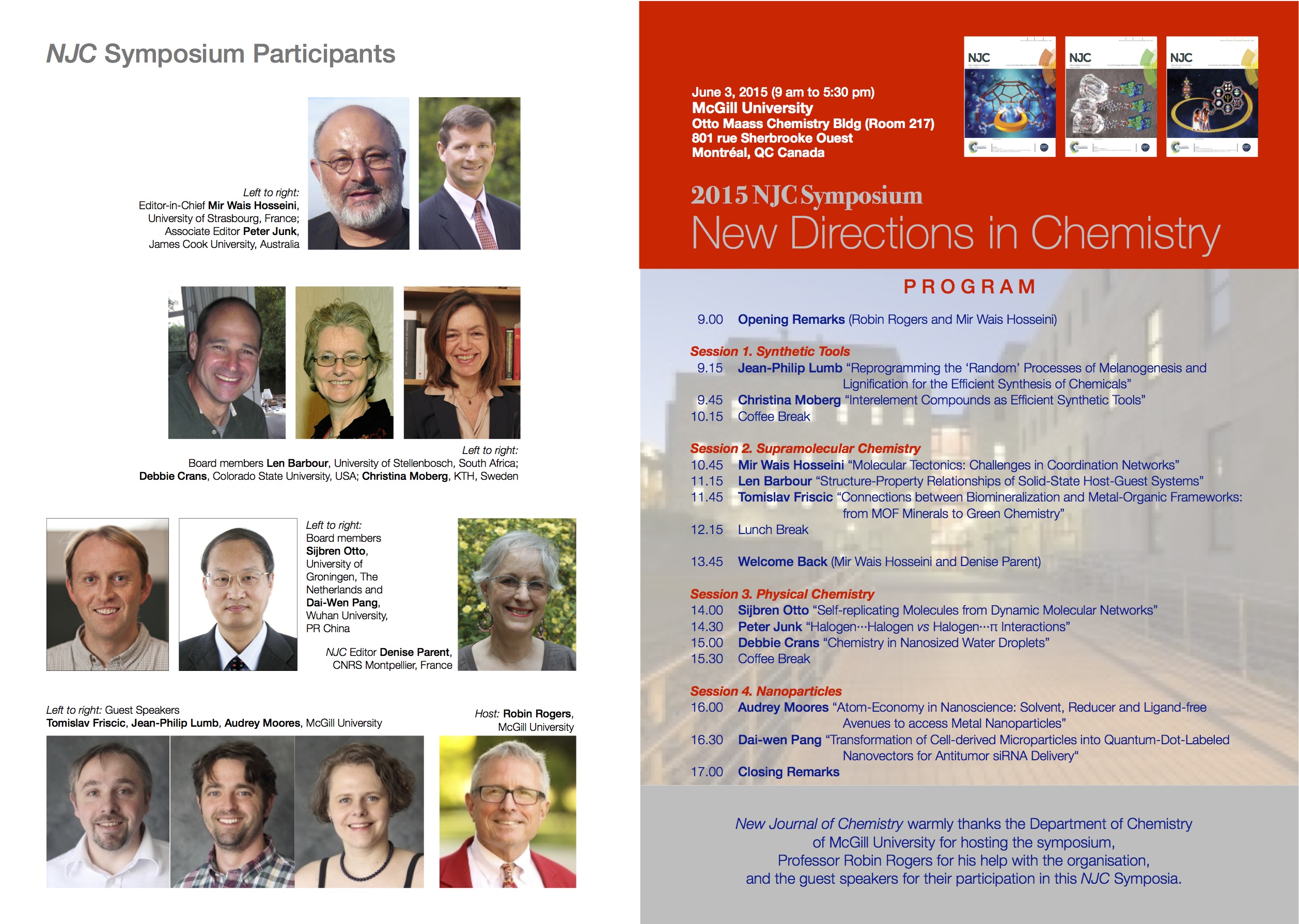
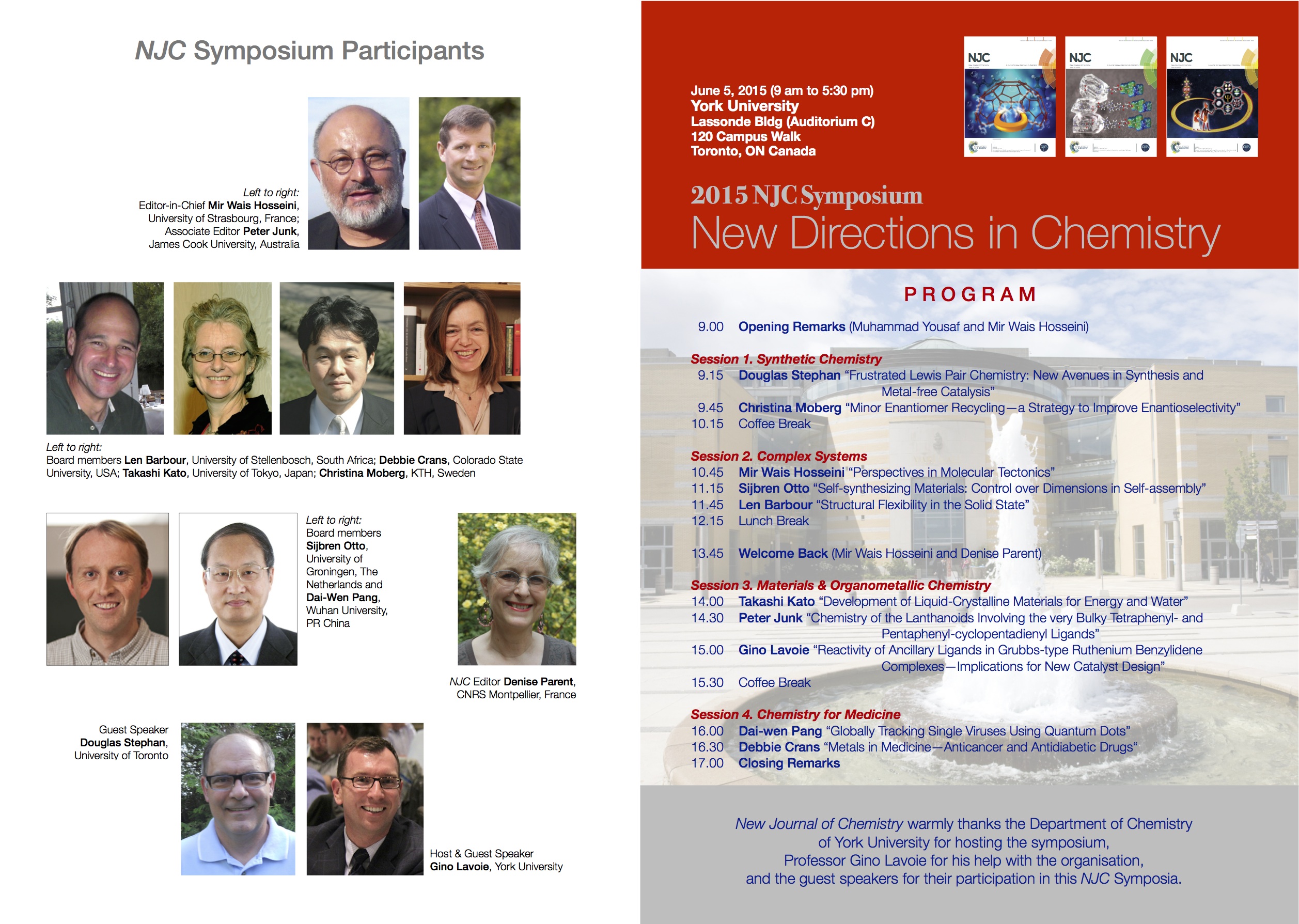
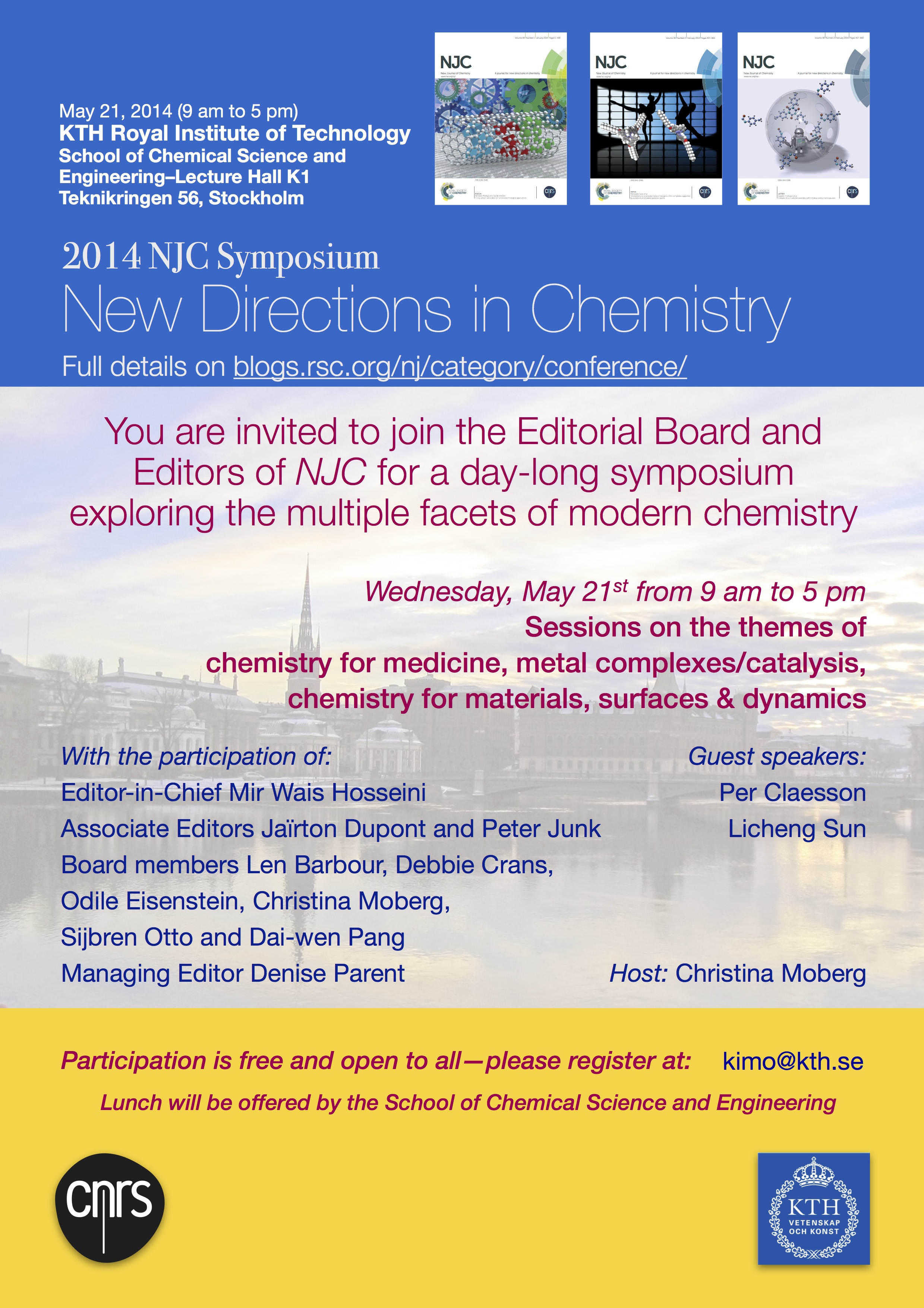
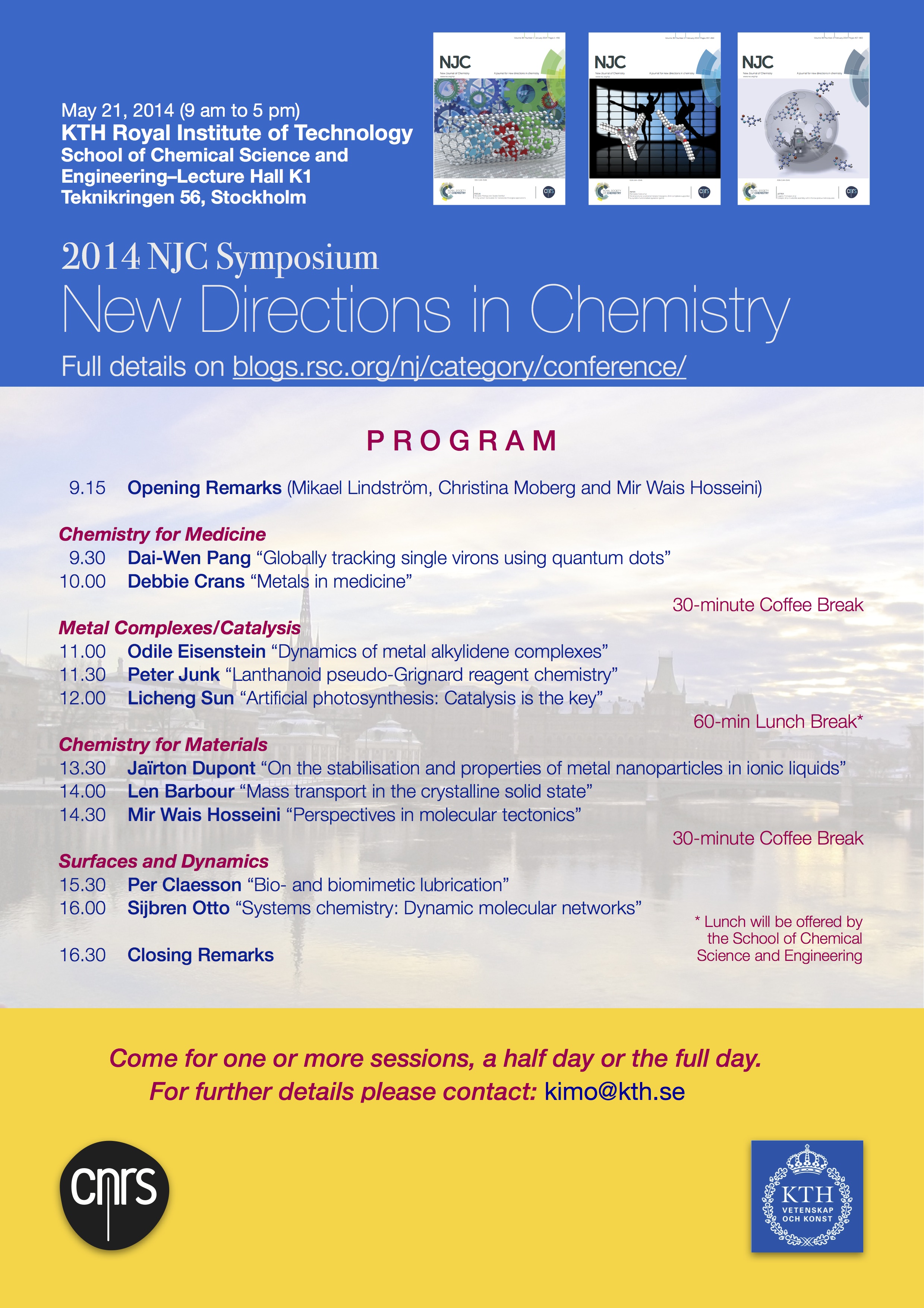
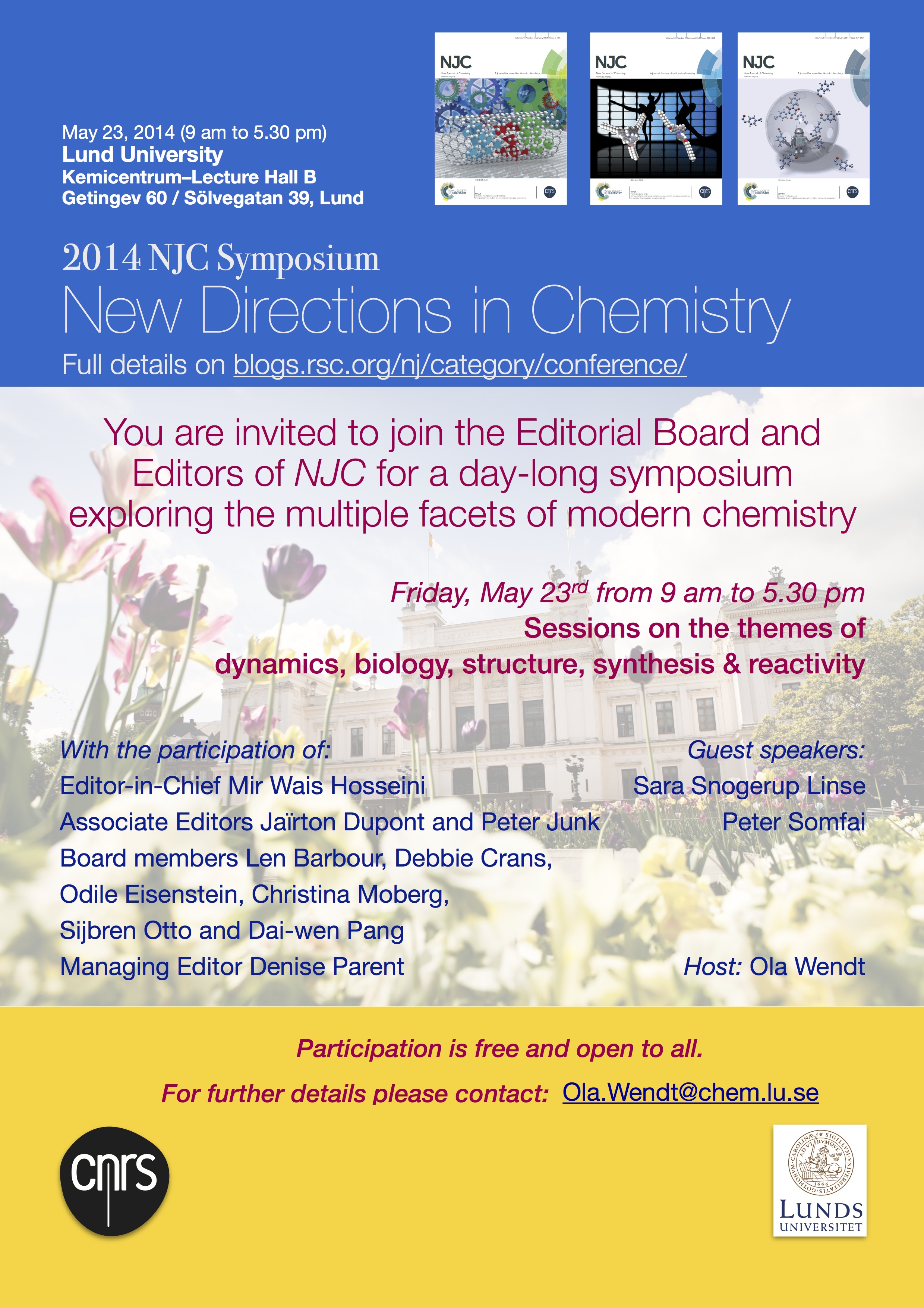
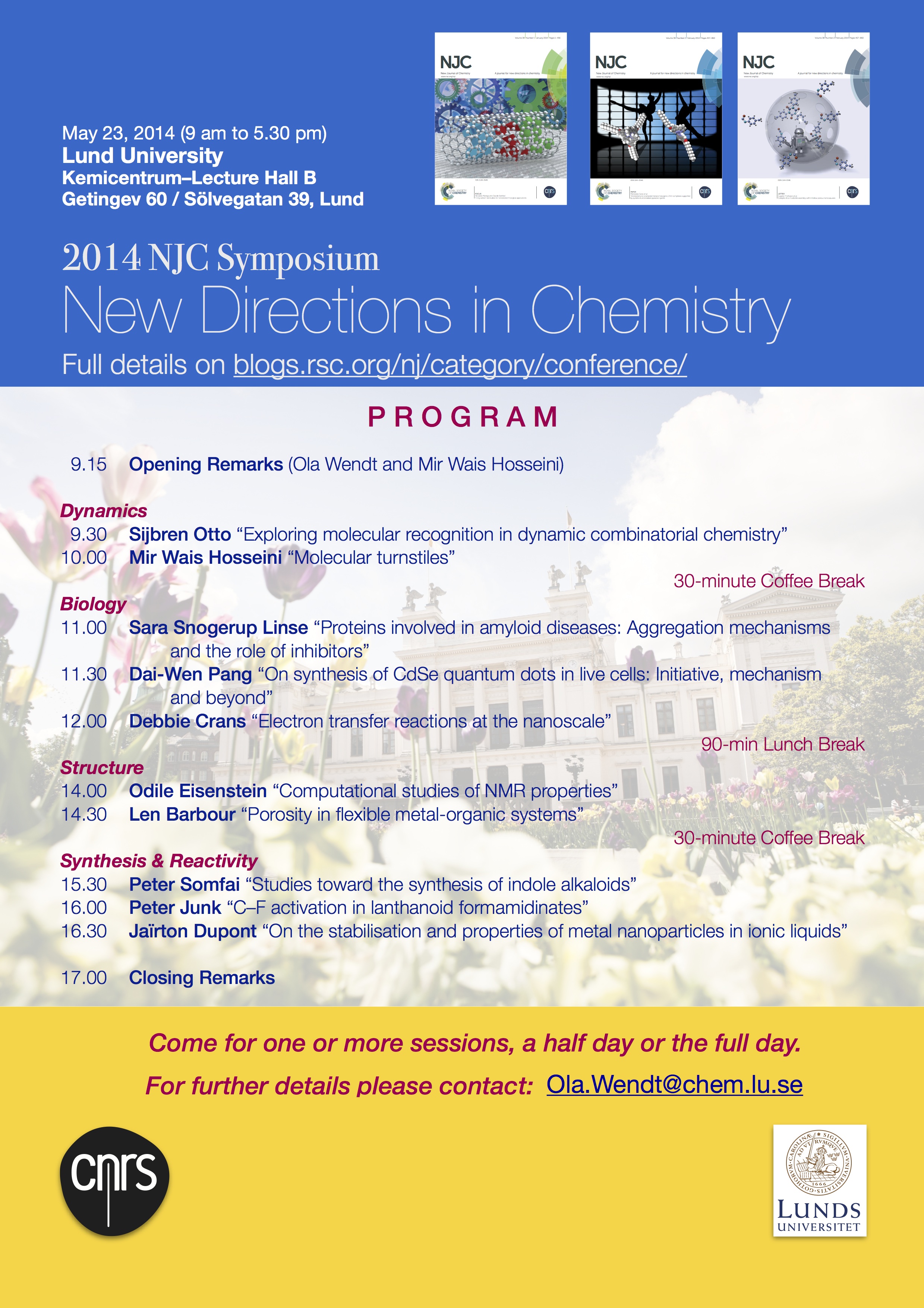
Full details are on the flyers and programs below (click on an image to see a larger image).

Digg This
Reddit This
Stumble Now!
Share on Facebook
Bookmark this on Delicious
Share on LinkedIn
Bookmark this on Technorati
Post on Twitter
Google Buzz (aka. Google Reader)

Meet Our Authors — March 2012

This month let’s get acquainted with 4 of the authors whose work is included in the March 2012 issue of NJC. We’ll find out what they have to say about their research and also a little about their taste in music.

WZ WangOur first author is Professor Wen-Zhen Wang, who  hails from the Chemistry and Chemical Engineering College of Xi’an Shiyou University in Xi’an, P. R. China. Xi’an is in Shaanxi Province in the center of China and is one of China’s oldest cities. It was the eastern terminus of the Silk Road and is also home to the famed Terracotta Army.

Wen-Zhen’s research covers the broad areas of coordination chemistry and catalysts. With colleagues from the Republic of China and the Azerbaijan Republic, Wen-Zhen has synthesized a series of pentachromium(II) metal string complexes and studied their structures, magnetic properties and single-molecular electronic conductivity. X-Ray crystallographic studies reported in this NJC article revealed that the structure of the complexes is non-symmetric: the linear metal chain structure consists of two quadruple Cr–Cr bonds and a separated high spin Cr(II) at the end, in a quintet ground state with four unpaired electrons. The complexes are quite resistant to oxidation and one complex exhibited good electronic conductance.

Celine Dion, the popular French-Canadian singer, is Wen-Zhen’s favorite musician. “I like her voice” simply states our chemist, who also loves classical music.

Fine tuning of pentachromium(II) metal string complexes through elaborate design of ligand by Wen-Zhen Wang, Rayyat Huseyn Ismayilov, Gene-Hsiang Lee, Yi-Lin Huang, Chen-Yu Yeh, Ming-Dung Fu, Chun-hsien Chen and Shie-Ming Peng, New J. Chem., 2012, 36, 632-637. DOI: 10.1039/C1NJ20512A

A BricenoDr. Alexander Briceño is an Associate Researcher at the Instituto Venezolano de Investigaciones Científicas (IVIC) in Caracas, Venezuela. His research interests include crystal engineering of photoreactive supramolecular assemblies directed by metal-coordination, hydrogen bonds and ionic interactions; the synthesis and structural characterisation of novel nano/microcomposites based on integrative chemistry of different kinds of materials; hydrogels, carbonaceous materials, MOFs, metal oxides and metal nanoparticles with multiple properties as adsorbents or catalysts.

In their NJC paper, Alexander and his colleagues establish a non-photochemical route to prepare quantitatively, regio- and stereoselectively rtct-pyridyl cyclobutane derivatives using a combination of  a solid state [2+2] photoreaction and a controlled isomerisation via a hydrothermal-assisted process. This alternative approach can be very helpful in overcoming the limitations imposed by Schmidt’s topochemical postulate  for obtaining regioselective photoproducts with such stereochemical requirements from crystalline assemblies. This method opens a window to develop efficient routes for the preparation of new and conventional cyclobutane-like stereoisomers that are difficult or impossible to access either in solution or by known solid state routes (such as the rcct-configuration). It also includes the possibility of inducing chirality on achiral cyclobutanes.

These rtct cyclobutane derivatives represent novel, attractive, multitopic building blocks for crystal engineering of metal-organic polyhedra, metal-organic frameworks and supramolecular hydrogen-bonded assemblies and are particularly useful for the study of supramolecular isomerism in the solid state.

Alexander’s favorite musician is the Venezuelan José Antonio Abreu, who founded the National System of Youth and Children’s Orchestras and Choirs of Venezuela: “His perseverance and dedication to the development of a classical music education program that uses music as a fascinating tool for the social integration, transformation and personal growth of thousands of youth and children in Venezuela has had influence beyond our frontiers.”

Combining topochemical [2+2] photoreactions and hydrothermal isomerisation for the regioselective and quantitative preparation of rtct-pyridylcyclobutanes by Yennifer Hill, Maholy Linares and Alexander Briceño, New J. Chem., 2012, 36, 554-557. DOI: 10.1039/C2NJ20855E
 

C Caris-VeyratDr Catherine Caris-Veyrat holds a Research Scientist position at the French INRA (National Institute for Agronomical Research). Her laboratory, located in Avignon in southern France, is looking into the safety and quality of plant products.

Catherine is interested in micronutrients, mainly carotenoids and their metabolites/oxidation compounds. Speaking of her NJC paper, she says “Our work is mainly in the field of chemistry (synthesis and physico-chemistry) but with an impact in the area of nutrition and health. It could bring insights into the in vivo activity mechanisms of lycopene, a natural bioactive molecule (found in tomatoes), and its possible metabolites.”  Since beta-carotene is the main precursor of vitamin A (retinol), researchers think that metabolites of non-provitamin A carotenoids could also be bioactive. “Consumption of tomato or derived tomato products has been shown to be good for health, possibly preventing appearance of degenerative diseases (cancers, cardio-vascular diseases, etc.). The main pigment in tomatoes (the carotenoid lycopene) or its metabolites could be implied in the protective effects. Our work was integrated into a European project on the effect of lycopene on cardio-vascular diseases.”

As a classical music lover, Catherine particularly likes Cecilia Bartoli, an Italian lyric female singer, especially for her interpretation of baroque music, such as that by Handel for example. “Her timbre of voice is very wide and warm and her interpretation of music pieces very expressive” is Catherine’s summary of her favorite musician.

Antioxidant activity of (all-E)-lycopene and synthetic apo-lycopenoids in a chemical model of oxidative stress in the gastro-intestinal tract by Pascale Goupy, Eric Reynaud, Olivier Dangles and Catherine Caris-Veyrat, New J. Chem., 2012, 36, 575-587. DOI: 10.1039/C1NJ20437H


S SpangeOur last chemist for this month is Stefan Spange, who is full Professor in the Institute of Chemistry at the University of Technology Chemnitz, Germany. Stefan’s research covers a broad range of subjects: solvatochromism, ionic liquids, hybrid materials, surface functionalization and twin polymerization.

His NJC publication reports on four merocyanine-type dyes derived from barbituric and thiobarbituric acid that can be used as probe molecules for the determination of empirical polarity parameters of oxidic, photocatalytic, and even coloured surfaces such as metals. “The appropriate polarity data of these types of surfaces is very important to explain many phenomena such as catalytic activity or polymer-surface interactions and therefore we think that this article is of great importance for a broad audience of chemists.”

While Stefan, like the other featured authors, likes classical music, his favourite kind of music is heavy metal, especially doom- and black metal. “At the moment I listen to Agalloch, My Dying Bride and Helheim from Norway. Also I like to listen to Nocte Obducta and Agrypnie from Germany.” When he was younger, he enjoyed Genesis (with Peter Gabriel), Pink Floyd, Deep Purple, Jimi Hendrix, Black Sabbath and Led Zeppelin.

Probing the surface polarity of inorganic oxides using merocyanine-type dyes derived from barbituric acid by Susan Seifert, Andreas Seifert, Gunther Brunklaus, Katja Hofmann, Tobias Rüffer, Heinrich Lang and Stefan Spange, New J. Chem., 2012, 36, 674-684. DOI: 10.1039/C2NJ20835K

I hoped you enjoyed reading about this selection of chemists. We thank them most warmly for accepting our invitation and having kindly taken their time to answer a few questions for us.

Check back next month for more profiles of NJC authors!


Digg This
Reddit This
Stumble Now!
Share on Facebook
Bookmark this on Delicious
Share on LinkedIn
Bookmark this on Technorati
Post on Twitter
Google Buzz (aka. Google Reader)

Announcing the 2012 NJC Symposia in China

Three prestigious institutions will be hosting members of the NJC editorial board and two NJC editors for the 2012 NJC Symposium: New Directions in Chemistry, which will be held during the last week of April 2012. Each one-day symposium will feature presentations by the editorial board members, prominent local chemists and the editors.

These symposia are free and open to all interested persons.

Please send an email with your full name, affiliation, status and which symposium you wish to attend by April 15th. This will allow us to welcome you under the best conditions.

Please join us and meet:

Members of the NJC Editorial Board who will be participating in the 2012 NJC Symposia include:
Co-Editor-in-Chief Professor Mir Wais HOSSEINI (University of Strasbourg, France)
Associate Editor Professor Michael SCOTT (University of Florida, USA)
Associate Editor Professor Peter JUNK (Monash University, Australia)
Professor Len BARBOUR (University of Stellenbosch, South Africa)
Professor Debbie CRANS (Colorado State University, USA)
Professor Odile EISENSTEIN (CNRS, Montpellier, France)
Professor Helen HAILES (University College London, UK)
Professor Takashi KATO (University of Tokyo, Japan)
Professor J N MOORTHY (Indian Institute of Technology, India)

NJC Managing Editor Dr Denise PARENT (Montpellier, France) and NJC Assistant Editor Dr Ling PENG (Marseille, France) will also be present.


April 23 at the University of Hong Kong (Host: Professor Vivian YAM)
Guest Speakers: Professors CHE Chi-ming and YANG Dan (University of Hong Kong); Professors JIA Guochen and TANG Ben Zhong (Hong Kong University of Science and Technology)

April 25 at East China University of Science and Technology, Shanghai (Host: Professor QIAN Xuhong)
Guest Speakers: Professor MA Dawei (Shanghai Institute of Organic Chemistry); Professor JIN Guoxin (Fudan University); Professor YANG Yi (ECUST)

April 27 at the Institute of Chemistry, Chinese Academy of Sciences, Beijing (Host: Professor YAO Jiannian)
Guest Speakers: Professor LIU Zhongfan (Peking University); Professors HAN Buxing and ZHANG Deqing (Institute of Chemistry, CAS Beijing)


Full details and the scientific programs will be available soon. Please check this blog in the coming weeks.

We all look forward to meeting you in Hong Kong, Shanghai or Beijing in April!

http://www.ucl.ac.uk/chemistry/staff/academic_pages/helen_hailes
Digg This
Reddit This
Stumble Now!
Share on Facebook
Bookmark this on Delicious
Share on LinkedIn
Bookmark this on Technorati
Post on Twitter
Google Buzz (aka. Google Reader)